University of Chicago team secures $10 million grant to expand AI-powered weather forecasting in developing economies
The Laude Institute funding will support an open-source platform designed to help meteorological agencies in low- and middle-income countries generate locally relevant forecasts using limited weather data and computing resources.
By Fatima hasan · Updated
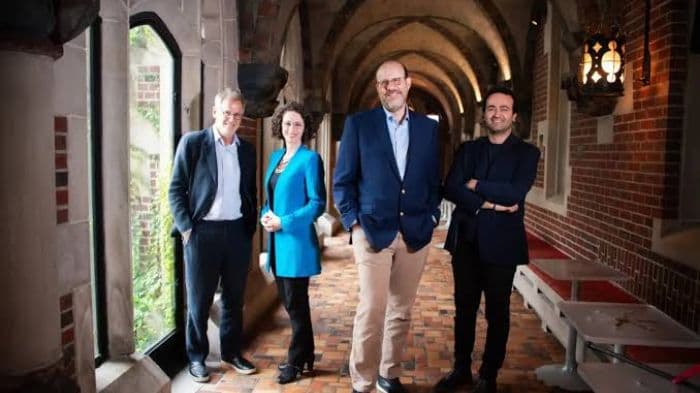
A University of Chicago research team has received a $10 million grant from the Laude Institute to develop artificial intelligence-powered weather forecasting systems for low and middle income countries, with a focus on improving access to reliable and locally relevant predictions.
The funding will support the development of new forecasting models and an open-source software platform intended to help meteorological agencies adapt and deploy AI-based forecasts using their own weather observations, geographical conditions and local requirements.
The initiative builds on work carried out by the university’s Human-Centered Weather Forecasts team. Between 2024 and 2026, governments in South Asia and Africa used forecasts developed with the researchers to provide information about the arrival of seasonal rains to more than 50 million smallholder farmers.
The new grant is expected to make the forecasting process faster and easier to deploy, while extending its application to additional regions and weather-related risks.
Addressing gaps in weather forecasting
Weather forecasts are particularly important for farmers in tropical regions, where the timing of seasonal rainfall can determine when crops are planted and whether a harvest succeeds. However, many meteorological agencies in these regions have limited access to the dense observation networks, computing infrastructure and technical resources used by advanced forecasting systems.
The researchers point out that conventional weather models have largely been developed using data and infrastructure available in wealthier, mid-latitude countries. As a result, forecasts may not adequately address the specific weather events that matter most to communities in tropical climates, such as the onset of monsoon rains.
The University of Chicago team is developing AI systems that can work with sparse observational data and comparatively modest computing resources. Its approach combines existing AI-based and physics-based forecasts and adapts them to local conditions and practical decisions.
The team is led by Rebecca Willett, professor of statistics and computer science; Pedram Hassanzadeh, associate professor of geophysical sciences; Ian Foster, professor of computer science; and Michael Kremer, Nobel laureate and University Professor in Economics.
Willett said that conventional evaluation of AI weather models often focuses on how accurately they predict global temperature and precipitation, rather than whether their forecasts help people make decisions.
“The leading AI weather models are evaluated on whether they accurately predict global temperature and precipitation,” Willett said. “That’s useful if you’re a meteorologist. But it tells you almost nothing about whether a model will correctly predict monsoon onset for a farmer in West Java or a dangerous heat wave for a public health official in Addis Ababa.”
She added: “We built our platform around a different question: not ‘how accurate is the model’ but ‘does this forecast help a specific person make a better decision in a specific place.’”
Open-source platform for meteorological agencies
With the grant, the researchers will develop new AI weather forecasting frameworks within the UChicago–Laude AI Almanac, a free, open-source platform designed for meteorological agencies, governments and non-profit organisations.
The platform will allow users to generate, assess and deploy forecasts tailored to their own geographical conditions, available observations and decision-making requirements. It is being designed to work without the need for specialised technical expertise, extensive observation networks or supercomputing infrastructure.
Pedram Hassanzadeh said the platform would help meteorological agencies translate advances in AI forecasting into information that can be used by the communities they serve.
The project will also focus on evaluating forecasts according to local needs, rather than relying only on conventional measures of global forecasting accuracy. This is intended to help agencies determine whether predictions are useful for decisions such as planting crops, preparing for heatwaves or responding to other climate-related risks.
The researchers have also reduced the time required to benchmark and adapt forecasting models. According to the university, work that previously required four to five months of expert labour can now be completed with a single day of expert review.
From agriculture to public health
The initiative is intended to extend beyond agricultural forecasting. Its planned applications include public health preparedness and warnings about compound climate extremes, which occur when multiple climate-related hazards overlap or interact.
For farmers, more actionable rainfall forecasts could help determine when to sow crops and reduce the risk of planting before an unexpected delay in seasonal rains. Public health authorities could use locally adapted forecasts to prepare for dangerous heatwaves, while emergency managers could use them to plan responses to weather hazards.
The university's earlier deployments have already demonstrated the potential of this approach. AI forecasts developed with the team were distributed through government agricultural ministries in South Asia and Africa, including warnings about an unusual stall in seasonal rainfall.
Farmers receiving the information through text messages could adjust planting decisions instead of sowing too early and risking crop losses.
The team is working with organisations including the Agricultural Innovation Mechanism for Scale (AIM for Scale), the non-profit Precision Development, the University of California, Berkeley, development banks and philanthropic organisations to expand the reach of these tools.
A companion training programme, co-led by the University of Chicago and the United Arab Emirates-based Mohamed bin Zayed University of Artificial Intelligence, is preparing government meteorologists from 14 countries to use the forecasting tools. The programme aims to extend participation to 30 countries by 2027.
Ian Foster said that reaching hundreds of millions of people would require infrastructure capable of operating across countries, datasets and different weather hazards. The team plans to draw on its experience with Globus, a non-profit research data management platform, to help agencies access and deliver forecasts without having to develop and maintain their own computing infrastructure.
The grant is part of a wider effort to make advances in AI weather prediction accessible to communities that are particularly exposed to climate risks but have fewer resources to develop forecasting capabilities.
Also read