
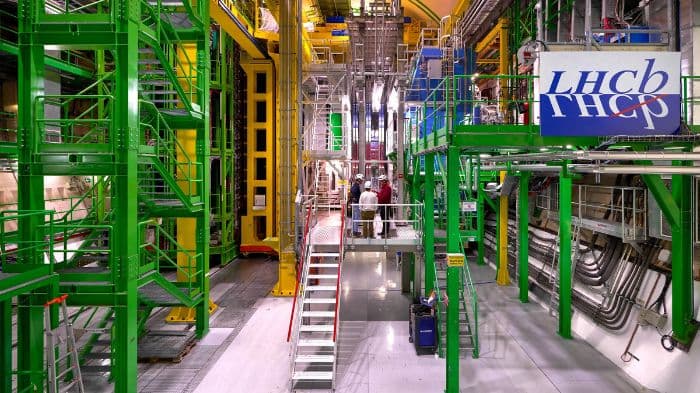
A Cambridge-led international team detected evidence of a beauty particle decaying into two muons, a rare process that could help physicists investigate particles and forces beyond the Standard Model.

The research collaboration will use data from the Emirati Genome Program and Abu Dhabi’s Malaffi health information exchange to examine genetic factors associated with the two chronic respiratory diseases.

Experiments on uranium ditelluride have shown that two distinct superconducting states can coexist in the material, making it a leading candidate for a topological superconductor, a development that could eventually support advances in quantum computing.
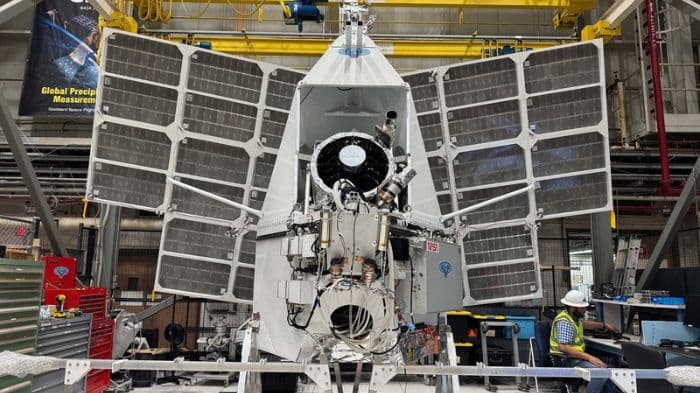
The EXCITE infrared telescope will travel aboard a high-altitude balloon to around 130,000 feet above Earth, allowing researchers to study the atmospheres of exoplanets known as hot Jupiters.
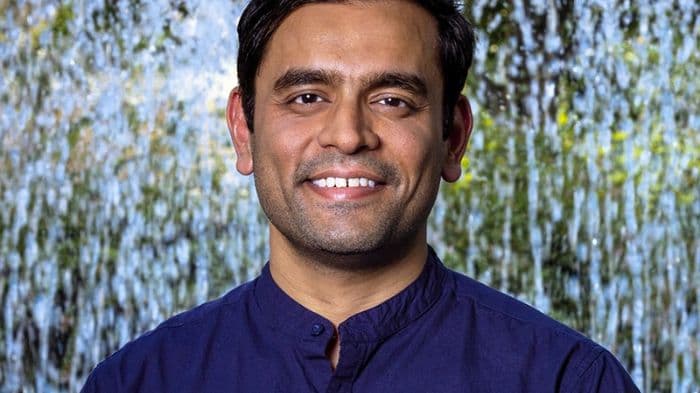
The Rutgers University scientist has been recognised for defending evidence on lead contamination in Flint, Michigan, despite facing opposition and threats. Kerala-based liver specialist Cyriac Abby Philips was also among this year’s nominees.

The robotic device can navigate the narrow, winding passage of the small intestine and perform imaging, tissue biopsies and drug delivery, potentially making difficult diagnostic procedures easier to carry out.

Researchers at the University of Oxford are examining a historic plant collection to investigate how Indigenous knowledge and colonial-era exchanges shaped the development of botanical science in Britain.

Over 96,000 Cases Pending Before 38 Judges

Geopolitical Tensions, High Valuations and Investor Selling Weighed on Markets

Democratic Control of Congress Raises Questions Over Trump’s Economic Agenda

New Two-Year Extension Introduced for Agniveers

Joint List Extends Support to Eisenkot as Coalition Talks Continue
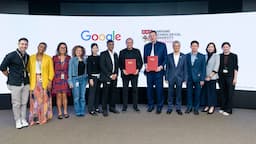
Google invests over US$6 million in AI research and education initiatives in Singapore

Cabinet Approves ₹4,371 Crore VISTAR Scheme to Modernize India's Statistical System

AI tutor outperforms classroom learning in US university trial, OECD report finds

Why will students lose Google Search access if schools reject Google's AI tools? Company announces new rules

Australian experts back school digital detox as concerns grow over AI and screen use

Copyright© educationpost.in 2026 All Rights Reserved.