


Experiments on uranium ditelluride have shown that two distinct superconducting states can coexist in the material, making it a leading candidate for a topological superconductor, a development that could eventually support advances in quantum computing.
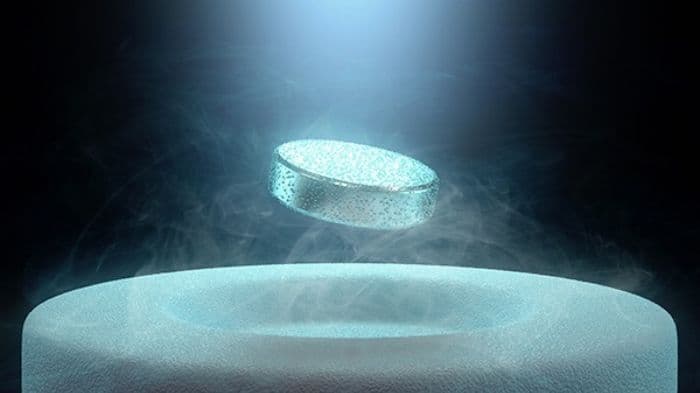
Researchers at Cornell University have found that uranium ditelluride can exhibit two distinct forms of superconductivity simultaneously, a finding that could help advance the search for materials needed to develop topological quantum computers.
The study, published in the journal Nature Physics on Oct 30 demonstrates that the material can host two superconducting states under different conditions and that these states can coexist and interact.

The finding makes uranium ditelluride a leading candidate for a topological superconductor, although researchers have not yet demonstrated that it has achieved this state.
A topological superconductor is a sought-after material that could enable advances in quantum computing by combining distinct forms of superconductivity. Researchers are investigating such materials because of their potential to support more stable quantum systems.
Two superconducting states in one material
The Cornell team found that one form of superconductivity in uranium ditelluride emerges at extremely low temperatures, while another appears under very strong magnetic fields or high pressure.
Different forms, or 'flavours', of superconductivity are determined by the amount and orientation of angular momentum when two electrons pair together in a superconducting state, explained Brad Ramshaw, associate professor of physics at Cornell's College of Arts and Sciences and director of its Laboratory of Atomic and Solid State Physics.
The researchers found that the two states can occur in overlapping regions under specific experimental conditions. This ability to exhibit both forms simultaneously distinguishes uranium ditelluride from many other known superconducting materials.
“No one has yet convincingly demonstrated a topological superconductor, but now we know that uranium ditelluride at least has the right ingredients to make it happen,” Ramshaw said.
Experiments reveal unusual behaviour under pressure
The research team revisited the material's phase diagram, which maps how superconductivity changes with temperature, pressure and magnetic fields. Earlier studies had left uncertainties about its behaviour under pressure.
Doctoral researcher Sahas Kamat, the paper's first author, investigated whether pressure could produce another form of superconductivity in uranium ditelluride. His examination of previous findings identified inconsistencies in the reported behaviour of the material.
The team then conducted its own experiments using pulse ultrasound measurements to construct a revised phase diagram. The experiments revealed a superconducting state emerging under pressure, alongside the state that appears at extremely low temperatures.
The pressure used in the experiment was about 18,000 pounds concentrated over an area of five millimetres. Researchers maintained the pressure while cooling the material to temperatures between one and two kelvin.
The resulting measurements showed that the two superconducting states could coexist and interact. They also revealed an unusual behaviour: one type of superconductivity disappeared as the temperature decreased because the other state displaced it.
According to the researchers, this is the first experimental demonstration of this particular behaviour, although it had been considered theoretically possible.
Quantum computing applications remain distant
The findings add to research into materials that could eventually help realise topological superconductivity. Such materials are of interest to quantum computing researchers because of the possibilities they may offer for developing new types of quantum systems.
However, the Cornell team cautioned that practical applications in quantum computing remain several steps away. Demonstrating two forms of superconductivity in uranium ditelluride does not establish that the material is already a topological superconductor.
“There are new superconducting materials being discovered all the time. There have been 6,000 catalogued already,” Ramshaw said, adding that most exhibit broadly similar forms of superconductivity.
The research involved scientists from Cornell University, the University of Maryland, Karlsruhe Institute of Technology and the Canadian Institute for Advanced Research.
The study, titled Thermodynamic demonstration of tetracriticality and multicomponent superconductivity in UTe2, was published in Nature Physics.
Cornell researchers identify material with two forms of superconductivity, advancing quantum research

Foreign university campuses in India struggle to attract first batches despite global rankings

UK universities bring four Indian campuses together for postgraduate recruitment

Ladakh Administration Directs Sonam Wangchuk-Founded School to Suspend Activities Pending High Court Decision

IIIT-Delhi Awards Degrees to 830 Students at 15th Convocation; Recognises Academic and Research Excellence
Japan's Okayama University uses robotics competitions to build engineering and workplace skills

Indian Navy Rescues 20 Crew from Hijacked Iranian Vessel off Somalia

Learning Mandarin, earning degrees in China: How Indonesian youth are preparing for global careers
China allows clinical medicine master's and PhD students to graduate without thesis under new pathway

Delhi HC Declines Action Against ACP Over Alleged Threats to Lawyers

Cornell researchers identify material with two forms of superconductivity, advancing quantum research
Foreign university campuses in India struggle to attract first batches despite global rankings
UK universities bring four Indian campuses together for postgraduate recruitment
Ladakh Administration Directs Sonam Wangchuk-Founded School to Suspend Activities Pending High Court Decision
IIIT-Delhi Awards Degrees to 830 Students at 15th Convocation; Recognises Academic and Research Excellence
Japan's Okayama University uses robotics competitions to build engineering and workplace skills
Indian Navy Rescues 20 Crew from Hijacked Iranian Vessel off Somalia
Learning Mandarin, earning degrees in China: How Indonesian youth are preparing for global careers
China allows clinical medicine master's and PhD students to graduate without thesis under new pathway
Delhi HC Declines Action Against ACP Over Alleged Threats to Lawyers
Copyright© educationpost.in 2026 All Rights Reserved.