


A study of 316 physics students found greater learning gains in less time with a generative AI tutor, while another trial showed AI-assisted tutors improved pass rates among underserved pupils.
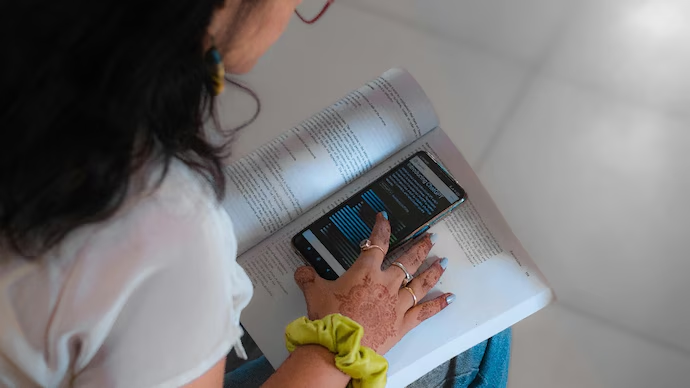
Can artificial intelligence help students learn more effectively than traditional classroom instruction? A new report by the Organisation for Economic Co-operation and Development (OECD) offers encouraging evidence, suggesting that carefully designed AI tutors could improve learning outcomes and strengthen educational support.
The OECD Digital Education Outlook 2026 highlights a US university trial involving 316 students that found significantly greater learning gains among those taught by a generative AI tutor than among peers receiving active-learning instruction in a physical classroom.

The findings offer a fresh perspective on the growing role of artificial intelligence in education, where concerns have largely focused on students using chatbots to complete assignments rather than develop a genuine understanding of what they are learning.
The randomised controlled trial involved students enrolled in an introductory university-level physics course in the United States. Researchers compared two teaching approaches: conventional classroom-based active learning and an online generative AI tutor designed around the same active-learning principles.
Students using the AI tutor achieved significantly higher learning gains in less time. They also reported stronger motivation and engagement. The study recorded an effect size of 0.63, which the OECD classifies as large. The results suggest that AI can do more than provide quick answers or simplify access to information. When designed around sound teaching principles, it can actively guide students through concepts and support the learning process.
The OECD report also highlights how generative AI can strengthen human-led teaching, particularly for students who have limited access to quality academic support. It examines Tutor CoPilot, an AI-powered tool developed by Stanford researchers and integrated into an online tutoring platform. The system was deployed by 900 tutors working with 1,800 underserved pupils in the United States.
The intervention produced an average 4% increase in student pass rates. The improvement was even more pronounced among less-experienced tutors, whose students recorded a 9% rise in pass rates. Students working with tutors who had previously received lower quality ratings also registered a 7% improvement.
The findings point to AI's potential to narrow gaps in educational support by helping tutors deliver more effective instruction, particularly where teaching experience and resources are limited. Rather than replacing human educators, Tutor CoPilot was designed to assist them within an existing tutoring system, offering additional support as they worked with students.
Together, the two studies underline an important distinction in the debate over artificial intelligence in education: not all AI tools contribute to learning in the same way.
A general-purpose chatbot that supplies ready-made answers is fundamentally different from an educational system designed to explain concepts, provide feedback and encourage students to think independently. The OECD report examines how dialogue-based AI tutors can offer personalised explanations, respond to individual learning needs and provide guidance beyond regular classroom hours.
Such tools could potentially extend academic support to students who otherwise have limited access to individual attention. However, the findings do not establish that AI tutors are universally more effective than human teachers. The physics trial focused on one university course and a specific AI-supported teaching model, while the Tutor CoPilot results relate to a particular tutoring programme in the United States.
The broader message is that AI's value in education will depend not simply on the sophistication of the technology, but on how thoughtfully it is integrated into teaching.
Used as a shortcut to complete assignments, AI risks weakening independent learning. Designed to encourage understanding, guide students through difficult concepts and strengthen teachers' capabilities, it could become a valuable addition to education.

From a Mars Dream to Indian Army Trials: BITS Students Develop GPS-Free Drone Technology
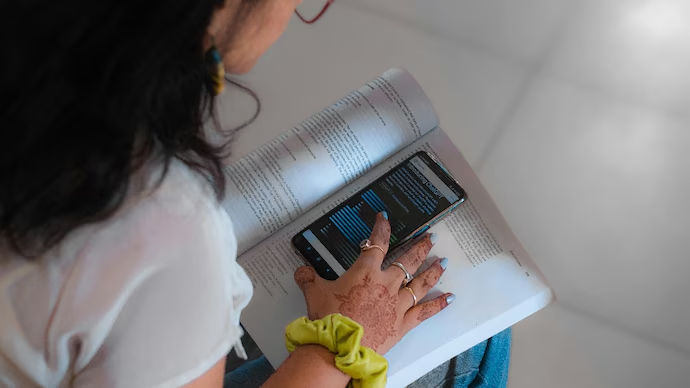
AI tutor outperforms classroom learning in US university trial, OECD report finds

Delhi: 9-year-old girl dies after collapsing in Lovely Heritage School classroom; family questions medical response

Karnataka CM urges private schools to partner with 1,000 government schools in rural areas

Ladakh Becomes India's First 100% Organic Union Territory: What It Means for Farmers
AI tutor outperforms classroom learning in US university trial, OECD report finds

Why will students lose Google Search access if schools reject Google's AI tools? Company announces new rules
Australian experts back school digital detox as concerns grow over AI and screen use

Want to prepare for married life? Goa college introduces a certificate course on relationships

NCTE forms panel to include ITEP graduates in CTET, STET eligibility criteria

From a Mars Dream to Indian Army Trials: BITS Students Develop GPS-Free Drone Technology
AI tutor outperforms classroom learning in US university trial, OECD report finds
Delhi: 9-year-old girl dies after collapsing in Lovely Heritage School classroom; family questions medical response
Karnataka CM urges private schools to partner with 1,000 government schools in rural areas
Ladakh Becomes India's First 100% Organic Union Territory: What It Means for Farmers
AI tutor outperforms classroom learning in US university trial, OECD report finds
Why will students lose Google Search access if schools reject Google's AI tools? Company announces new rules
Australian experts back school digital detox as concerns grow over AI and screen use
Want to prepare for married life? Goa college introduces a certificate course on relationships
NCTE forms panel to include ITEP graduates in CTET, STET eligibility criteria
Copyright© educationpost.in 2026 All Rights Reserved.