


The UAE has stepped up its engagement with international scientific institutions and research centres while developing partnerships in space, artificial intelligence, biotechnology and environmental research to connect academic work with strategic industries.
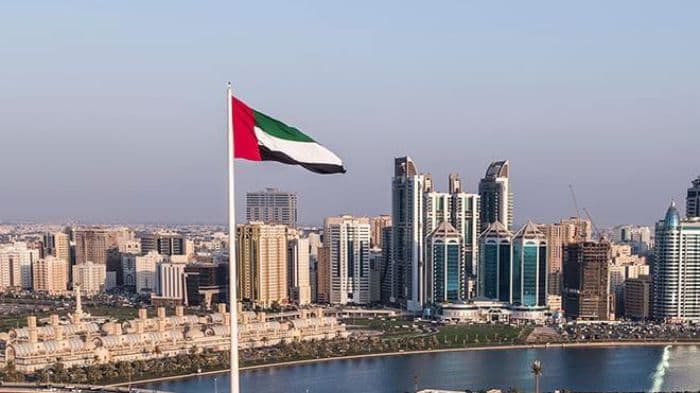
The United Arab Emirates is expanding its scientific research and advanced technology ecosystem through international partnerships, university-industry collaborations and programmes aimed at developing specialised national talent.
Developments across 2026 include the country's participation in international scientific organisations, cooperation with global universities and research centres, and initiatives to direct research and development towards strategic industries, according to a report published by the Emirates News Agency (WAM) on November 7.

The UAE joined the Svalbard Treaty in April 2026, allowing its scientists to conduct field research in Ny-Ålesund, an international research community in the Arctic archipelago of Svalbard. Researchers from more than 10 countries work there on polar and atmospheric studies.
The country also joined the International Science Council in July, with the Advanced Technology Research Council appointed as its national representative. The council brings together more than 250 scientific organisations, including national academies, research councils and international scientific unions.
UAE builds framework linking education with advanced industries
Alongside international engagement, the UAE has introduced the National Programme for Advanced Sciences and Technologies to connect education, research and development, and talent development with the needs of strategic industries.
The programme's first phase includes six tracks covering technical education and national talent, national service, flagship initiatives, global challenges, global talent attraction, and technical research and innovation.
The initiative aims to develop specialised capabilities in science and advanced technology while directing research towards industrial and national development priorities.
Universities deepen partnerships with space industry
University-industry cooperation has also expanded in the space sector.
In October, Khalifa University of Science and Technology and satellite technology company ICEYE announced a strategic partnership covering space research, applied innovation and specialised talent development.
The collaboration will explore joint research and engineering projects involving data, software and artificial intelligence. It will also consider internships, semester placements and graduate opportunities for students.
The partnership followed the launch of the International Space Cooperation Programme in May 2026, which has an allocation of AED1 billion to support international cooperation in space research and development.
On Oct 29, the Mohammed Bin Rashid Space Centre and the University of Sharjah also signed a memorandum of understanding to strengthen cooperation in space science and engineering, research and knowledge exchange, and specialised talent development.
Research partnerships target environmental and healthcare challenges
The UAE's research collaborations also extend to biotechnology and environmental projects.
In September, Emirates Biotech and United Arab Emirates University launched a joint project to develop an organic-waste valorisation pilot plant. The facility is designed to convert organic waste into resources such as renewable biogas and nutrient-rich compost.
The pilot plant is expected to process up to 40 kg of organic waste daily during a two-year project examining the performance of the treatment processes and their potential for wider application.
The country's broader research agenda also includes cooperation with international institutions in artificial intelligence, environmental science and healthcare.
Through these initiatives, the UAE is seeking to strengthen links between universities, research organisations and industry, while building national expertise in advanced technology and applied scientific research.
India set to join EU’s €93.5 billion Horizon Europe research programme in January 2027

Australia study detects exam stress in university campus sewage
European Commission unveils education package to address falling basic skills and teacher shortages
UAE expands global research partnerships and links university innovation with industry

Researchers warn AI overuse could weaken students’ ability to think independently
UN Secretary-General to take Arctic scientists’ climate warnings to COP31

Nepali students form Japan's second-largest international academic community: Foreign Minister

'Mogging' explained: How bodybuilding term became Collins Word of the Year 2026

‘It’s actually very cut-throat’: 13-year-old wins New Zealand spelling bee title
Schoolchildren join desperate effort to save stranded whales on New Zealand coast

India set to join EU’s €93.5 billion Horizon Europe research programme in January 2027
Australia study detects exam stress in university campus sewage
European Commission unveils education package to address falling basic skills and teacher shortages
UAE expands global research partnerships and links university innovation with industry
Researchers warn AI overuse could weaken students’ ability to think independently
UN Secretary-General to take Arctic scientists’ climate warnings to COP31
Nepali students form Japan's second-largest international academic community: Foreign Minister
'Mogging' explained: How bodybuilding term became Collins Word of the Year 2026
‘It’s actually very cut-throat’: 13-year-old wins New Zealand spelling bee title
Schoolchildren join desperate effort to save stranded whales on New Zealand coast
Copyright© educationpost.in 2026 All Rights Reserved.