


In an interview with Education Post, Mrs. Suchita Rathore shares insights on AI in classrooms, implementing NEP 2020, teacher development, and balancing exam excellence with character-building.
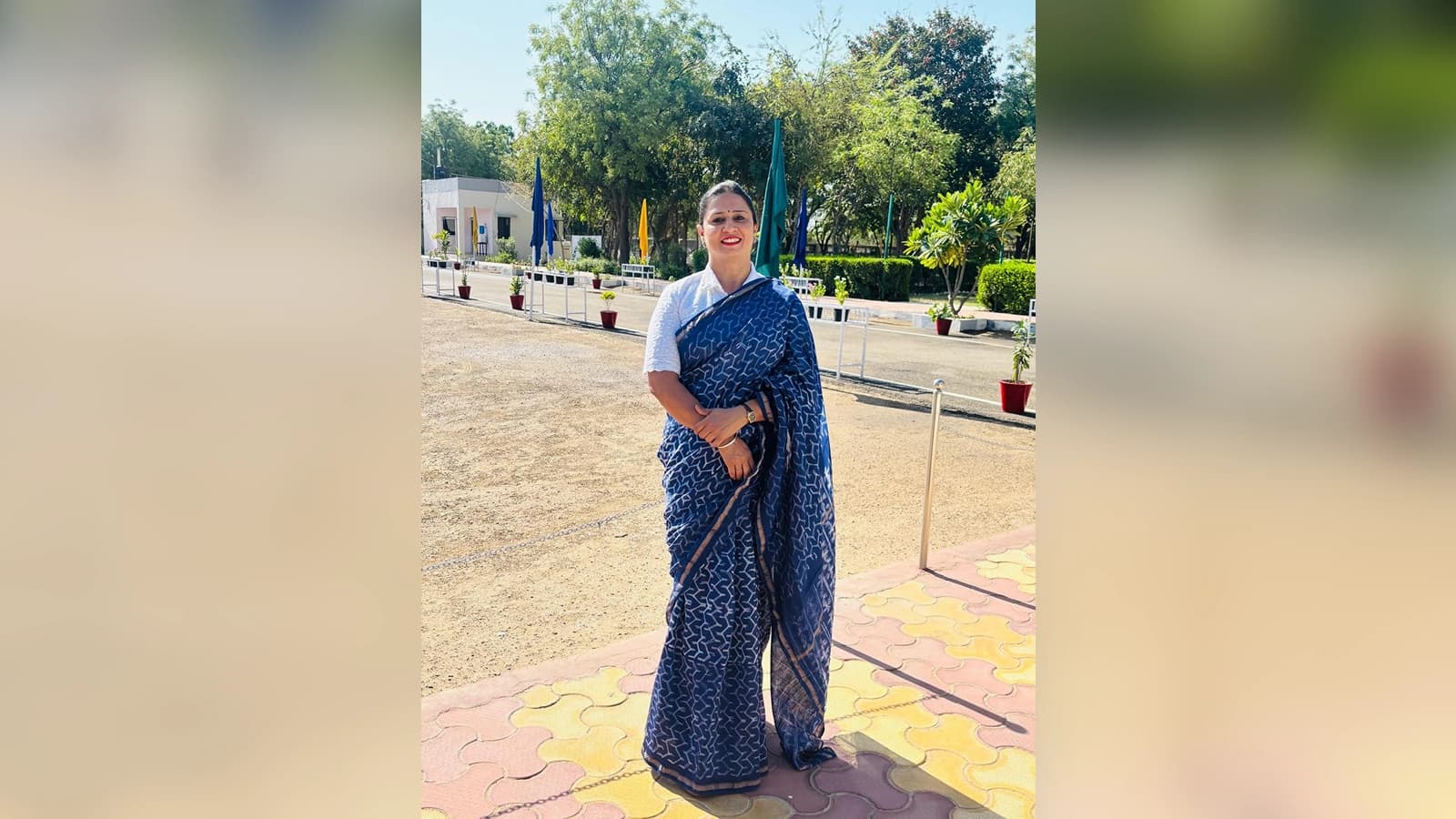
Mrs Suchita Rathore Principal Army Public School Bikaner in an interview with Education Post
Education is evolving beyond marks, rankings and examination outcomes, and for Mrs. Suchita Rathore, Principal of Army Public School, Bikaner, the purpose of schooling lies in preparing students for life. In this interview with Education Post’s Prabhav Anand, Rathore discusses her approach to school leadership, academic excellence, teacher development, AI in education, NEP 2020 and the growing need for future-ready skills. She also reflects on discipline, leadership, career guidance and the next phase of growth for APS Bikaner. “AI can support learning, but the thinking, curiosity and final effort must belong to the student,” she says.
1. You took charge as Principal of Army Public School, Bikaner after nearly two decades of experience across teaching, academic coordination and school leadership. What were the first things you observed when you assumed the role, and what have been your biggest priorities in shaping the school's next phase?

When I took charge, my first approach was to observe and understand rather than immediately change things. I spent time interacting with teachers, students and staff and understanding the school’s strengths as well as areas that needed attention.
My major priorities have been discipline, punctuality, academic monitoring, teacher development and creating a more accountable yet positive school culture. I also wanted to strengthen technology, innovation and student engagement.
For me, leadership is not about changing everything overnight. It is about taking small, consistent steps and bringing people along. I am still learning, but my aim is simple—to make APS Bikaner a more disciplined, progressive and happy place for both students and teachers.
2. Schools are often judged by board results, competitive-exam performance and rankings, yet the larger purpose of schooling is to prepare young people for life. How do you define educational success at APS Bikaner, and how do you ensure that academic excellence does not come at the cost of creativity, confidence, empathy and other dimensions of student development?
For me, good results are definitely important, and as a school, we should always strive for academic excellence. But honestly, I don’t think a child’s success can be defined by marks or rankings alone.
After spending so many years in education, I’ve seen that every child has something special. Some do very well academically, while others find their confidence through sports, music, technology, leadership or simply by helping others.
So, at APS Bikaner, I want both things to go hand in hand. We should prepare our children to do well in exams, but also give them the freedom to think, create, express themselves and learn from their mistakes.
For me, the most satisfying moment is when I see a student becoming more confident, more responsible and, above all, a kinder human being. If we can achieve that, I feel we are doing something right.
3. With your own career spanning classroom teaching, academic coordination and school administration, how has your understanding of the teacher's role evolved? What capabilities do teachers today need to develop to remain effective in classrooms shaped by technology, changing student behaviour and new expectations from parents?
Having been a teacher myself and then moving into academic coordination and school leadership, my understanding has evolved considerably. Earlier, I believed a good teacher was primarily someone with strong subject knowledge. Today, I feel a teacher must also understand the child—their emotions, learning needs and individual strengths.
Technology is changing classrooms, and so are children and parents. Teachers therefore need to be adaptable, patient, empathetic and willing to keep learning.
Personally, I still consider myself a teacher at heart. I believe our role is not just to teach a subject, but to touch young lives and help children become confident human beings.
4. The education debate has moved rapidly from online learning to generative AI. How is AI changing the way schools should approach teaching, assessment and student learning? Where should schools draw the line between using AI as a learning tool and allowing it to replace a student's own thinking?
I feel AI is a wonderful learning tool if we teach children to use it responsibly. It can help them research, explore ideas, practise and learn in a more personalised way. But it should never do the thinking for them.
As educators, we also need to rethink assessment—looking not only at the final answer, but at how a child thinks, explains and applies what they have learned.
For me, the line is quite simple: AI can support learning, but the thinking, curiosity and final effort must belong to the student.
5. NEP 2020 calls for a shift from rote learning towards competency-based, experiential and multidisciplinary education. After several years of implementation, where do you see the biggest gap between what education policy envisions and what schools can realistically implement in classrooms?
I think the biggest gap is between the vision and classroom realities. NEP 2020 rightly promotes competency-based and experiential learning, but teachers are still working within exam pressures, large syllabi, limited resources and varying levels of training.
From my experience as a school leader, I have seen that teachers are willing to change, but meaningful change cannot happen through guidelines alone. Teachers need time, practical training, appropriate resources and freedom to experiment. Assessment also needs to evolve alongside teaching; if examinations continue to reward memorisation, classrooms will naturally remain focused on completing the syllabus.
For me, the real implementation of NEP will happen when a teacher can confidently move from “What should I make students remember?” to “What should my students be able to understand, apply and create?” That shift is gradual, but it is already beginning in many schools.
6. Army Public Schools operate within an ecosystem where discipline, responsibility, teamwork and leadership are particularly valued. How do you translate these principles into everyday schooling without making discipline merely about rules and compliance? And what do you believe this environment can teach students about leadership and citizenship?
For me, discipline in an Army Public School is not about rules alone; it is about developing self-discipline, responsibility and respect. We encourage students to take ownership of their actions, work as teams and learn from their mistakes.
Leadership is also learnt through everyday opportunities—taking responsibility, helping others and making decisions. I believe the greatest lesson is that true leadership is about service, integrity and accountability, not authority.
7. Students entering school today may eventually work in professions that are still emerging—or do not yet exist. How should schools rethink career guidance, subject choices and skill development so that students are prepared not merely for their next examination, but for a rapidly changing world of work?
I feel schools today have to focus more on career readiness than just career selection. Students need skills like critical thinking, communication, creativity, digital and AI literacy and most importantly, the ability to adapt.
At our school, we are trying to do this through our Career Fest, where we invite colleges from across India, professional career counsellors, and experts from different fields for panel interactions. This gives students real exposure and helps them understand different career possibilities.
We may not know what jobs will exist tomorrow, but we can definitely prepare our students to keep learning, adapt and confidently find their own path.
8. Army Public School, Bikaner was ranked No. 1 among Rajasthan's Central Government Day Schools in EducationWorld's 2025 rankings. Beyond rankings and recognition, what do you believe the school must improve or accomplish next? And when you look ahead at the next five years, what would you like APS Bikaner to be recognised for that it is not necessarily known for today?
The ranking is certainly encouraging, and I am proud of what our students and teachers have achieved. But for me, a ranking is a milestone, not the destination.
I would like APS Bikaner to become even stronger in areas like innovation, experiential learning, technology and skill-based education, while continuing to nurture values and character. We also need to keep investing in our teachers, because a strong school ultimately grows through a strong and motivated teaching team.
Over the next five years, I would love APS Bikaner to be recognised not just for academic results, but as a school that builds confident, compassionate and future-ready children—students who can think independently, lead responsibly and contribute meaningfully to society. That would be the achievement I would value most.
Delhi CM Rekha Gupta Opens New Dwarka School, ITI Training Centres; Announces New Education Projects

IIIT Ranchi student death: Education Ministry panel to probe emergency care, hostel facilities and support systems

Ravi River’s Surface-Water Area Shrinks Fivefold After Reservoir Operations, IIT Gandhinagar Study Finds
AI can support learning, but the thinking, curiosity and final effort must belong to the student
SRM University-AP: 20 Faculty Members Named Among World’s Top 2% Scientists
IIIT Ranchi student death: Education Ministry panel to probe emergency care, hostel facilities and support systems

NMC clarifies digital authentication of medical records: Key rules on liability, security and foreign experts

‘Dear Italy, how much do you cost us?’ Students pitch tents over soaring rents

Australia passes bill to expand university access and support disadvantaged students
HBKU’s PlasmaPure advances to semifinals in global water desalination competition

Delhi CM Rekha Gupta Opens New Dwarka School, ITI Training Centres; Announces New Education Projects
IIIT Ranchi student death: Education Ministry panel to probe emergency care, hostel facilities and support systems
Ravi River’s Surface-Water Area Shrinks Fivefold After Reservoir Operations, IIT Gandhinagar Study Finds
AI can support learning, but the thinking, curiosity and final effort must belong to the student
SRM University-AP: 20 Faculty Members Named Among World’s Top 2% Scientists
IIIT Ranchi student death: Education Ministry panel to probe emergency care, hostel facilities and support systems
NMC clarifies digital authentication of medical records: Key rules on liability, security and foreign experts
‘Dear Italy, how much do you cost us?’ Students pitch tents over soaring rents
Australia passes bill to expand university access and support disadvantaged students
HBKU’s PlasmaPure advances to semifinals in global water desalination competition
Copyright© educationpost.in 2026 All Rights Reserved.