


China's 2026–2030 plan focuses on expanding senior high school and university capacity, upgrading existing facilities, and repurposing unused school buildings for vocational and cultural activities.
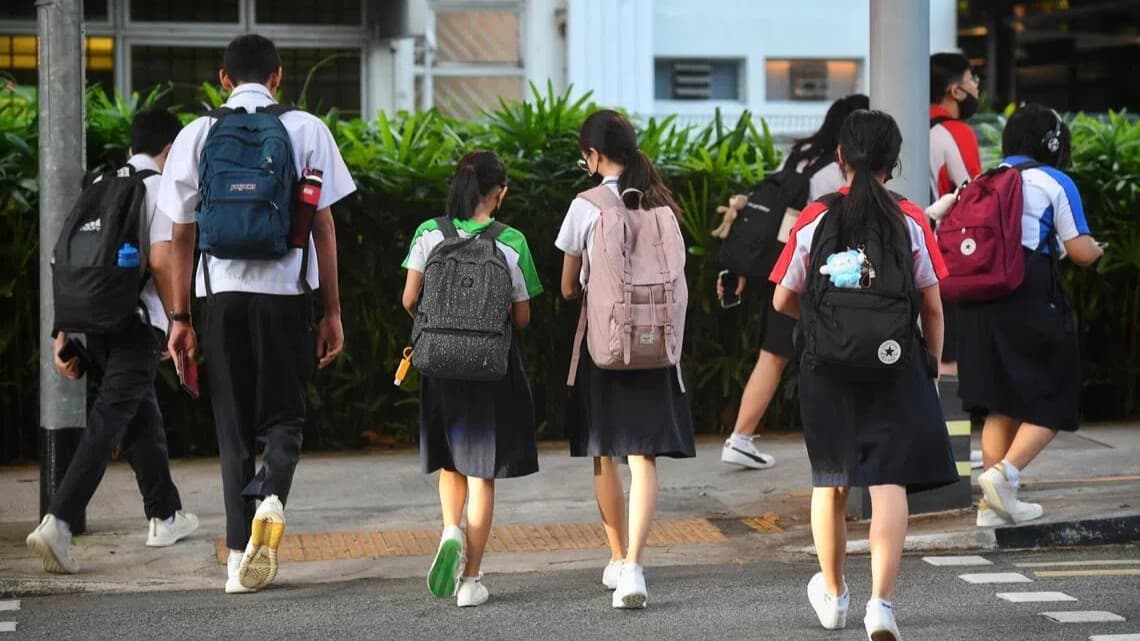
China is preparing to increase admission capacity in senior high schools and universities while reorganizing kindergartens and schools for younger children as declining birth rates reshape student enrolment patterns and resource requirements.
The country is facing contrasting demographic pressures across its education system. Fewer children are entering early education, while larger student groups are approaching senior high school and university, a senior government official said.

Huang Weiru, deputy director of the social development department at the National Development and Reform Commission (NDRC), explained the government's approach during a news conference on Nov 10. She said changing population trends required adjustments to educational infrastructure and enrolment capacity.
The strategy involves reducing excess capacity in certain stages of schooling while directing additional resources towards institutions experiencing growing demand.
China is also placing education reforms at the center of its efforts to sustain high-quality economic growth despite a declining population. Policymakers are increasingly emphasizing scientific literacy, cultural development and vocational capabilities to strengthen the country's talent pool amid global competition.
“During the 15th five-year period, supply-demand tensions in senior high schools and higher education will intensify,” Huang said, referring to the 2026-2030 economic planning cycle.
To accommodate the expected increase in demand, authorities plan to expand senior high school capacity through new construction, renovation of existing facilities and more efficient use of available infrastructure.
University admissions will also increase, with particular attention to expanding enrolment at leading institutions, Huang said.
Xiong Bingqi, director of the 21st Century Education Research Institute, estimated that the number of students entering senior high schools would continue increasing until around 2029. University admissions, meanwhile, are projected to reach their peak around 2032.
He attributed the pressure on educational infrastructure to demographic changes and growing expectations among families for greater access to senior high schools and undergraduate programs.
“Under the dual influence of demographic trends and rising parental expectations for higher high-school admission rates and undergraduate places, increasing the supply of these resources is an inevitable practical choice,” Xiong said.
China plans to expand research universities and vocational colleges
Alongside increasing admission capacity, the government intends to support research-oriented universities and specialized vocational institutions offering undergraduate degrees, Huang said.
The move comes as China places greater emphasis on scientific research, technological innovation and the development of highly skilled professionals.
Several research-focused universities backed by wealthy entrepreneurs have emerged in recent years, reflecting growing private investment in the country's scientific and technological ambitions.
Qiantang University in Hangzhou is among the latest examples of this trend. Nongfu Spring founder Zhong Shanshan has pledged financial support worth 40 billion yuan (US$6 billion) over 10 years to establish the institution.
According to an education plan released by the Zhejiang provincial government last week, the university aims to become a “high-starting-point, research-driven, internationally oriented and small yet excellent” institution.
The proposed institution reflects China's broader push to strengthen research capabilities and develop universities with specialized academic priorities.
Falling enrolment prompts changes in primary and junior schools
While senior high schools and universities are preparing for increased student numbers, institutions catering to younger children are confronting the opposite situation.
At a briefing on Nov 11, officials discussed ways to manage surplus educational infrastructure as declining enrolment leaves some schools and kindergartens with fewer students.
Huang said enrolment across kindergartens, primary schools and junior high schools declined by nearly 17 million students between 2021 and 2025.
Rather than simply reducing educational resources, authorities plan to encourage smaller classroom sizes and repurpose buildings that are no longer required for regular teaching.
Unused school infrastructure could be converted into facilities for labor education, arts and other extracurricular activities, Huang said. The approach aims to improve learning environments and educational quality while adjusting to falling student numbers.
The proposed changes reflect the government's attempt to redistribute educational resources according to changing enrolment patterns rather than apply uniform reductions across the school system.
Declining birth rates reshape China's education priorities
China's education planning is closely linked to wider demographic concerns, with the country's total population declining since 2022.
The national leadership has repeatedly emphasized “high-quality population development” as an important requirement for sustaining long-term economic growth.
At a State Council meeting late last month, Premier Li Qiang highlighted the need to strengthen people's scientific knowledge, cultural attainment and vocational skills.
Official birth statistics illustrate the scale of the demographic shift. Annual births remained between 15 million and 16.5 million from the early 2000s through the mid-2010s.
The introduction of the nationwide two-child policy in 2016 triggered a temporary increase in births. However, the upward trend did not continue, and birth numbers subsequently declined sharply.
By 2025, China recorded just 7.92 million births, less than half the figure reported approximately a decade earlier.
The number also represented the country's lowest annual birth count since 1949, highlighting the demographic pressures confronting its education system.
As student populations change across different age groups, China is seeking to balance additional places in higher education with the efficient use of facilities serving younger children.
The government's approach combines infrastructure expansion, institutional development and resource redistribution to respond to changing enrolment patterns while supporting its broader economic and workforce objectives.

University of Sharjah deepens UAE-Australia ties through cultural and academic exchange

Chhath Puja 2026: Delhi Declares November 16 Holiday, Bihar Schools to Reopen on November 18

Abu Dhabi to train 250 Emiratis annually for inclusive education roles
National Education Day 2026: History, Significance, Celebrations and Maulana Abul Kalam Azad’s Legacy

French students block 49 schools in renewed protest over learning conditions

UK regulator warns universities to protect degree standards as AI reshapes student assessments

Assam clears key education reforms, healthcare funding and employee welfare measures

India-Japan MIRAI-Setu program connects IIT students with Japanese universities and industries
Indian Railways Announces 31 Special Trains from Delhi Amid Chhath Puja Rush; Bihar and UP Passengers Get Relief
Fewer children, more university aspirants: China plans major education system overhaul

University of Sharjah deepens UAE-Australia ties through cultural and academic exchange
Chhath Puja 2026: Delhi Declares November 16 Holiday, Bihar Schools to Reopen on November 18
Abu Dhabi to train 250 Emiratis annually for inclusive education roles
National Education Day 2026: History, Significance, Celebrations and Maulana Abul Kalam Azad’s Legacy
French students block 49 schools in renewed protest over learning conditions
UK regulator warns universities to protect degree standards as AI reshapes student assessments
Assam clears key education reforms, healthcare funding and employee welfare measures
India-Japan MIRAI-Setu program connects IIT students with Japanese universities and industries
Indian Railways Announces 31 Special Trains from Delhi Amid Chhath Puja Rush; Bihar and UP Passengers Get Relief
Fewer children, more university aspirants: China plans major education system overhaul
Copyright© educationpost.in 2026 All Rights Reserved.