


The WorldGrad Co-Founder Amit Garga explores why Indian students prioritize ROI and employability over destination prestige, turning toward hybrid pathways and regional hubs like Singapore and the UAE.
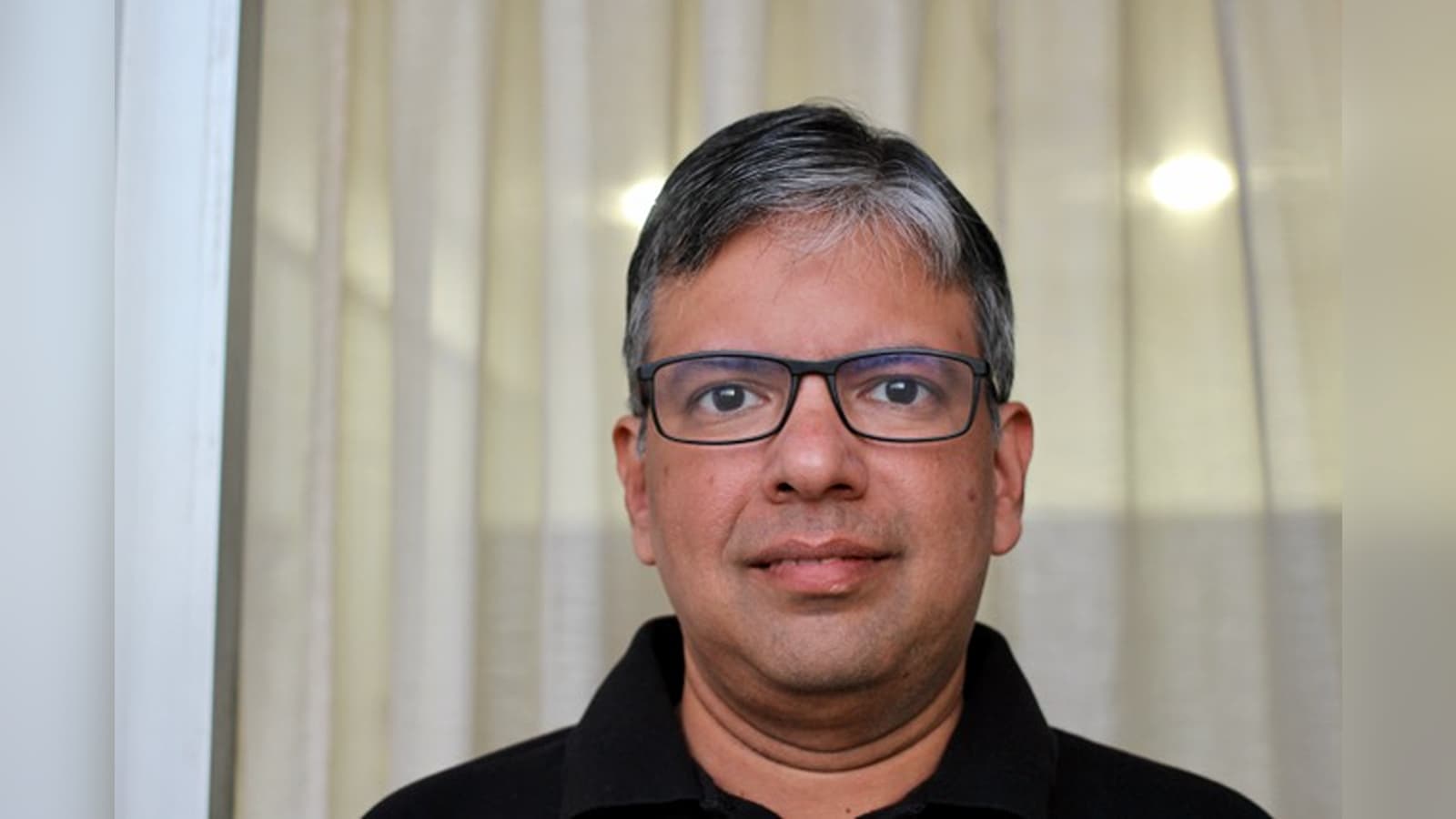
Amit Garga, Co-Founder of The WorldGrad, speaking on the future of international education and pathway programs
International education is undergoing a shift as Indian students look beyond destination and university prestige to examine cost, employability, curriculum and long-term career outcomes. Amit Garga, Co-Founder of The WorldGrad, discusses how this changing mindset is reshaping decisions around overseas education, from the rise of pathway and transnational models to growing interest in emerging education hubs such as Singapore and the UAE. In this interview with Education Post’s Prabhav Anand, Garga examines India’s evolving role in global higher education and the skills students will need as AI transforms learning and the workplace. At the centre of the conversation is a broader question: how can global education become more flexible, purposeful and accessible?
1. Indian students are becoming more career-focused when choosing overseas education. How is this changing the way they evaluate universities, countries and courses?

The biggest change is that students are no longer choosing the destination first; they are increasingly focused on the outcome. A decade ago, the conversation might have begun with, “Which country should I go to?” Today, it increasingly begins with, “What do I want to study, what kind of career I want, and which route offers the strongest return on my investment?”
This is changing the hierarchy of factors in the decision-making process. University rankings and reputation still matter, but they are no longer sufficient. Students are looking at the curriculum, industry exposure, internship opportunities, graduate employment prospects, post-study work policies and the overall cost of completing a degree. They are also becoming more conscious of whether a course has relevance in the labour market.
For example, a student considering a business or technology programme may ask whether the curriculum includes applied learning, data and AI capabilities, opportunities to work with industry, and meaningful employer connections. Similarly, the choice of country is increasingly being evaluated against the career ecosystem it offers rather than simply its global popularity.
I see this as a maturation of the Indian international education market. Families are seeking greater clarity on the value chain, from tuition fees and qualifications to employability. Universities that cannot clearly articulate the relationship between these factors may find it harder to compete, irrespective of their rankings.
2. You have highlighted employability as an increasingly important factor in international education. What should universities do differently to ensure degrees translate into meaningful career outcomes?
Universities need to move away from treating employability as a final-year activity. A student cannot spend three or four years focusing almost exclusively on academics and then expect the career services department to make them job-ready in the final few months.
Employability needs to be considered from the beginning of a programme. Several international universities have moved in this direction by bringing greater industry engagement and practical learning into the student experience, although there is still scope to make these approaches more widespread. This means involving industry more closely in curriculum design and giving students opportunities to work on real-world projects, internships, case studies, simulations and multidisciplinary problem-solving. It also means helping students understand how to apply academic knowledge in ways that demonstrate practical capabilities to employers.
Another important consideration is greater clarity around student outcomes, where possible. Students would benefit from knowing not only where graduates are employed, but also the kinds of roles they move into, the sectors they typically enter, the level of industry exposure included in a programme and the career support available to international students. At the same time, the amount of information universities can share may vary across markets because of regulatory and data-privacy requirements. The focus, therefore, should be on providing students with as much meaningful and comparable information as institutions are permitted to share, enabling them to make more informed decisions.
AI makes this even more important. As technology increasingly automates parts of knowledge work, a degree on its own may be a less distinctive differentiator than it once was. Universities therefore need to equip graduates with a combination of domain knowledge, analytical thinking, communication skills, technological fluency and the ability to solve problems in ambiguous environments.
The real test of an international degree is no longer simply, “Where did you study?” but, “What can you do because you studied there?”
3. The cost of studying abroad remains a major barrier for Indian students. Can pathway and hybrid models make global education significantly more accessible without compromising academic quality?
Absolutely, I think the more important question today is whether students necessarily need to follow the traditional “move abroad from day one” model to access a high-quality international degree.
The conventional model brings together a significant financial commitment right at the beginning international tuition, accommodation, living expenses, travel and other relocation costs. For many Indian families, the issue is not whether they value international education; it is whether they can comfortably absorb the entire cost of an overseas education from the first year.
This is where transnational education and structured pathway models can play an important role. By allowing students to begin their academic journey in India and transition to an international university at a later stage, these models can reduce the initial cost of international education while retaining the opportunity for students to experience an overseas campus.
We have seen through our work at The WorldGrad that there is a growing appetite for this kind of flexibility. Students and parents are increasingly open to a model where the international journey is not necessarily a single move, but a carefully structured progression from one academic environment to another. This is what we have embedded in our four pathway programs
However, affordability cannot come at the expense of academic integrity. The pathway needs to be designed as one coherent academic journey, with clearly defined curriculum, credit transfer, progression requirements and degree outcomes. Students should know from the beginning where the pathway leads and what they need to achieve at each stage.
There is also a strong student-readiness argument. Starting the first part of a degree in India can give students time to develop greater academic independence, confidence and familiarity with international pedagogy before making the transition overseas. For an 18-year-old, that can be a meaningful advantage rather than simply a financial one.
So, I would not look at pathway models as merely a cheaper alternative to studying abroad. Their larger value lies in creating a more flexible architecture for international education one that allows students to combine affordability, global exposure and academic continuity.
Ultimately, if transnational models can bring down the financial barrier while preserving the academic standards, international credentials and overseas experience students are seeking, they can make global education accessible to a much broader section of Indian students.
4. Students are increasingly looking beyond traditional destinations such as the US, UK and Australia. What emerging destinations or education markets do you see gaining momentum among Indian students?
I would frame this less as students abandoning traditional destinations and more as students becoming much less destination-loyal.
The US, UK and Australia continue to have significant advantages in terms of university depth, global recognition and established alumni networks. However, students are now much more willing to consider alternatives if another country offers a stronger combination of academic quality, affordability, employability and post-study opportunities.
This is why we are seeing greater consideration of regional education hubs such as Singapore and the UAE. Singapore offers proximity to India, a strong business ecosystem and access to internationally oriented programmes, making it an attractive option for students seeking a global education experience closer to home. The UAE, meanwhile, is emerging as an increasingly important higher-education hub, supported by its proximity to India, growing international university presence and expanding economy. For students, these markets offer the opportunity to pursue internationally aligned education while remaining closer to home and, in many cases, accessing a more cost-conscious and regionally relevant pathway
The underlying driver is not geography; it is Return on Investment. Students are becoming more deliberate about comparing the quality of the program, total cost of education, access to industry, employment opportunities and the broader ecosystem they will enter after graduation.
Another factor is that students are increasingly separating the idea of “international exposure” from simply living abroad for three or four years. If a student can access an internationally recognised university, curriculum and peer network through a more flexible model, the geographical decision becomes less binary.
I expect this trend to continue because Indian students have become much more informed consumers of international education. They are comparing not just universities or countries, but the entire cost-to-outcome equation. This will increasingly force education markets to compete on the substance of what they offer—academic quality, industry exposure, career outcomes and overall value—rather than destination branding alone.
5. India is moving from being primarily a source of international students to becoming a destination for global education through international branch campuses and transnational programmes. How significant is this shift?
I think this is more than simply an expansion of India’s higher-education sector it represents a change in the direction of student mobility.
For a long time, the assumption was that if an Indian student wanted a globally recognised education, the student had to leave India. That assumption is now being challenged. With international universities establishing campuses in India and transnational models allowing students to begin their degree here and complete it overseas, the international education experience is becoming increasingly distributed across geographies.
What is particularly interesting is that these models address two very different needs in the Indian market. International branch campuses bring global institutions closer to students who may want an international academic environment without immediately relocating. Transnational pathways, meanwhile, allow students to stage their international education, rather than making the entire financial and personal commitment on day one.
We are seeing this shift reflected in the kinds of questions families ask. Earlier, the conversation was often about which foreign university can my child get into? Increasingly, it is becoming what is the most sensible route to that university? That is a meaningful change in consumer behaviour.
For India, the opportunity is much larger than simply retaining students who might otherwise go overseas. A mature transnational ecosystem can allow Indian institutions and international universities to collaborate on curriculum, faculty, credits, mobility and delivery, creating multiple routes into global higher education.
I therefore see India evolving from being primarily a student-export market to becoming part of the global delivery infrastructure for higher education. The scale of India's student population makes that shift particularly significant.
6. With AI and rapid changes in the global job market, what skills should Indian students develop before they enter an international university and eventually the global workforce?
I would actually challenge the idea that students need to arrive at university already “AI-ready” in the narrow sense. The more important preparation is learning how to think in an environment where AI can produce an answer in seconds.
Students entering university today will have access to tools that can write, code, analyse data, summarise research and generate presentations. The differentiator will therefore move away from simply producing an output. It will be the ability to determine whether the output is correct, what question should have been asked in the first place, and what decision should follow from it.
That makes critical thinking and problem formulation particularly important. Students should be comfortable breaking an unfamiliar problem down, questioning assumptions, working with evidence and defending their conclusions. These capabilities become even more important in an international university, where learning is often discussion-led and project-based rather than dependent on memorisation.
I would also encourage students to develop strong communication and collaboration skills before they leave India. International classrooms bring together students with different academic systems, cultures and ways of expressing ideas. Being able to present a point of view, disagree constructively, work across cultures and contribute to a team is a genuine employability skill.
And finally, students need to become comfortable with continuous learning. A degree should no longer be viewed as the final acquisition of knowledge; it is increasingly the foundation for repeatedly acquiring new knowledge throughout a career.
So, if I had to reduce it to a few priorities, I would say: domain depth, AI fluency, critical thinking, communication and adaptability. AI will change the tools students use, but these underlying capabilities will determine how effectively they use them.
7. Looking ahead, what do you believe will define the next phase of international education from India—greater affordability, technology-enabled pathways, global university partnerships, or something else?
I believe we are already in the Next Phase. The biggest change is here. We are rapidly moving from a single “study abroad” model to a portfolio of international education pathways.
For a long time, the international education journey was fairly standardised: students selected a foreign university, moved overseas after school and completed the full degree there. But that model does not adequately address the diversity of the Indian market. The student who wants a global degree and has the financial ability to relocate immediately has very different requirements from a student who has the academic ambition but wants to manage the cost and transition more carefully.
That is why I expect pathway programs, transnational education, hybrid delivery, international branch campuses and credit mobility to become much more mainstream. These are not simply alternate formats of delivery; they give students more control over when, where and how they undertake different parts of their education.
The other significant change will be greater scrutiny of the economics of international education. Families will increasingly evaluate the total investment not just tuition fees, but living costs, duration overseas, financing requirements and ultimately career outcomes. That will make value-for-money a much more important competitive factor for universities.
Technology will support this transition, but I don't think technology itself is the story. The real story is choice. Students will increasingly expect international education to be modular, flexible and responsive to their circumstances, rather than a one-size-fits-all experience.
From what we are seeing at The WorldGrad, the demand for such flexibility is already becoming more visible. Students are not necessarily asking for less international education; they are asking whether there is a smarter way to access it. We are proud to support Indian students by making global education more accessible and affordable.
That, in my view, will define the next phase of the market: not simply more students going abroad, but more ways for Indian students to access global education, with greater control over cost, mobility and the overall academic journey.
Global education is shifting from simply going abroad to creating more flexible routes to opportunity
IIT Bombay invites applications for 30 counsellor posts to expand student mental health support

Delhi Police files FIR against Congress MP Bimol Akoijam over JNU sexual harassment allegations

Ireland grants study visas to three Palestinian students from Gaza after appeals
SRM Univ AP expands research footprint with 20 faculty members named to World’s Top 2% Scientists list
Global education is shifting from simply going abroad to creating more flexible routes to opportunity
Delhi Police files FIR against Congress MP Bimol Akoijam over JNU sexual harassment allegations

Utkal University tightens security after late-night explosions ahead of student polls

IET India Scholarship Award 2026: DTU’s Kush Garg wins top honor for AI device for neurodivergent children

Erasmus Days 2026 celebrates international learning and skills for the future

Global education is shifting from simply going abroad to creating more flexible routes to opportunity
IIT Bombay invites applications for 30 counsellor posts to expand student mental health support
Delhi Police files FIR against Congress MP Bimol Akoijam over JNU sexual harassment allegations
Ireland grants study visas to three Palestinian students from Gaza after appeals
SRM Univ AP expands research footprint with 20 faculty members named to World’s Top 2% Scientists list
Global education is shifting from simply going abroad to creating more flexible routes to opportunity
Delhi Police files FIR against Congress MP Bimol Akoijam over JNU sexual harassment allegations
Utkal University tightens security after late-night explosions ahead of student polls
IET India Scholarship Award 2026: DTU’s Kush Garg wins top honor for AI device for neurodivergent children
Erasmus Days 2026 celebrates international learning and skills for the future
Copyright© educationpost.in 2026 All Rights Reserved.