


Prof. Saraju P. Mohanty discusses the necessity of problem-driven research, Security-by-Design for IoT, smart agriculture innovations, and transforming SRM University-AP into India’s first AI-native institution.
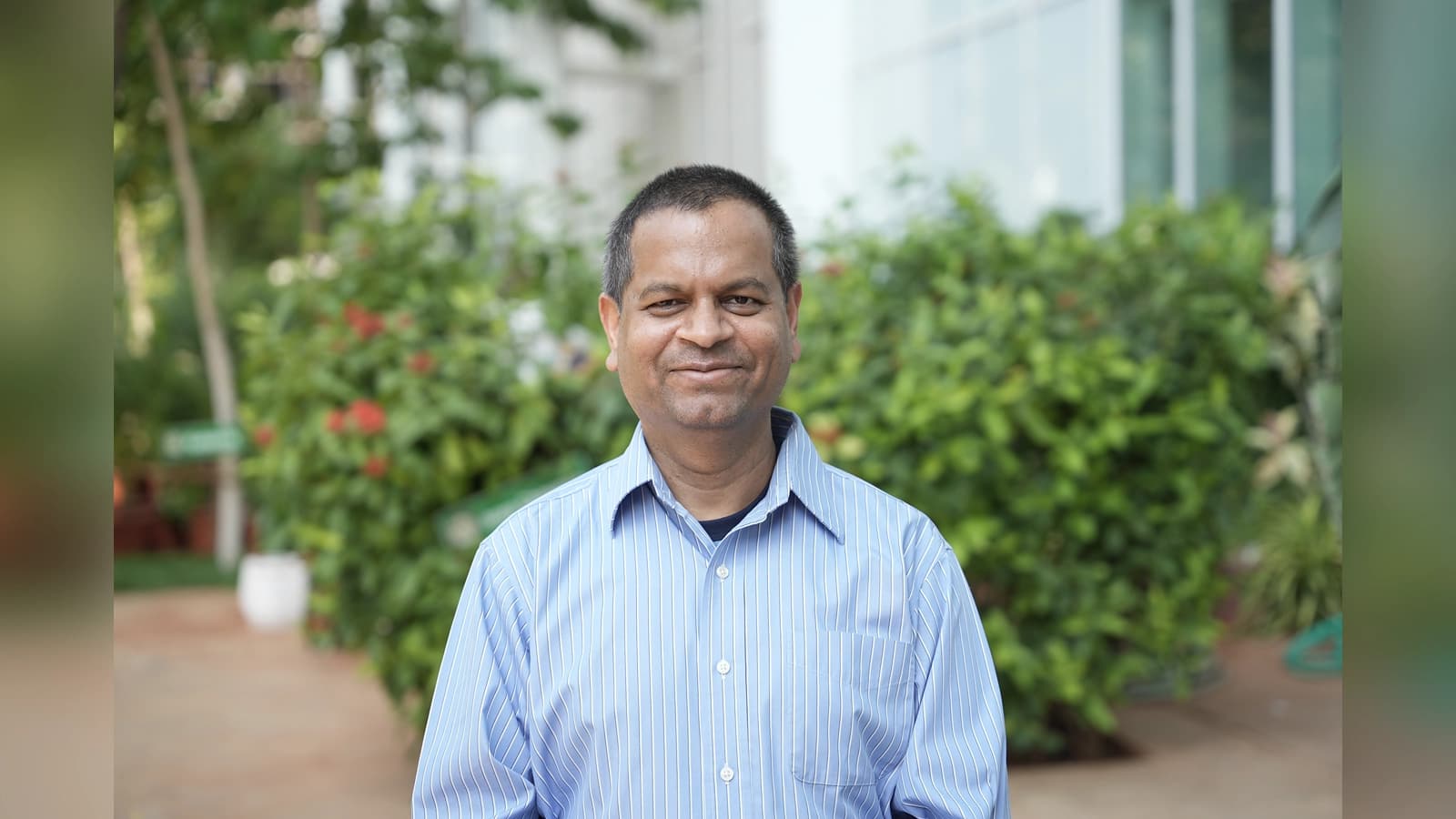
• Prof. Saraju P. Mohanty, Dean of AI at SRM University-AP, discussing artificial intelligence and engineering research
As engineering education undergoes a major transformation in the age of artificial intelligence, questions around cybersecurity, smart systems, rural innovation, and industry-ready research have become more relevant than ever. In this conversation, Prof. Saraju P. Mohanty, Dean - AI, SRM University, Andhra Pradesh shares his perspective with Education Post’s Prabhav Anand on the future of engineering and technology, highlighting the need for stronger cybersecurity, AI-driven smart systems, and research that focuses on solving real-world problems rather than merely increasing publication numbers. He discusses the growing role of AI in agriculture, the importance of building secure IoT ecosystems, and the distinction between using AI tools and truly understanding AI engineering. He also outlines how institutions can prepare students for an AI-driven future while fostering innovation that addresses India's unique challenges.
1. You have often spoken about the importance of AI and smart systems working at the “edge” instead of depending fully on the cloud. Do you think Indian engineering colleges are still focusing too much on software and not enough on areas like embedded AI, chips, and smart hardware systems?

Both Edge computing and Cloud computing need an appropriate combination of hardware and software to be operational. Edge computing needs light duty hardware whereas cloud computing need heavy duty hardware. Correspondingly the software running on them have different features and capabilities. I think educational Institutes of India are covering both software aspects as well as hardware aspects. Of course, there is a notion that focus on software is more may be job market dictates these aspects.
2. Your research focuses a lot on making smart systems energy-efficient, secure, and intelligent. In today’s technology world, where do you think India is still lacking the most — energy efficiency, cyber security, or smart system design?
In all these technologies India is in a progressive way. Hopefully, in current few years India will be in advanced stage. This can be possible if more research can be occurred in all these sectors with the supports of Industry and academia. In my view energy efficiency aspects lots of progress has been made we are using electric vehicle, solar power, etc. along with low-power hardware. Cyber security aspects can further improve. Smart systems with integrated AI, development of own LLM in India are still long way to go.
3. In your previous talks, you highlighted the need for stronger security at the device level in IoT systems. As smart devices become part of healthcare, agriculture, and cities, do you think cyber attacks in the future could start affecting real-world public safety as well?
Yes, cyber attacks could significantly affect real-world public safety. Let me provide couple of examples. Let us smart grid. If smart grid is hacked then a complete city can be made black out. Let us think about an autonomous vehicle. If it is hacked to manipulate a control signal from “putting a brake” to “slow down” then imagine the consequence. In a smart healthcare if insulin delivery dosage can be changed, imagine the impact on public safety! To overcome these issues, I have promoted a principle called “Security-by-Design (SbD)” to ensure that security is a design axis of any device or system to consider these threats from an early stage, rather than a afterthought.
4. You have worked on smart villages and technology for agriculture. Today, India is aiming to become a global AI and semiconductor hub. How can engineering research help solve rural problems and improve agriculture instead of staying limited to urban industries?
Agriculture is the driver of civilization. We need to do whatever needed to improve agriculture productivity when it is a fact that we loose farmable or cultivatable land due to various reasons including soil erosion, and rapid urbanization. We can integrate various smart agriculture devices, AI tools to enhance agriculture productivity and efficiency. For example, use of automatic irrigation involving right kind of sensors and AI can ensure optimal usage of water. AI with drone can be used to monitor crop damages due go natural calamities. AI with camera can be used for automatic monitoring of crop growth.
5. Having worked in both the US and Indian education systems for many years, what is the biggest difference you see in the way engineering research is done? What changes do Indian institutions still need to make to create globally strong research culture?
In my view engineering research should focus on actual problem solving rather than emphasizing for publications. No doubt publications are important for students. But actual prototypes and products can be transformative to advance society. Institutes can give more emphasis to patents, give emphasis to doing hands on, and solving problems relevant to India.
6. Today, many students are running behind AI because it has become a trend. In your opinion, what is the difference between simply learning AI tools and actually becoming a strong engineer in the AI era?
In my opinion, learning AI tools makes someone an AI application person. May be at best a big data analyzer. AI development overall is not about data analysis only. AI engineering involves lots of backend hardware and software developments as well as modeling. For example, AI needs heavy-duty hardware that some engineer is designing. AI LLM development is a huge effort that AI engineers and scientists are handling.
7. Based on your experience in AI, cybersecurity, IoT, and smart electronic systems, which engineering field do you believe will become most important in the next 10 years but is still not getting enough attention in Indian universities?
AI just started getting attention and is all set to grow in next 10 years. For example, at SRM-AP, as the founding Dean, I am building AI Technology Institute (AiTI) to make SRM-AP India's first AI-Native University that offers core AI programs, certifies each graduating student's AI-working competency, integrates AI in all programs, and incorporates AI in all aspects of academia.

UAE parents urged to check if children truly learn from AI homework

Chennai School Holiday Today: Schools Closed in 5 Tamil Nadu Districts Due to Heavy Rain

Sharjah schools set boundaries for AI use in homework and exams
Palghar Ashram School Accident: Two Students Die, Three Injured After Navratri Fair Visit
Engineering Research Should Focus on Actual Problem Solving
Sharjah schools set boundaries for AI use in homework and exams

Former MIT scientist wins $6 million defamation verdict in misconduct dispute

McMahon highlights Trump’s push to return education powers to states

Could smarter energy solutions make data centres more sustainable?

Cambridge and AstraZeneca extend joint PhD programme for three years

UAE parents urged to check if children truly learn from AI homework
Chennai School Holiday Today: Schools Closed in 5 Tamil Nadu Districts Due to Heavy Rain
Sharjah schools set boundaries for AI use in homework and exams
Palghar Ashram School Accident: Two Students Die, Three Injured After Navratri Fair Visit
Engineering Research Should Focus on Actual Problem Solving
Sharjah schools set boundaries for AI use in homework and exams
Former MIT scientist wins $6 million defamation verdict in misconduct dispute
McMahon highlights Trump’s push to return education powers to states
Could smarter energy solutions make data centres more sustainable?
Cambridge and AstraZeneca extend joint PhD programme for three years
Copyright© educationpost.in 2026 All Rights Reserved.