


JKLU Dean Dr. Tapas Kumar in this interview with Education Post critiques examination-driven learning, placement metrics, and compliance-heavy OBE while outlining how engineering curricula must adapt for the AI era.
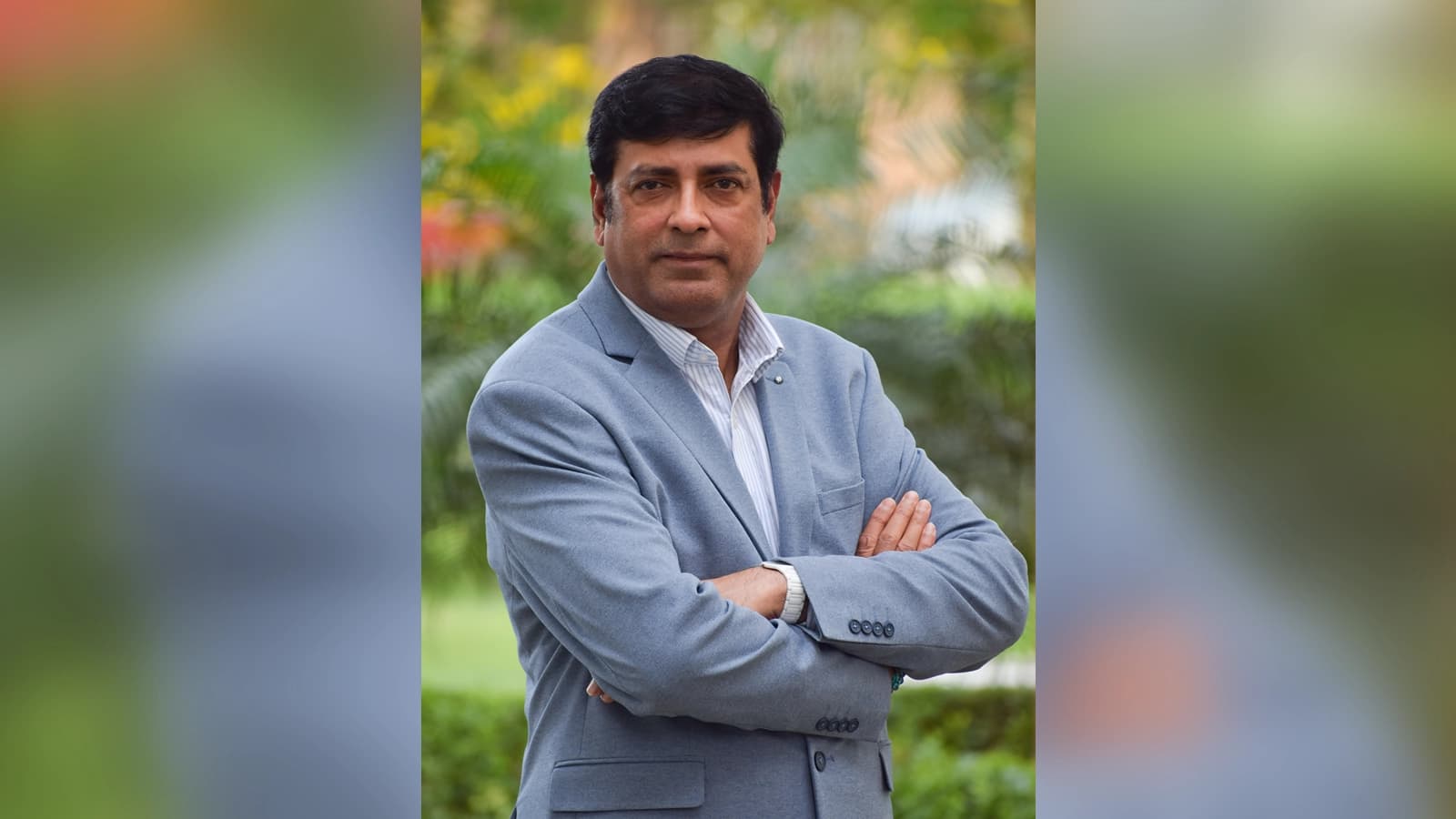
Dr. Tapas Kumar Dean, Institute of Engineering & Technology, JK Lakshmipat University (JKLU), Jaipur
India’s engineering education system continues to face a fundamental challenge: translating classroom knowledge into practical competence. Despite curriculum reforms, technological advances and growing industry partnerships, questions remain about whether institutions are preparing graduates for real-world engineering challenges. Dr. Tapas Kumar, Dean, Institute of Engineering & Technology, JK Lakshmipat University (JKLU), Jaipur, in this interview with Education Post’s Prabhav Anand, examines the shortcomings of examination-driven learning, the uneven adoption of artificial intelligence and the limitations of placement-based performance measures. Drawing on nearly three decades of academic experience, he also discusses research accountability, industry relevance and why universities must prioritise problem-solving over academic credentials.
1. With nearly three decades of experience in engineering education and academic leadership, what do you consider the most persistent weakness in India's engineering education system? Why have successive curriculum reforms struggled to address the gap between classroom learning and practical competence?

The most persistent weakness in India’s engineering education system is the gap between knowing and doing. Over nearly three decades in engineering education and academic leadership, I have observed that many students understand theoretical concepts and perform well in examinations but struggle to apply their knowledge to real-world engineering problems.
Several factors contribute to this gap, including examination-oriented learning, limited experiential education, inadequate laboratory facilities, insufficient problem-solving opportunities, and weak industry-academia collaboration. In many institutions, academic success is measured primarily through marks rather than practical competence, creativity, innovation, and critical thinking.
Although successive curriculum reforms have introduced outcome-based education, project work, and industry-oriented courses, their impact often remains limited because implementation has not kept pace with policy. Traditional teaching methods, outdated infrastructure, and inadequate faculty development frequently undermine the objectives of these reforms.
Engineering education must prioritise project-based learning, design thinking, interdisciplinary projects, internships, and continuous assessment. Students should be encouraged to design, build, test, fail, improve, and innovate.
Equally important are communication, teamwork, adaptability, digital literacy, and lifelong learning. Meaningful transformation requires collective efforts from institutions, faculty, industry, policymakers, and students. Engineering education will truly progress when we move beyond teaching subjects to developing capable, confident, and innovative problem-solvers.
2. As generative AI increasingly takes over routine coding and technical tasks, the skills expected of engineering graduates are changing. Are Indian universities adapting their curricula quickly enough, and what should students learn today to remain relevant in an increasingly AI-driven job market?
Generative AI is transforming how engineers work and redefining their professional responsibilities. While AI can generate code and automate routine tasks, engineers remain essential for asking the right questions, designing reliable systems, and exercising sound judgement.
Indian universities have made a promising start by introducing programmes in artificial intelligence, data science, and machine learning. However, adaptation remains uneven. AI is often taught as a standalone subject rather than integrated across disciplines. Universities need faster curriculum reforms, faculty development, modern infrastructure, and stronger industry collaboration.
Students must recognise that AI does not diminish the importance of engineering fundamentals. Mathematics, algorithms, computational thinking, programming principles, and domain expertise remain essential for evaluating AI-generated solutions for accuracy, security, efficiency, and reliability.
To remain relevant, graduates should develop AI and data literacy, cybersecurity awareness, systems thinking, creativity, communication, teamwork, and ethical decision-making. Practical experience through projects, internships, research, and industry engagement is equally important.
The most successful engineers in the AI era will combine technical depth with critical thinking, adaptability, creativity, and lifelong learning. Universities must prepare students not merely to use AI tools, but to understand, evaluate, and apply them responsibly.
3. Outcome-Based Education (OBE) has become an important part of engineering education, yet questions remain about how effectively learning outcomes are measured. Are universities genuinely assessing students' problem-solving abilities, or has the approach become another accreditation exercise focused on documentation and compliance?
Outcome-Based Education (OBE) has strengthened Indian higher education by establishing clear learning expectations and connecting teaching, assessment, and curriculum improvement. Its central principle is shifting the focus from what is taught to what students actually learn.
However, in some institutions, OBE has become documentation-driven, with excessive emphasis on Course Outcome mapping, Programme Outcome attainment, spreadsheets, and accreditation compliance. Well-prepared reports do not necessarily demonstrate that students can solve engineering problems or apply knowledge in unfamiliar situations.
The challenge lies not in OBE itself but in its implementation. For example, instead of merely testing theoretical knowledge of image processing, students could develop an image-based system to detect defects in manufactured components. Their ability to design solutions, analyse results, and justify decisions would provide more meaningful evidence of learning.
Authentic assessments, including laboratory investigations, design challenges, simulations, capstone projects, and real-world assignments, must complement conventional examinations. Clear assessment rubrics, constructive feedback, and continuous evaluation can further strengthen learning.
Faculty and academic leaders must ensure that outcomes guide teaching, assessment, and curriculum development. Ultimately, OBE should be measured not by accreditation documentation but by students’ demonstrated ability to analyse, innovate, design, and solve complex engineering problems confidently.
4. Engineering institutions frequently highlight placement percentages, salary packages and industry partnerships. However, these figures may not fully reflect graduates' employability. What should universities disclose about placement quality, actual job roles and long-term career outcomes to give students a more accurate picture?
Placement statistics and career outcomes are not the same. Although placement percentages, salary packages, and industry partnerships create confidence, they do not always reflect graduates’ professional readiness. Universities must provide a transparent and comprehensive picture of employability.
Institutions should disclose the total number of eligible graduates, placement percentages, median salaries, salary distributions, actual job roles, recruiting sectors, and joining status. They should also clarify whether employment opportunities align with graduates’ engineering disciplines, technical competencies, and career aspirations.
For instance, a mechanical engineering graduate working in product design, manufacturing, or automation may directly apply core engineering knowledge. Another graduate earning a higher salary in an unrelated role may have fewer opportunities to use those skills. Both careers have value, but this distinction helps students understand the relevance of their education.
Universities should also report outcomes related to higher education, research, entrepreneurship, and other career pathways. Information about internships, industry projects, professional certifications, and employer feedback would provide additional insights.
Long-term career tracking can reveal professional growth, skill development, and employment stability. Ultimately, an institution’s success should not be judged solely by first-job placements, but by how well graduates are equipped to build meaningful, relevant, and sustainable careers.
5. Your research interests include artificial intelligence, medical image processing and AI-assisted healthcare systems. Despite growing research in these areas, translating academic innovations into clinical applications remains challenging. What barriers involving clinical validation, patient privacy and technological reliability need greater attention from researchers and policymakers?
The true measure of healthcare AI is not its accuracy in a laboratory, but how safely and meaningfully it improves patient care. Although AI is advancing medical imaging, disease prediction, and clinical decision support, promising research results do not automatically translate into clinical effectiveness.
A major challenge is the diversity of clinical data. Patients, hospitals, diagnostic practices, and medical equipment vary considerably. An AI system trained to detect diabetic retinopathy at one hospital may perform less reliably elsewhere. Therefore, validation across diverse patient populations and clinical settings is essential.
Patient privacy is equally important. Sensitive medical information requires informed consent, secure data sharing, and robust governance. Anonymisation helps protect privacy but cannot eliminate every risk.
Reliability also demands attention. Incorrect predictions, cybersecurity vulnerabilities, and unexplained recommendations can compromise patient safety and clinician confidence. AI systems must undergo rigorous evaluation, continuous monitoring, and appropriate human oversight.
Addressing these challenges requires multicentre clinical studies, independent validation, collaboration between engineers and clinicians, and effective regulatory oversight.
AI should strengthen clinical judgement rather than replace it. Researchers and policymakers must prioritise measurable improvements in diagnostic accuracy, treatment decisions, accessibility, and patient outcomes. Ultimately, healthcare innovation succeeds when technological capability is matched by scientific evidence, ethical responsibility, and accountability. AI must be safe, reliable, and worthy of human trust.
6. Indian universities are increasingly encouraging patent filings, entrepreneurship and industry-funded research. However, many academic innovations struggle to move beyond publications and prototypes. What changes in research funding, evaluation and institutional incentives are necessary to ensure that university research produces measurable benefits for society?
Research output and research impact are not the same. Publications generate knowledge and patents protect innovations, but the true value of research lies in addressing real-world challenges and improving people’s lives. Indian universities must move beyond counting publications and patents towards translating research into practical outcomes.
Promising innovations often remain prototypes because of limited funding for product development, field testing, validation, regulatory approval, and commercialisation. Research funding should support the entire innovation journey, from fundamental research to pilot implementation and societal deployment. Seed grants, technology incubators, testing facilities, and industry co-investment can bridge this gap.
Research evaluation must also evolve. Publications and patents remain valuable, but they should be complemented by technology transfer, licensed innovations, successful start-ups, industry adoption, policy contributions, and measurable social benefits.
For example, a university-developed healthcare AI tool should be evaluated not only for accuracy but also for reliability across hospitals, affordability, safety, and contribution to patient care.
Institutional incentives should encourage translational research without compromising academic rigour or fundamental inquiry. Stronger industry partnerships, interdisciplinary collaboration, and professional technology-transfer support can accelerate adoption.
Ultimately, universities must value innovation not merely for its academic output but for its societal impact. Research succeeds when knowledge becomes practical, sustainable, inclusive, and beneficial to people.
7. In an earlier interview with SugerMint, you stated that "the future belongs to institutions that successfully combine academic rigor with industry relevance." Given the increasing pressure on universities to produce job-ready graduates, where should institutions draw the line between meeting immediate industry demands and preserving fundamental knowledge, independent thinking and long-term academic learning?
Universities should not choose between academic excellence and employability; they must integrate both. Engineering education should prepare students for current industry demands while equipping them to navigate an uncertain future.
Strong foundations in mathematics, science, engineering principles, and critical thinking remain essential. These should be complemented by specialised technical skills, interdisciplinary learning, and exposure to emerging technologies.
Connecting classroom learning with real-world applications is equally important. Internships, collaborative projects, expert mentoring, and industry-defined assignments help students apply theoretical knowledge effectively.
For example, developing a solar energy optimisation system enables students to combine electrical engineering, data analytics, and artificial intelligence to improve energy efficiency while developing practical problem-solving skills.
However, universities must avoid allowing short-term industry trends to dictate entire curricula. Future engineers also need creativity, research orientation, ethical judgement, communication skills, and a commitment to lifelong learning.
Achieving this balance requires sustained collaboration between academia and industry, along with regular curriculum updates that preserve academic depth and independent thinking.
Ultimately, engineering education should be measured not merely by placement rates or starting salaries, but by graduates’ ability to innovate, adapt, and contribute meaningfully to society. The goal is to develop engineers who possess the knowledge and creativity to shape the future, rather than simply respond to technological change.

The Most Persistent Weakness in India’s Engineering Education System Is the Gap Between Knowing and Doing

Study in India 2027: Top Universities, Courses, Fees, Scholarships and Career Opportunities

Study in Singapore 2027: Top Universities, Fees, Scholarships, Student Visa and Jobs for Indian Students

French education institutions face December deadline to retain apprenticeship-tax funding eligibility

From “write a thesis” to “build something”: IIT Ropar’s new PhD route
The Most Persistent Weakness in India’s Engineering Education System Is the Gap Between Knowing and Doing
Study in Singapore 2027: Top Universities, Fees, Scholarships, Student Visa and Jobs for Indian Students

Study in Taiwan 2027: Top Universities, Fees, Scholarships, Student Visa and Jobs for Indian Students

Study in Hong Kong 2027: Top Universities, Fees, Scholarships, Visa and Career Opportunities for Indian Students

Study in South Korea 2027: Top Universities, Fees, Scholarships, Visa and Career Opportunities for Indian Students

The Most Persistent Weakness in India’s Engineering Education System Is the Gap Between Knowing and Doing
Study in India 2027: Top Universities, Courses, Fees, Scholarships and Career Opportunities
Study in Singapore 2027: Top Universities, Fees, Scholarships, Student Visa and Jobs for Indian Students
French education institutions face December deadline to retain apprenticeship-tax funding eligibility
From “write a thesis” to “build something”: IIT Ropar’s new PhD route
The Most Persistent Weakness in India’s Engineering Education System Is the Gap Between Knowing and Doing
Study in Singapore 2027: Top Universities, Fees, Scholarships, Student Visa and Jobs for Indian Students
Study in Taiwan 2027: Top Universities, Fees, Scholarships, Student Visa and Jobs for Indian Students
Study in Hong Kong 2027: Top Universities, Fees, Scholarships, Visa and Career Opportunities for Indian Students
Study in South Korea 2027: Top Universities, Fees, Scholarships, Visa and Career Opportunities for Indian Students
Copyright© educationpost.in 2026 All Rights Reserved.