


Dr. Arya Kumar Bhattacharya discusses why universities must balance core engineering fundamentals with interdisciplinary AI innovation and sustainable, industry-ready research over short-lived technical trends.
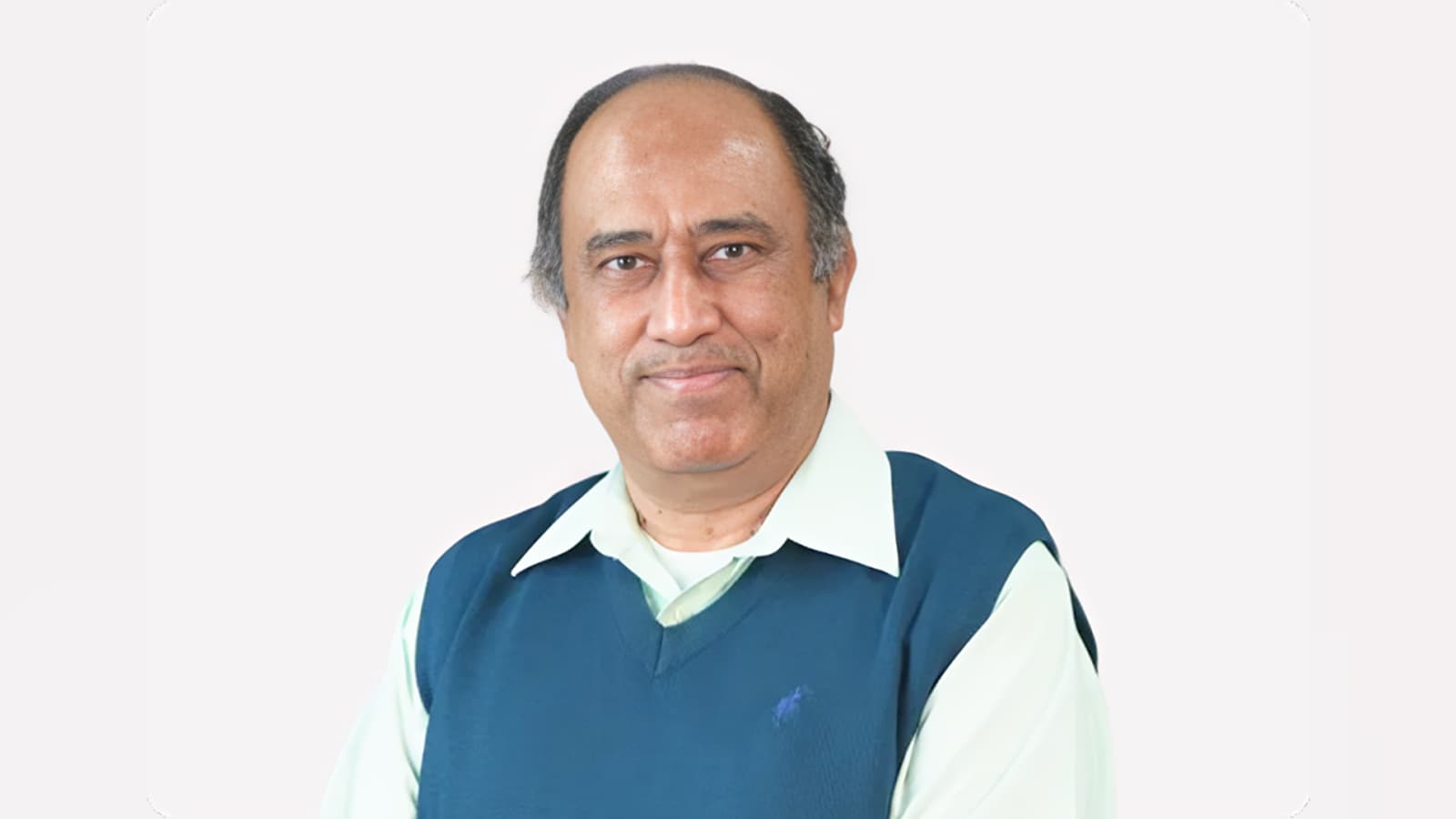
Dr. Arya Kumar Bhattacharya, Dean of Research and Development at Mahindra University's Ecole Centrale School of Engineering
As engineering education undergoes a profound transformation in the age of artificial intelligence, automation, and cyber-physical systems, institutions are being challenged to rethink how they prepare students for an increasingly complex future. In this conversation, Dr. Arya Kumar Bhattacharya, Dean, Research and Development, Ecole Centrale School of Engineering, Mahindra University discusses with Education Post’s Prabhav Anand about the evolving relationship between academia and industry, the growing importance of interdisciplinary research, and the need to move beyond knowledge creation toward innovation-driven outcomes. He also shares his perspectives on AI literacy, digital twins, sustainability challenges posed by emerging technologies, and the foundational role engineering education must continue to play in preparing graduates for long-term careers.
1. You have worked across defence, transportation, manufacturing, and academia. Looking at engineering education today, what are the biggest research habits that universities still fail to teach students, despite industry demanding them urgently?

Research and innovation are crucial aspects of higher education along with interdisciplinary problem-solving skills as they boost employability and global competitiveness. Students are often trained to solve well-defined problems rather than discover and define problems themselves. A proper foundation is significant for engineering students to prosper. Universities need to put more emphasis on evidence-based decision making. Research is about questioning assumptions, validating hypotheses and generating results. Universities need to train students to evaluate limitations and implications of the findings. Modern engineering students require interconnected ecosystems and they must view technology as a part of the same system.
A crucial aspect of research in industry is to search for and arrive at the root cause of any undesirable observations. This aspect is usually neglected in University / academia - based research, primarily because that is not a priority. From an early stage, we encourage students at Mahindra University to engage in inter-disciplinary projects and industry-linked research. In today’s innovation-driven economy, this helps students to develop the knack of looking at issues from first principles and evaluate cause-and-effect relationships, develop curiosity and analytical rigour. We also offer global immersion programmes, that provide students opportunities to collaborate with world-class universities.
2. Much of your work focuses on AI-driven digital twins and the real-time replication of complex physical systems. As engineering moves toward cyber-physical ecosystems, do you believe traditional discipline-based engineering departments will eventually become obsolete?
From isolated physical machinery to dynamic cyber physical ecosystems, engineering is witnessing a shift called Industry 4.0 that is allowing systems to perceive, predict as well as autonomously adjust to real-world environments. The fundamentals of traditional engineering disciplines are indispensable; the change is the way they interact. Inherently multidisciplinary technologies include intelligent manufacturing, smart infrastructure, autonomous systems and digital twins, among many others. For instance, expertise in sensors, artificial intelligence, data analytics, control systems and domain specific engineering expertise is needed for developing a digital twin.
Flexible structures along with core disciplines enable collaboration across departments and universities must integrate disciplinary depth with interdisciplinary integration. We motivate our students to tackle challenges through critical thinking. Fuelled by experiential learning, students are empowered to become global thinkers.
3. Engineering institutions are rapidly adding AI and Machine Learning courses, but research output often remains disconnected from industrial deployment. What structural changes are required to transform engineering campuses from knowledge creators into innovation producers?
Many engineering campuses lack translational mechanisms which is one of the main reasons behind the disconnection. They do not have the systems required for moving discoveries from laboratories into practical deployment. The structural changes needed to transform engineering campuses from knowledge creators into innovation producers include stronger industry participation throughout research lifecycle, robust innovation infrastructure that supports technology and maturation, evolution of performance metrics. These together with patents, technology transfers, industrial collaborations, incubation of start-ups are a vital step in become innovation producers.
For knowledge creation, we actively encourage students and faculty members to pursue academic publications and intellectual property generation. To translate ideas into ventures and embed practice-led approach to entrepreneurship, Mahindra University’s Atal Incubation Centre and Centre for Entrepreneurship and Innovation (CEI) cultivates research driven enterprise development. Further, many of our faculties have umbilical relations with industry, and this automatically accelerates translation of lab-level innovations to real applications for company bottom-line benefits.
4. Having filed more than twenty patents and spent years leading industrial R&D teams, what distinguishes research that gets published from research that actually changes how industries operate?
Impactful research and published research often service different objectives. Research that gets published usually contributes to new knowledge, advances comprehension and aids in building scientific foundation for future developments. Whereas research that alters the way industry operates addresses a clearly identified operational challenge. Within existing systems, it must showcase scalability, feasibility, ease of integration and economic feasibility. Every problem needs a solution and it must be efficient and must operate consistently.
When scientific rigor is combined with through understanding of operational realities that is when most innovations become successful and we are cultivating this mindset among our students and researchers. Through research dissemination and intellectual property, we are strengthening academic impact as well as innovation. 100 percent of our faculty members are Ph.D. holders; we have over 20 research teams and our research has been published in more than 500 publications.
An important factor to be kept in mind is that research that is published today will become impactful in a commercial sense, tomorrow. One may look upon this as the heights of fruits hanging from a tree. Low-hanging fruits are those than can be plucked and tasted maybe in six-months – these are like immediate industrial benefits. High-hanging fruits will gradually ripen and fall to be tasted much later or can be plucked with difficulty – these are like background research which is published today and will translate into advantages for the company after say 3 to 5 years. Mid-hanging fruits are in-between. There is an established global parlance for this: Technology Readiness Levels or TRLs. Levels 1-3 are basic research which may be published, 4-6 reflect mapping into real-world solutions (patents) and then 7 and above are actual commercialized applications.
5. Your research spans Game Theory, Evolutionary Algorithms, Autonomous Systems, and Industry 4.0. Which emerging engineering problem do you believe is currently being underestimated by researchers but will become critically important over the next decade?
The intersection of AI computational infrastructure with local environmental and resource constraints along with engineering of autonomous decision ecosystems are among challenges that are critically underestimated. With the surge in demand of water needed to cool AI data centres, there is a possibility that many developing countries might not be able to meet net-zero targets. In the future, individual AI models or autonomous agents will require interaction with large number of intelligent entities. To make coordinated decisions, fields such as distributed intelligence, optimisation, game theory and cyber physical systems are important.
6. Many engineering graduates are learning to use AI tools, but very few understand the mathematics, optimization, and system-level thinking behind them. Should engineering education prioritize AI literacy for all students or deep AI specialization for a smaller group? Why?
Both AI literacy and deep AI specialisation are important for educational institutions offering engineering courses. In today’s hyper competitive environments, students need to possess basic understanding of how AI operates, its uses along with the mathematics, optimisation and the system-level thinking behind them. While AI acts as a foundation for competency, deep AI specialisation drives the next generation of breakthroughs. They need to create layered learning frameworks as engineers need to possess mathematical and computational depth needed to advance the field and be capable of working efficiently with AI enabled systems.
To cater to the growing demand for future-ready AI engineers, Mahindra University offers B. Tech in Artificial Intelligence which equips students to craft creative AI solutions for real-world problems and skilling them in machine learning and large-scale systems to transform industries and society. Our curriculum focuses on holistic development and we ensure that every single engineering graduate has a powerful foundation of computational thinking, mathematical modelling and optimisation.
We also run very specialized Elective Courses in AI that describe the mapping of these methodologies and perspectives into longer term advancements and applications. In a sense these Electives are taken by choice of students and only the best among them find place in these courses.
7. In an earlier interview, you emphasized the importance of interdisciplinary research, industry partnerships, and solving real-world challenges through collaboration. Several years later, what has surprised you most about the gap between academia's intentions and industry's expectations, and how should engineering institutions respond differently?
Academia and industry require better alignment of timeline, expectations and metrics as educational institutes traditionally operate on semesters, long term creation of knowledge and while industry operates on quarterly deliverables, immediate personal priorities and market pressure.
To bridge the gap between academia’s intentions and industry's expectations, engineering institutions must learn to act as agile research partners for industry. They need blend theoretical knowledge with practical application. For translation of academic insights into industrial execution velocities, creation of dedicated interface layers are needed. Rather than occasional research partners, universities must position themselves as long term innovation partners.
We strategically partner with industry for development of curriculum, joint research facilities and internships. Few partnerships with Airbus, Rockwell Automation, Boltzmann Labs, National Academy of Construction, Dr. Reddy’s, India Nippon Electricals Ltd, Tektronix, among others.
Having said this – industry also needs to understand that academic institutions create solid foundations of knowledge and understanding that span 3 to 4 decades of a student’s potential lifetime career, and are not expected to tweak their teaching to attend to what may be a quasi-momentary priorities of different industries. They should not expect that academic institutions, especially the best ones, will keep modulating their curriculum to teach tools and techniques that may arise today and be outdated tomorrow. This is especially true of AI, ML and DL. Once the understanding matures on both sides (academia and industry), expectations will be more realistic and so the commensurate responses.

Connecting Talent and Industry Will Define India’s Next Decade
UGC seeks governors’ intervention as 82 Tamil Nadu institutions face 150 fee-refund complaints

Engineering Must Build Foundations, Not Chase Every Trend: Dr. Arya Kumar Bhattacharya
Beyond Machine Intelligence: A Sanatan view of Singularity

Seven days to reopen Hormuz? Iran puts the ball in Trump's court as US standoff deepens
UGC seeks governors’ intervention as 82 Tamil Nadu institutions face 150 fee-refund complaints
Engineering Must Build Foundations, Not Chase Every Trend: Dr. Arya Kumar Bhattacharya

France protests escalate as Macron rejects minister’s resignation, students block Louvre

France protests turn violent as Paris reports 855 arrests, fresh clashes erupt

A whale’s death inspired him at four, now 11-year-old is set for Earth Medal

Connecting Talent and Industry Will Define India’s Next Decade
UGC seeks governors’ intervention as 82 Tamil Nadu institutions face 150 fee-refund complaints
Engineering Must Build Foundations, Not Chase Every Trend: Dr. Arya Kumar Bhattacharya
Beyond Machine Intelligence: A Sanatan view of Singularity
Seven days to reopen Hormuz? Iran puts the ball in Trump's court as US standoff deepens
UGC seeks governors’ intervention as 82 Tamil Nadu institutions face 150 fee-refund complaints
Engineering Must Build Foundations, Not Chase Every Trend: Dr. Arya Kumar Bhattacharya
France protests escalate as Macron rejects minister’s resignation, students block Louvre
France protests turn violent as Paris reports 855 arrests, fresh clashes erupt
A whale’s death inspired him at four, now 11-year-old is set for Earth Medal
Copyright© educationpost.in 2026 All Rights Reserved.