


LPU Chancellor Dr. Ashok Kumar Mittal discusses embedding AI, industry collaboration, experiential learning, and student earning opportunities to build future-ready higher education models across India.
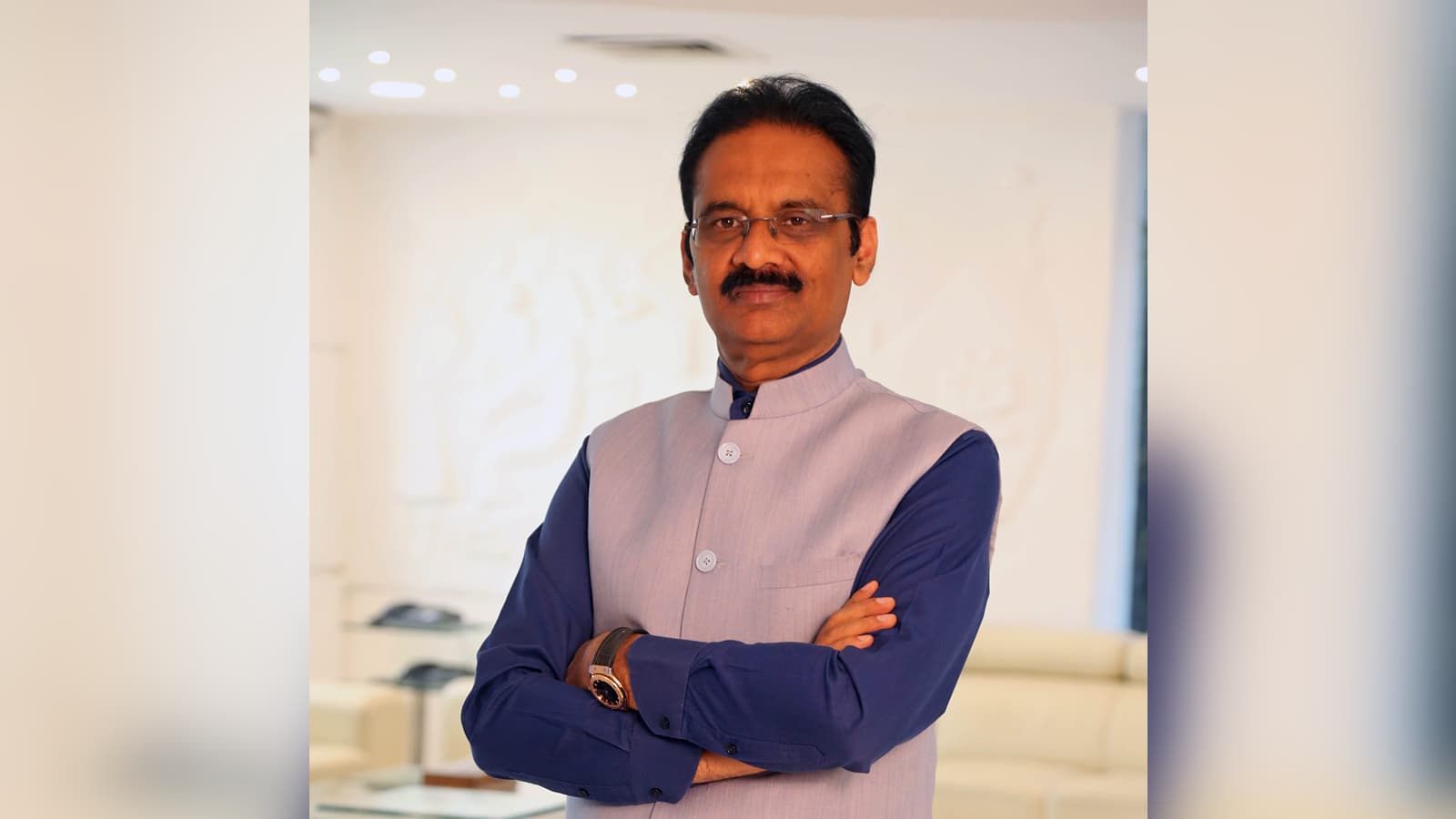
Dr. Ashok Kumar Mittal, Chancellor of Lovely Professional University, during an interview on higher education reforms.
As Indian higher education moves beyond degrees, examinations and conventional measures of success, the question of what universities should actually prepare students for is becoming increasingly important. Dr. Ashok Kumar Mittal, Chancellor, Lovely Professional University, examines how institutions can rethink education around skills, employability, innovation and student choice. In this interview with Education Post’s Prabhav Anand, Dr Mittal discusses the growing role of artificial intelligence in teaching and assessment, the need to bring industry into the academic experience, and why experiential and interdisciplinary learning must move beyond isolated initiatives. He also reflects on internationalisation, research and entrepreneurship, while outlining his vision of “new norms” in Indian education—one where learning, earning and reskilling extend well beyond the traditional boundaries of a degree.
1. India is moving from an education system centred on degrees and examinations towards one focused on skills and outcomes. What are the most important changes universities must make to ensure students are truly prepared for the world of work?

Shifting away from a marks-driven system is long overdue, and universities have to change on three fronts if this shift is to mean anything. One, the curriculum has to be built with industry sitting at the table, revised regularly, and organised around what a student can actually do rather than what they can recall in a three-hour paper. Two, evaluation has to move beyond examinations to include projects, live problem-solving, and portfolios that show real work. And universities have to hold themselves accountable for what happens to their students after graduation. Students can take up paid projects, internships, and freelance opportunities while they study, so by the time they graduate, they have already earned, worked on real briefs, and built a track record before becoming part of the industry full-time.
2. AI is rapidly changing both classrooms and workplaces. How should universities redesign teaching, assessment and curricula so that students learn to use AI effectively without becoming overly dependent on it?
AI is going to touch every profession, so it cannot remain a computer science subject. A law student, an agriculture student, a designer, a management student—each needs to understand how AI applies to their field. Teaching should treat AI as a collaborator that students learn to direct with judgment, not as a shortcut that thinks for them. Assessment has to change too. If a student can answer an examination question by typing it into a chatbot, the question is the problem, not the student. We can look at open-ended AI evaluations that test reasoning, originality, and the ability to spot where the machine can get it wrong. The idea is to make students confident users of AI while preserving the sharpness of their own thinking.
3. You have often emphasised the need to bridge the gap between academia and industry. Beyond internships and placements, what deeper changes are required in university-industry partnerships to make graduates genuinely employable?
Within Edu-Revolution, our Earn Your Fee Back model is based on the belief that students should be able to create value and generate money while studying. They can do this through paid projects, paid internships, start-ups, exhibitions, industry assignments, and other opportunities where their skills generate revenue. The idea is to give students multiple pathways to earn, rather than limiting them to a particular client or platform. It means they graduate having already handled deadlines, feedback, and revisions.
Placements and internships are only the visible tip. The real work happens much earlier. Industry professionals should be co-teaching courses, faculty should be spending some time inside companies, and companies should be bringing live problems into classrooms as part of coursework. When a student solves an actual business challenge during their fifth semester, employability stops being an aspired result and becomes a natural outcome. Partnership has to be built into the daily academic experience, not as part of an organised, one-time annual immersion exercise.
4. Experiential and interdisciplinary learning are becoming increasingly important in higher education. How can universities move these approaches from isolated projects and initiatives into the mainstream academic experience?
The moment you make experiential learning credit-bearing and mandatory, it stops being optional and starts being real. Interdisciplinary learning needs the same structural push. Students should be able to take courses across schools without paperwork battles, and faculty should be encouraged, not discouraged, from teaching across departments. At LPU, industry projects, community work, and cross-disciplinary electives are built into the programme structure. If a mechanical engineering student wants to take a course in psychology or languages, the system should say yes, not raise objections. The world doesn't hand people problems neatly labelled by department, so universities cannot afford to keep training students that way.
5. LPU has increasingly focused on research, innovation, entrepreneurship and global academic collaborations. What role do you see these four pillars playing in making Indian universities globally competitive?
These four pillars are not separate boxes to tick. Research feeds innovation, innovation needs entrepreneurship to reach people, and all of it grows stronger when connected to the best minds abroad. Indian universities have traditionally leaned heavily on teaching, and that has to expand. Students need to see themselves as people who can discover something, build something, protect it with a patent, or turn it into a company. When that becomes the culture, competitiveness follows on its own. We have invested considerably in incubation, patent support, international faculty, and joint degree programmes because the four pillars only work when they reinforce each other daily, not when they sit in separate offices.
6. Internationalisation is no longer limited to student exchange programmes. How can Indian universities use international partnerships to improve curriculum, research and learning outcomes while also giving students a genuinely global outlook?
A short trip abroad does not make a student global. What does is working with international peers on shared problems, learning from faculty trained in different traditions, and producing work that stands up to scrutiny anywhere in the world. Indian universities should be building joint research projects, running virtual classrooms with partner universities, and offering seamless credit transfers that let students move between systems without losing crucial academic years. LPU's international collaborations are structured around this—the idea is that a student here should be able to work with a student in Australia or Europe on the same assignment and both benefit. Global outlook comes from sustained engagement, not touch-and-go experiences or photographs at conferences in global settings.
7. In your earlier Education Post interview, you spoke about integrating technology with traditional teaching and creating an industry-based, outcome-focused academic model. What has changed since then, and where do you believe universities still need to rethink their approach?
What has changed is that technology is no longer a supplement—it is, in fact, the base layer. The pandemic has already settled that debate convincingly. What has not changed enough is the way we evaluate students and the way we invest in our faculty. Many universities put lectures online but kept the same old examination pattern. Teachers were expected to adapt overnight without the training or support to do it well. A rethinking has to happen there. Faculty need real development opportunities, and evaluation has to reflect what students can do, not just what they can write down. When students are earning through real work during their studies, the university has to make sure everything, from teaching to mentoring, keeps up with that pace.
8. You have recently argued that India’s education transformation must create “new norms” rather than simply reform existing ones. What would those new norms look like, particularly in terms of curriculum, assessment, employability and student autonomy?
New norms mean rethinking the basic shape of a degree. Why must every programme be four years? Why can't students exit with a meaningful qualification, work for a while, and return? Curriculum should be updated with industry input every year, not every five years. Assessment should show what a student has built, not just what they remember. Employability should be woven into the years of study, so students take on paid projects and internships during their programme, and employability is not a worry saved for the final semester. And student autonomy means real choice—in pace, in pathway, and in the mix of subjects. Old norms were built for the university's convenience. New norms have to be built for the student's future. NEP 2020 has drawn the precise framework around everything I have discussed above—universities in India need to start implementing it.
9. As Lovely Professional University completes 25 years, what do you see as the most significant shifts in its educational philosophy, and what should the university’s next 25 years focus on to remain relevant to a rapidly changing higher education landscape?
The biggest shift over 25 years has been in what we consider success. In the early years, the priority was giving students from smaller towns and modest families access to quality higher education. That mission worked. Then the question became—access to what? Just a degree, or a genuinely better life? That is where initiatives at LPU like EduRevolution took shape, giving students the opportunity to earn, build experience, and grow while they study, so graduation is not the starting line but a well-earned milestone.
But the next 25 years have to be about something bigger than our own success. For 25 years, our responsibility was understandably focused on our students, faculty, staff, alumni, and institution. Now that circle has to expand and give back in measurable ways to our surroundings, Punjab, India, and ultimately the world. A university should not be measured only by how successful its graduates become, but by what its ideas, research, entrepreneurs, teachers, and communities go on to create and how they benefit the ecosystems that help us thrive.
The LPU of the future has to make education a lifelong relationship rather than a four-year stop. Alumni should be able to return, reskill, and find new opportunities at any point in their careers. Ultimately, I want LPU to be a place where learning, earning, research, innovation, and building all come together, and where something that begins in a classroom here can make a difference far beyond this campus. That is the direction we intend to lead in.

Learning, earning, research, innovation and building must all come together
NMMSS Scholarship 2026-27: Application Deadline Extended to October 31, Check Eligibility and Apply Online

Delhi Class 12 student wins IOAA gold while preparing for JEE

US probes nine universities over J-1 visas, halts PERM processing for eight firms

NLSIU Bengaluru announces NLSAT 2027 date for BA, LLB, MPP and PhD admissions
US probes nine universities over J-1 visas, halts PERM processing for eight firms
.jpg&w=256&q=75)
Regional universities face international student slump as visa refusals and political rhetoric deter applicants
AI may lift homework scores but weaken real learning, World Development Report raises concerns

Ken Griffin’s record $3 billion gift to Carnegie Mellon to fuel new Miami campus

Michael Jordan pledges $10 million to UNC social work school in mother’s honour

Learning, earning, research, innovation and building must all come together
NMMSS Scholarship 2026-27: Application Deadline Extended to October 31, Check Eligibility and Apply Online
Delhi Class 12 student wins IOAA gold while preparing for JEE
US probes nine universities over J-1 visas, halts PERM processing for eight firms
NLSIU Bengaluru announces NLSAT 2027 date for BA, LLB, MPP and PhD admissions
US probes nine universities over J-1 visas, halts PERM processing for eight firms
Regional universities face international student slump as visa refusals and political rhetoric deter applicants
AI may lift homework scores but weaken real learning, World Development Report raises concerns
Ken Griffin’s record $3 billion gift to Carnegie Mellon to fuel new Miami campus
Michael Jordan pledges $10 million to UNC social work school in mother’s honour
Copyright© educationpost.in 2026 All Rights Reserved.