


With Delhi's average AQI reaching 391, the Supreme Court has questioned the effectiveness of pollution-control measures and highlighted vehicle emissions, stubble burning and Diwali firecrackers.
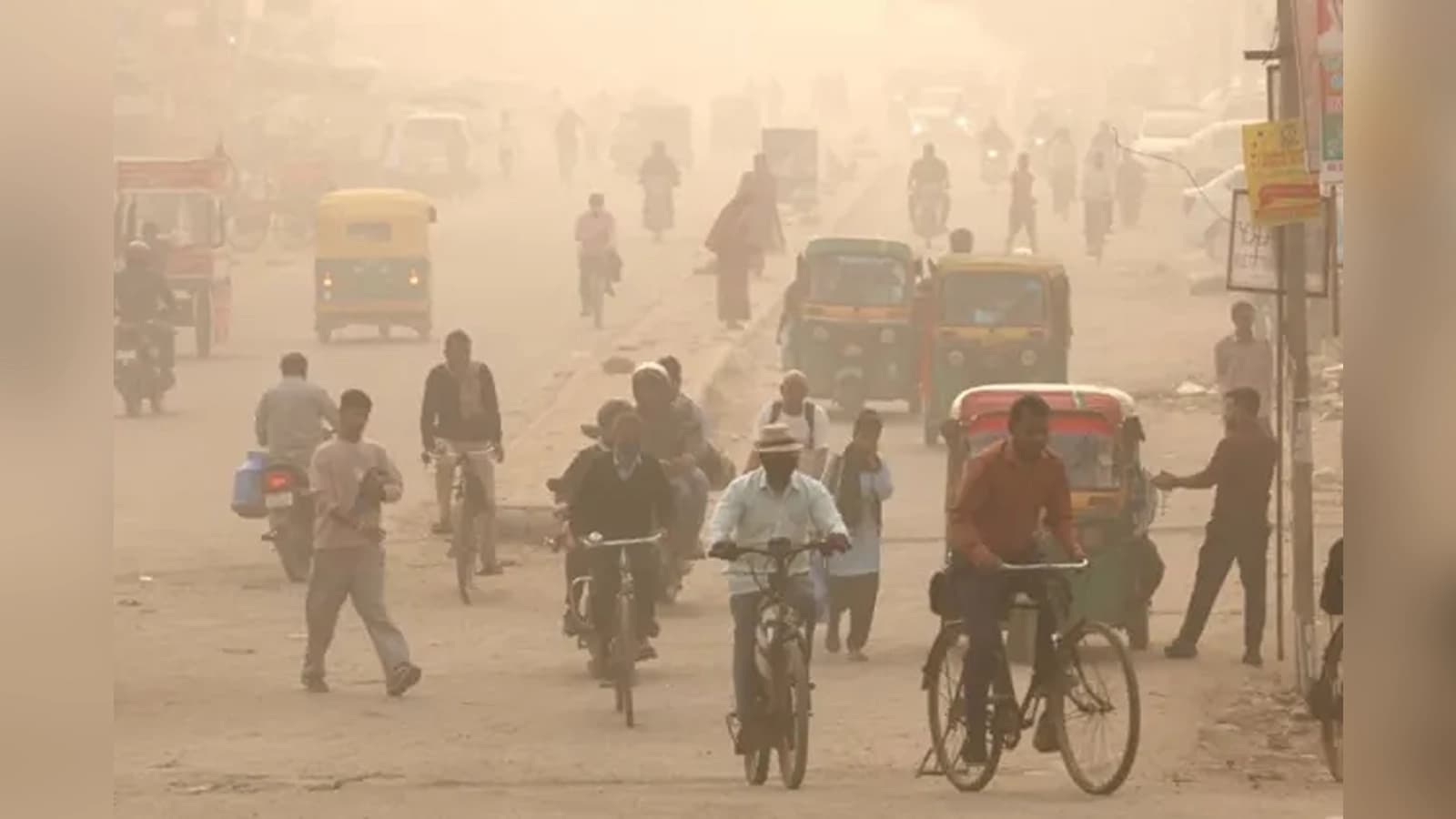
Delhi's air quality deteriorates ahead of Diwali as the Supreme Court questions existing pollution-control measures.
The Supreme Court has expressed serious concern over worsening air pollution in Delhi-NCR, with the Air Quality Index (AQI) approaching 400 in several areas ahead of Diwali. During a hearing on Friday, Chief Justice of India (CJI) Surya Kant questioned the effectiveness of existing pollution-control measures and highlighted heavy vehicular movement as a major contributor to the crisis. A three-judge bench comprising CJI Surya Kant and Justices Joymalya Bagchi and V. Mohana observed that repeated discussions and restrictions had not produced sufficient improvements in air quality.
Delhi AQI Reaches 391, Several Areas Record Severe Levels

Delhi's overall AQI reached 391 on November 6, placing it in the 'Very Poor' category. However, several monitoring stations recorded readings above 400. Rohini registered an AQI of 475, while IIT Delhi recorded 472. Out of 59 monitoring stations, 30 reported severe pollution levels at 9 am. Under India's AQI classification, readings between 301 and 400 fall under the Very Poor category, while 401–500 are classified as Severe.
Supreme Court Questions Vehicular Pollution
The bench raised concerns about bumper-to-bumper traffic and the increasing number of private vehicles travelling between Delhi and neighbouring cities, including Noida, Gurugram, Ghaziabad and Faridabad. The Centre informed the court about measures such as restrictions on certain vehicles, geo-tagging of Pollution Under Control (PUC) certificates and action against visibly polluting vehicles. However, the court emphasized that implementing rules alone would not solve the problem without effective enforcement.
The Supreme Court also questioned the repeated focus on stubble burning while urban pollution sources continue to contribute to poor air quality. It called for advance announcements of crop-residue procurement prices and better collection facilities through gram panchayats to help farmers manage agricultural waste without burning it. According to submissions by amicus curiae senior advocate Aparajita Singh, stubble burning contributed approximately 14% of Delhi's pollution on November 5.
Diwali 2026: Green Crackers Allowed for Two Days
In its October 29 order, the Supreme Court temporarily permitted approved green firecrackers in Delhi-NCR on November 7 and 8. Firecrackers are allowed only between 6 am and 7 am and 8 pm and 10 pm. Online sales, barium-containing crackers and joined firecrackers are prohibited. The complete firecracker ban is scheduled to return from November 9. The court has also directed authorities to monitor air quality before and after Diwali and collect information from hospitals about pollution-related health impacts.
The latest hearing has renewed questions about Delhi's long-term pollution strategy. Apart from stubble burning, vehicle emissions, industrial pollution, construction dust and waste burning continue to affect air quality. The Supreme Court has listed the matter for November 16, 2026. The challenge now is to move beyond temporary restrictions and ensure year-round pollution control through better public transportation, stricter enforcement and practical alternatives for farmers.

Delhi Metro Diwali 2026 Timings: Last Train at 10 PM, Pink Magenta and Grey Lines to Start at 6 AM
New Delhi Railway Station Introduces Separate Entry and Exit Gates for Diwali, Chhath Rush; Check Gate Numbers

India Relaxes Passport and Visa Rules for Refugees, Pakistani Nationals and Foreigners: Check Eligibility
Supreme Court Flags Delhi Pollution as AQI Nears 400, Questions Vehicular Emissions

Indian Railways Plans Door-to-Door Parcel Service in 8 Cities: Check Booking, Charges and Refund Rules

‘It’s actually very cut-throat’: 13-year-old wins New Zealand spelling bee title

Schoolchildren join desperate effort to save stranded whales on New Zealand coast

New Zealand school hostel shut down after damning inspection raises concerns over student welfare

Can AI blackboards change how mathematics is taught in India? China's new technology offers glimpse

Tamil Nadu renews NEET abolition demand, seeks Class 12 marks for medical admissions

Delhi Metro Diwali 2026 Timings: Last Train at 10 PM, Pink Magenta and Grey Lines to Start at 6 AM
New Delhi Railway Station Introduces Separate Entry and Exit Gates for Diwali, Chhath Rush; Check Gate Numbers
India Relaxes Passport and Visa Rules for Refugees, Pakistani Nationals and Foreigners: Check Eligibility
Supreme Court Flags Delhi Pollution as AQI Nears 400, Questions Vehicular Emissions
Indian Railways Plans Door-to-Door Parcel Service in 8 Cities: Check Booking, Charges and Refund Rules
‘It’s actually very cut-throat’: 13-year-old wins New Zealand spelling bee title
Schoolchildren join desperate effort to save stranded whales on New Zealand coast
New Zealand school hostel shut down after damning inspection raises concerns over student welfare
Can AI blackboards change how mathematics is taught in India? China's new technology offers glimpse
Tamil Nadu renews NEET abolition demand, seeks Class 12 marks for medical admissions
Copyright© educationpost.in 2026 All Rights Reserved.