


The Supreme Court has permitted certified green firecrackers in Delhi-NCR on November 7 and 8, introducing strict restrictions on manufacturing, sales and usage. The decision comes amid questions over the effectiveness of the existing firecracker ban and growing concerns about air pollution and public health.
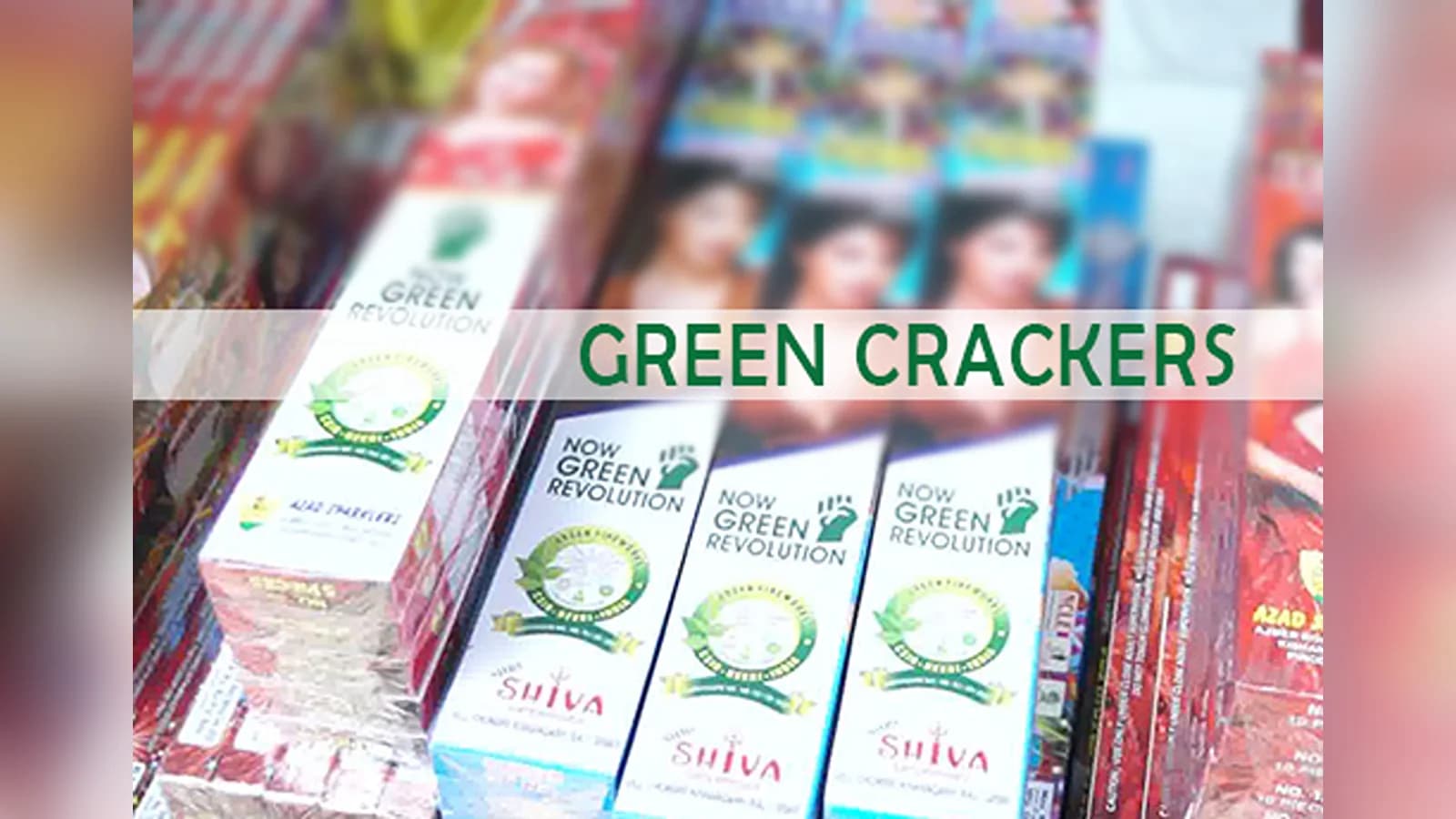
The Supreme Court has permitted the use of certified green firecrackers in Delhi-NCR for two days around Diwali 2026.
The Supreme Court has permitted the temporary use of certified green firecrackers across Delhi-NCR for two days around Diwali 2026, relaxing the existing blanket prohibition while imposing strict conditions on their manufacture, sale and use.
In an order dated October 29, made public on November 2, a bench comprising Justices M.M. Sundresh and Prasanna B. Varale allowed green firecrackers to be burst between 6 am and 7 am and 8 pm and 10 pm on November 7 and 8. The court clarified that the complete ban on firecrackers would be restored from November 9.

The decision in Arjun Gopal & Others v. Union of India & Others comes amid continuing concerns over Delhi-NCR's deteriorating air quality and questions about whether a blanket prohibition has effectively controlled the illegal sale and use of conventional firecrackers. However, the court's decision is not an unrestricted relaxation. It introduces a temporary regulatory framework involving scientific certification, QR-code verification, designated selling locations, police surveillance and post-Diwali pollution monitoring.
Why Did the Supreme Court Relax the Firecracker Ban?
The Supreme Court's decision reflects growing concerns about the implementation of existing firecracker restrictions. The matter has been under judicial consideration since 2015, when a petition raised concerns about the environmental and health consequences of firecracker use.
In October 2018, the Supreme Court introduced restrictions on conventional firecrackers and allowed certain improved and green alternatives. Subsequently, Delhi imposed a complete ban on the manufacturing, storage, sale and bursting of firecrackers from January 1, 2025. Similar restrictions were extended to the NCR regions of Uttar Pradesh and Haryana. However, the court observed that the situation had not improved despite the restrictions.
In its latest order, the bench noted that conventional firecrackers continued to be sold illegally under the label of green crackers. It also highlighted that pollution levels experienced significant spikes around Dussehra despite the existing prohibition. The court observed that it did not have sufficient scientific data to determine whether the complete ban had achieved its intended environmental objectives.
It also questioned whether an ineffective blanket prohibition was encouraging illegal markets while preventing consumers from purchasing legitimate, certified green crackers. Consequently, the court opted for a temporary regulated approach instead of continuing the complete prohibition during the Diwali period.
Supreme Court's Green Crackers Rules: What Is Allowed and What Is Prohibited?
The Supreme Court has established specific conditions for the temporary relaxation.
1. Limited manufacturing permission
Manufacturers possessing valid certification from the Council of Scientific and Industrial Research–National Environmental Engineering Research Institute (CSIR-NEERI) and the Petroleum and Explosives Safety Organisation (PESO) can manufacture only approved green crackers listed on the CSIR-NEERI website between November 2 and November 6, 2026.
2. Restricted sale of green crackers
The licences of certain traders whose licences were previously cancelled have been temporarily restored from November 4 to November 6 to facilitate the sale of approved green crackers. Sales will be permitted only through licensed traders at locations designated by district authorities. Online sales and purchases are prohibited.
3. QR codes made mandatory
Every approved green-cracker box must carry a product-specific QR code identifying the manufacturer, NEERI registration, relevant licence details, formulation and test certificate. The boxes must remain properly sealed to prevent conventional or unauthorized firecrackers from being mixed with approved products.
4. Conventional firecrackers remain prohibited
The court has prohibited:
5. No-cracker zones around sensitive locations
Fireworks are prohibited within a 300-metre radius of hospitals, nursing homes, primary and district health centers, old-age homes, educational institutions and notified silence zones. Authorities have been directed to identify, mark and publicize these areas.
Green Crackers Are Not Pollution-Free: What Makes Them Different?
Green crackers are alternatives developed through scientific research to reduce the environmental impact of conventional fireworks. CSIR-NEERI has worked on different green-cracker technologies, including SWAS, STAR and SAFAL. These products are designed to reduce particulate emissions and certain harmful pollutants compared with conventional firecrackers. However, an important distinction needs to be made: green crackers are designed to be less polluting, not pollution-free.
They can still release particulate matter and other emissions, contributing to air and noise pollution. Their environmental impact also depends on the product formulation, manufacturing standards and actual usage. Therefore, allowing certified green crackers cannot be interpreted as a declaration that they are completely safe for public health or the environment.
Supreme Court Orders AQI Monitoring Before and After Diwali
One of the most significant aspects of the judgment is its emphasis on scientific monitoring. The Supreme Court has directed the Central Pollution Control Board (CPCB), in consultation with State Pollution Control Boards and their regional offices in NCR districts, to prepare air-quality reports covering three periods:
| Monitoring period | Dates |
|---|---|
| Pre-Diwali | November 2–6, 2026 |
| During Diwali | November 7–8, 2026 |
| Post-Diwali | November 9–30, 2026 |
Authorities have also been directed to collect sand and water samples for comparative analysis and inspect air-quality monitoring stations reportedly not functioning properly. The court has further ordered post-Diwali waste clearance, proper disposal of firecracker-related waste and cleaning of highly polluted areas using water sprinklers and other appropriate measures. Importantly, the monitoring exercise will extend beyond air-quality readings. The authorities must also collect hospital admission data across Delhi-NCR to assess the increase in patients following the festival. The information will help the court examine the potential health consequences of permitting regulated green firecracker use.
Who Will Be Responsible for Enforcing the Restrictions?
The Supreme Court has placed significant responsibility on district administrations and police authorities. District Collectors and Commissioners, in consultation with district Superintendents of Police, must identify designated locations for green-cracker sales.
Police and administrative teams will monitor these locations, verify QR codes and inspect products to ensure that only approved firecrackers are being sold. Authorities have also been directed to check vehicles entering Delhi-NCR to prevent the transportation of illegal and conventional firecrackers. Manufacturers and traders will be required to furnish monetary security in amounts determined by the concerned authorities. These deposits can be forfeited if the court's directions are violated. The court has warned that officials responsible for failing to implement its directions may face contempt proceedings.
Why This Decision Matters for Delhi-NCR's Air Pollution Crisis
Delhi-NCR experiences recurring air-quality deterioration during winter because of multiple contributing factors, including vehicular emissions, industrial pollution, construction dust, biomass burning and unfavorable meteorological conditions. Firecrackers add another source of particulate pollution during the festive season. The Supreme Court has acknowledged that particulate matter released by fireworks can remain suspended in the atmosphere for several days.
The court has also emphasized that the right to religious practice under Article 25 of the Constitution remains subject to public health and other constitutional restrictions. At the same time, it recognized Diwali's religious, social and emotional significance. The judgment attempts to balance these competing considerations through temporary permission accompanied by strict monitoring.

NTA empanels 5,000 experts in major overhaul after NEET-UG paper leak
Odisha Laptop Scheme 2026: Rs 30,000 Assistance for 15,000 Meritorious Class 12 Students

Delhi Schools Asked to Enforce SOP for Drug-Free Campuses, Set Up Anti-Tobacco Committees
Cyclone Murasu Makes Landfall in Andhra Pradesh: Why Did It Form, What Does Its Name Mean and Which States Are Affected?
JAC Board Exam 2027: Jharkhand Matric, Inter Registration Begins November 12; Check Important Dates
NTA empanels 5,000 experts in major overhaul after NEET-UG paper leak
Cyclone Murasu Makes Landfall in Andhra Pradesh: Why Did It Form, What Does Its Name Mean and Which States Are Affected?

When students struggle, schools must act: Gujarat introduces new mental health rules
What if AI could learn from your data without taking it? India's new framework explains how

UAE schools to begin three week winter break on December 14

NTA empanels 5,000 experts in major overhaul after NEET-UG paper leak
Odisha Laptop Scheme 2026: Rs 30,000 Assistance for 15,000 Meritorious Class 12 Students
Delhi Schools Asked to Enforce SOP for Drug-Free Campuses, Set Up Anti-Tobacco Committees
Cyclone Murasu Makes Landfall in Andhra Pradesh: Why Did It Form, What Does Its Name Mean and Which States Are Affected?
JAC Board Exam 2027: Jharkhand Matric, Inter Registration Begins November 12; Check Important Dates
NTA empanels 5,000 experts in major overhaul after NEET-UG paper leak
Cyclone Murasu Makes Landfall in Andhra Pradesh: Why Did It Form, What Does Its Name Mean and Which States Are Affected?
When students struggle, schools must act: Gujarat introduces new mental health rules
What if AI could learn from your data without taking it? India's new framework explains how
UAE schools to begin three week winter break on December 14
Copyright© educationpost.in 2026 All Rights Reserved.