


Pupils aged 8 to 12 joined rescue crews and volunteers in a desperate bid to save stranded pilot whales on the Wairarapa coast.
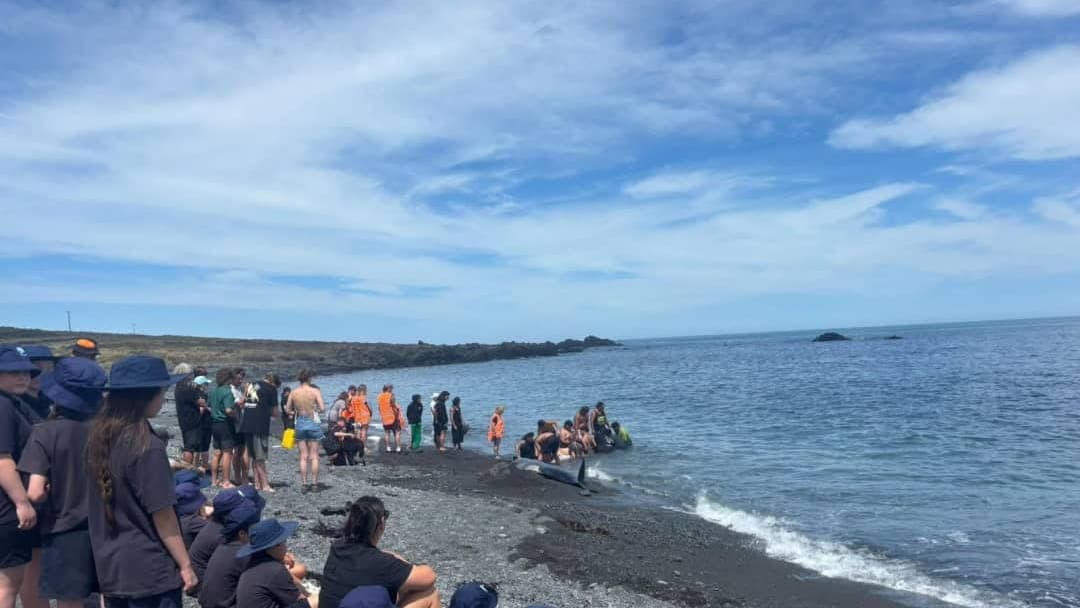
Pirinoa School pupils visit the beach on Thursday morning to witness the whale rescue efforts.
In an extraordinary departure from their usual school day, pupils from Pirinoa School in New Zealand joined volunteers and rescue crews on Thursday in a desperate effort to save dozens of pilot whales stranded along the rugged Ngawi coastline.
About 50 whales were reportedly found stranded along the coast, most of them already dead. Despite hours of rescue efforts, the four whales initially found alive also died by Thursday afternoon, including two that rescuers had managed to return to the water. For Pirinoa School principal Toby Funnell, the unfolding tragedy presented a lesson that no classroom could replicate. Rather than keep pupils aged between eight and 12 inside, the school arranged for them to collect containers and travel to the beach, where they hoped to help keep the stranded animals wet.

"Everyone talks about the teachable moments, and it seemed crazy to keep the kids in school," Funnell said. At the beach, the children watched as rescue teams worked against difficult conditions, while volunteers explained what was happening and why the whales needed urgent assistance. Funnell said the children were eager to help, but the sheer size of the animals made the rescue operation particularly challenging.
"You want to jump in and do something. But I guess the reality of these whales, four metres plus ... it's pretty challenging." The school principal, who was further along the coastline, witnessed the moment the first whale was successfully refloated. The sight, however, was deeply distressing.
"It was pretty emotional seeing the poor things stuck and all ripped up," he said. The rescue effort also faced serious challenges. RNZ reported that crews were instructed to leave the water for a period after the first whale was refloated because of an excessive amount of blood in the water.
Funnell described the moment as one of profound helplessness, particularly for the volunteers who had gathered hoping to save the animals. "There was this feeling of helplessness when they made the call to get everyone out of the water," he said.
Around 60 people had assembled along the coast, ready to assist in whatever way they could. "It's as unique as you can get ... everyone wants to help the wildlife," Funnell said. Project Jonah manager Louisa Hawkes confirmed that all four whales initially found alive had eventually died, despite the efforts of rescue teams and volunteers. She thanked everyone who had responded to the stranding, acknowledging the difficult conditions faced by those working on the beach.
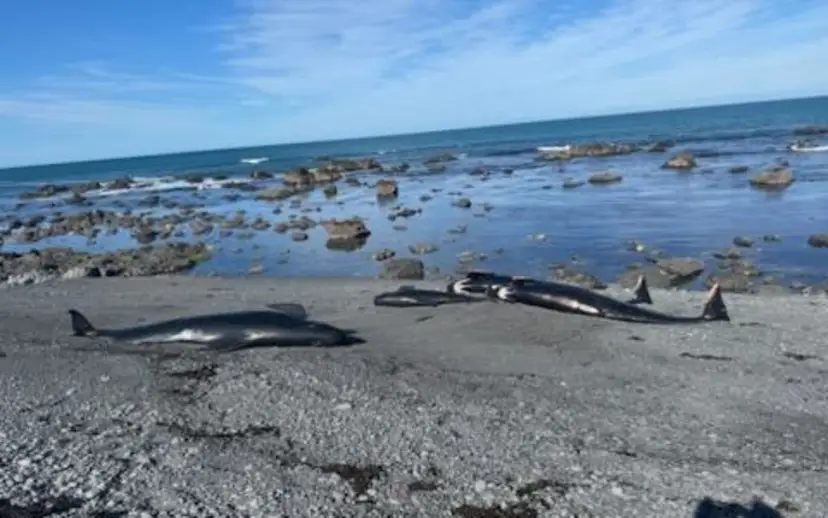
"We definitely appreciate everybody who came out and helped and tried to do their best for the whales," Hawkes said. "It was really tricky conditions, and tough conditions for those on the beach." Attention is now expected to turn to understanding what caused the mass stranding. Hawkes said determining the reasons behind such incidents can be difficult, particularly while rescue operations are still under way.
"It's really hard when you're on the beach to figure out why they've come ashore," she said. The Department of Conservation (DOC) confirmed that 30 pilot whales had died, although local reports put the number of stranded animals at around 50. On Thursday evening, iwi representatives held karakia, or traditional prayers, for the dead whales. DOC said it was working alongside iwi, hapū and whānau to manage the whale carcasses, with investigations into the circumstances surrounding the stranding expected in the coming weeks.

UGC Equity Rules 2026: Centre Plans Review Committee After Supreme Court Intervention Amid Controversy

Shashi Tharoor Says US Midterm Results Won't Affect India-US Ties; Trump Retains Foreign Policy Powers

‘It’s actually very cut-throat’: 13-year-old wins New Zealand spelling bee title
Schoolchildren join desperate effort to save stranded whales on New Zealand coast
Nagaland AI Curriculum: Classes 6 to 3 Under Consideration
‘It’s actually very cut-throat’: 13-year-old wins New Zealand spelling bee title
Schoolchildren join desperate effort to save stranded whales on New Zealand coast

New Zealand school hostel shut down after damning inspection raises concerns over student welfare

Can AI blackboards change how mathematics is taught in India? China's new technology offers glimpse

Tamil Nadu renews NEET abolition demand, seeks Class 12 marks for medical admissions

UGC Equity Rules 2026: Centre Plans Review Committee After Supreme Court Intervention Amid Controversy
Shashi Tharoor Says US Midterm Results Won't Affect India-US Ties; Trump Retains Foreign Policy Powers
‘It’s actually very cut-throat’: 13-year-old wins New Zealand spelling bee title
Schoolchildren join desperate effort to save stranded whales on New Zealand coast
Nagaland AI Curriculum: Classes 6 to 3 Under Consideration
‘It’s actually very cut-throat’: 13-year-old wins New Zealand spelling bee title
Schoolchildren join desperate effort to save stranded whales on New Zealand coast
New Zealand school hostel shut down after damning inspection raises concerns over student welfare
Can AI blackboards change how mathematics is taught in India? China's new technology offers glimpse
Tamil Nadu renews NEET abolition demand, seeks Class 12 marks for medical admissions
Copyright© educationpost.in 2026 All Rights Reserved.