


The iFLYTEK-developed system converts handwritten equations into graphs, transforms geometric sketches into interactive 3D models and generates digital lesson summaries, with adoption reported across thousands of Chinese schools.
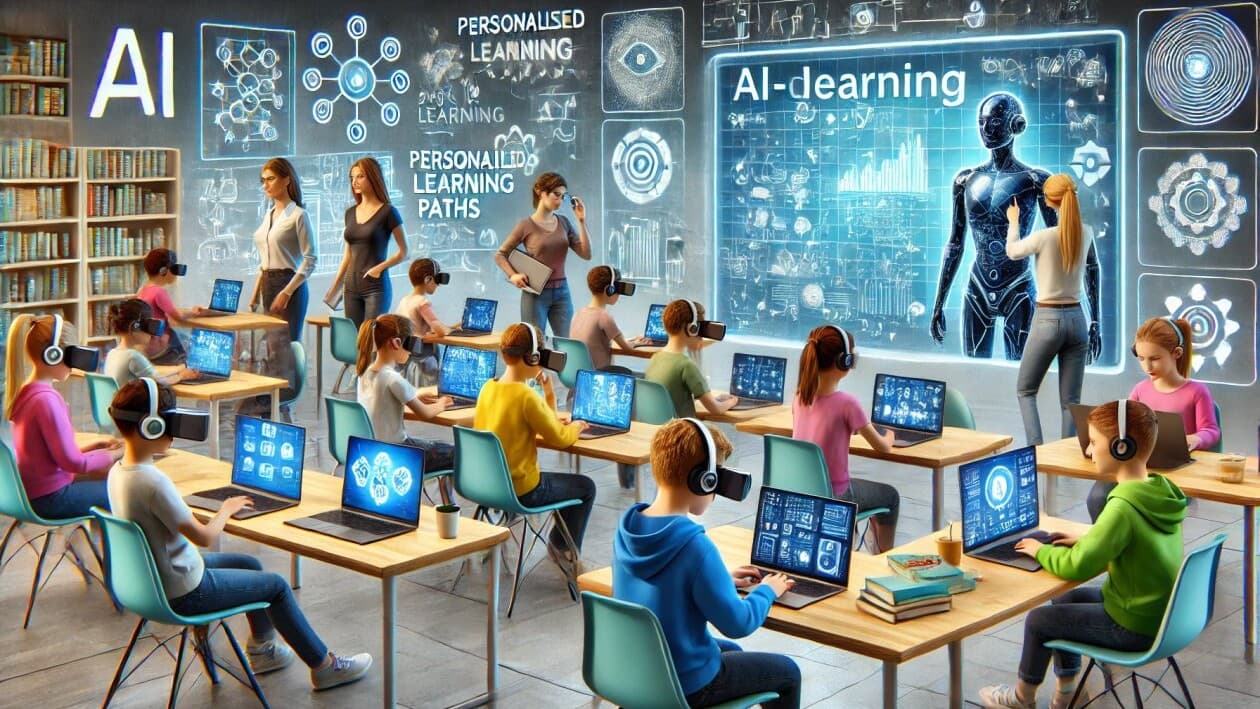
Artificial intelligence is gradually changing how subjects such as mathematics and science are taught, with interactive classroom tools offering new ways to explain concepts that students often find difficult to visualize.
A technology developed by Chinese company iFLYTEK demonstrates how traditional blackboards could evolve into interactive teaching systems.

At the World Artificial Intelligence Conference (WAIC) 2026 in Shanghai, the company showcased an AI-powered blackboard that can transform a teacher's rough drawings into standard geometric figures and interactive three-dimensional (3D) models.
Called the Tongchuang AI Blackboard, the system recognizes handwritten figures, completes rough sketches into accurate geometric shapes and converts two-dimensional (2D) diagrams into 3D models. Students can rotate these models on the screen and examine their points, lines and surfaces from different angles.
The technology is designed to make classroom explanations more interactive, particularly when teachers introduce mathematical concepts involving geometry, shapes and spatial relationships.
During a demonstration at the conference, a visitor drew a triangle on the blackboard. The system recognized the drawing, completed it into a standard figure and identified the associated mathematical concept.
It also displayed relevant teaching material before converting the flat triangle into a three-dimensional model. The model could then be rotated through touch-based controls, allowing viewers to examine its structure from different perspectives.
The blackboard can also recognize mathematical equations and generate their corresponding graphs. This allows teachers to move beyond conventional diagrams and demonstrate mathematical relationships through visual representations.
For students, such features could provide another way to understand abstract concepts that may be difficult to grasp through textbook explanations or static illustrations. Teachers can use the interactive models to demonstrate how different mathematical elements relate to one another.
iFLYTEK AI blackboard already used in schools across China
The Tongchuang AI Blackboard is not just an experimental product displayed at an international technology conference. According to iFLYTEK, the system is already being used across 33 provincial-level administrative regions and more than 1,400 counties and districts in China.
The company also reported that its broader range of education products and services has reached more than 60,000 schools. Collectively, these products have served over 160 million teachers and students.
Beyond converting mathematical drawings into interactive models, the blackboard includes features that allow classroom writing to be digitized and lessons to be recorded.
It can also generate structured summaries of classroom sessions and produce short learning videos from recorded lessons. These resources allow teachers to revisit their classroom explanations and students to review concepts after classes.
The features could also help students revisit difficult topics without depending entirely on their classroom notes. Teachers can use recorded material to review explanations and make lesson content available for subsequent learning.
The company's latest demonstration reflects China's broader push to integrate artificial intelligence into its education system. Educational institutions and technology companies in the country have been exploring AI applications across classroom instruction, student learning and assessment.
The Tongchuang AI Blackboard was among the technologies showcased at WAIC 2026, which brought together technology companies, researchers and policymakers in Shanghai from July 17 to 20. Discussions at the conference covered developments in artificial intelligence and its applications across multiple sectors.
Could AI-powered blackboards change classroom teaching in India?
The development also raises questions about how similar technologies could be used in India's schools, where classroom teaching continues to rely heavily on textbooks, conventional blackboards and digital presentation tools.
Mathematics and science are among the subjects where visual explanations can play an important role. Students studying geometry, algebra, physics and other concept-heavy topics may find it easier to understand lessons when abstract ideas are presented through interactive diagrams and models.
AI-powered blackboards could offer teachers additional ways to demonstrate these concepts. For instance, a teacher explaining geometric shapes could convert a two-dimensional drawing into a rotatable 3D model, while mathematical equations could be displayed alongside their graphical representations.
Such tools could also support lesson recording and the preparation of digital learning material, giving students another opportunity to revisit classroom explanations.
However, introducing these systems in Indian schools would require attention to infrastructure, affordability, teacher training and access to reliable digital facilities. Differences in technology access between urban and rural schools would also need to be considered.
The National Education Policy (NEP) 2020 emphasizes the integration of technology into education and encourages the use of digital tools to improve teaching and learning. AI-based classroom systems could contribute to these objectives if introduced with adequate infrastructure and appropriate teacher support.
The effectiveness of such technology, however, cannot be measured only by its ability to convert drawings into interactive models. Its wider value will depend on whether students develop a better understanding of concepts, retain what they learn and actively participate in classroom discussions.
For India, the development offers an example of how artificial intelligence could supplement conventional teaching methods. Its practical relevance will ultimately depend on how effectively schools adapt these tools to their classroom requirements and learning needs.
Can AI blackboards change how mathematics is taught in India? China's new technology offers glimpse

Tamil Nadu renews NEET abolition demand, seeks Class 12 marks for medical admissions

Karnataka plans bilingual education across 46,757 govt schools by June 2027
Karnataka CM seeks private school support to improve rural education and curb migration to cities

Hindustan Group of Institutions Hosts Christmas Cake Mixing Ceremony at Guindy Campus
Can AI blackboards change how mathematics is taught in India? China's new technology offers glimpse
Tamil Nadu renews NEET abolition demand, seeks Class 12 marks for medical admissions
Karnataka plans bilingual education across 46,757 govt schools by June 2027
Karnataka CM seeks private school support to improve rural education and curb migration to cities

JEE Main 2027: NTA allows NRI candidates to use passports for Session 1 registration

Can AI blackboards change how mathematics is taught in India? China's new technology offers glimpse
Tamil Nadu renews NEET abolition demand, seeks Class 12 marks for medical admissions
Karnataka plans bilingual education across 46,757 govt schools by June 2027
Karnataka CM seeks private school support to improve rural education and curb migration to cities
Hindustan Group of Institutions Hosts Christmas Cake Mixing Ceremony at Guindy Campus
Can AI blackboards change how mathematics is taught in India? China's new technology offers glimpse
Tamil Nadu renews NEET abolition demand, seeks Class 12 marks for medical admissions
Karnataka plans bilingual education across 46,757 govt schools by June 2027
Karnataka CM seeks private school support to improve rural education and curb migration to cities
JEE Main 2027: NTA allows NRI candidates to use passports for Session 1 registration
Copyright© educationpost.in 2026 All Rights Reserved.