


Russia is looking to deepen its higher education ties with African countries through university partnerships, plans for additional campuses and financial support for students seeking to study in the country.
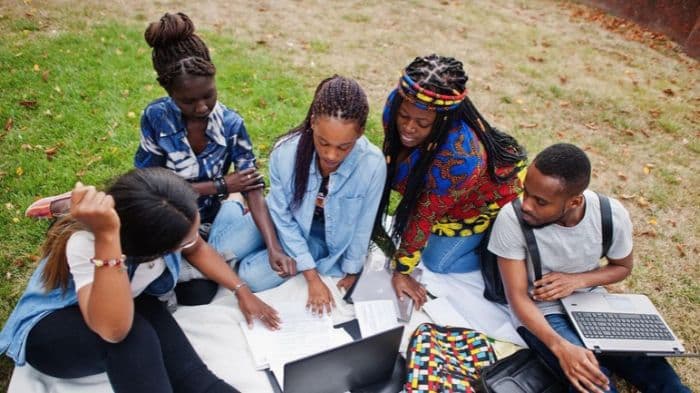
Image for Representation
Russia is planning to expand its educational presence in Africa as Moscow seeks to strengthen academic cooperation with countries across the continent. The efforts include developing university links, establishing educational support centres and providing financial assistance to African students pursuing higher education in Russia.
The developments were highlighted around the Russia-Africa Media Forum and the third Russia-Africa Summit in Moscow, where representatives discussed cooperation in education, skills development, technology and industrial training.

According to Russia's official Study in Russia portal, more than 37,000 African students were enrolled at Russian universities during the 2025-26 academic year. Egypt, Morocco, Cameroon, Algeria and Nigeria were among the leading countries of origin.
Russia expands study grants for African students
Financial support remains a key part of Russia's efforts to attract students from African countries. Its government quota programme provides tuition-funded places at Russian universities, while separate grant schemes offer additional assistance to eligible students.
Russia's official education portal reported that more than 4,800 African citizens received government-funded study places in 2025. Another 400 African students received grants during the same year.
The grant package can include return travel, a monthly scholarship, health insurance and accommodation. Available support and eligibility requirements depend on the programme concerned.
Students can pursue undergraduate, postgraduate and doctoral studies in fields including engineering, natural sciences, social sciences and humanities. Russian universities also offer programmes in medicine, biotechnology, artificial intelligence, agriculture and energy-related disciplines.
Educational centres planned across Africa
Russia has also announced plans to establish 10 educational and skills development centres across selected African countries by the end of 2028.
Vadim Lobov, president of Synergy Corporation, said the proposed centres would help African students navigate the process of studying in Russia. Planned services include university selection, preparatory courses, visa assistance and support extending through graduation and employment.
The initiative is expected to use a digital platform developed in collaboration with IVA Corporation. Synergy is also seeking partnerships with African educational institutions, businesses and ministries of education.
The specific host countries for all 10 centres have not yet been fully detailed in the announcement.
These centres should be distinguished from university branch campuses, which provide academic programmes directly through an institution operating in another country.
Russian universities strengthen their African links
Russia already has a university presence on the continent. Its official Study in Russia portal lists branches of Kazan Federal University and St Petersburg State University in Cairo, where more than 3,000 students are enrolled in programmes including general medicine, dentistry and pharmacy.
The Russian-African Network University also connects participating Russian and African higher education institutions to support academic cooperation, joint programmes and research.
Expanding such links could give students more opportunities to access Russian academic programmes and professional training. However, the proposed educational centres, existing university branches and any future campuses represent different forms of cooperation, with separate implementation requirements.
Russia's latest initiatives form part of a broader effort to expand educational and scientific partnerships with African countries. Their eventual impact will depend on how the plans are implemented, which institutions participate and what opportunities become available to students.
Russia plans to expand university presence in Africa, offers study grants

MIT develops snake-inspired soft robot to help diagnose small intestine disorders

11-year-old Egyptian girl beats 40 million students in Arab Reading Challenge, wins Dh500,000
Karnataka LKG, UKG Admission 2026-27: 581 Government Schools Approved for Pre-Primary Classes

IIT Gandhinagar to Organise Amalthea 2026 on October 31 and November 1; Check Key Attractions
NTU Singapore, VFT launch joint research lab to develop safer batteries for renewable energy storage
ULLAS 2026: Will B.Ed. Students' Academic Credits Depend on Adults Passing Literacy Tests?

Earth’s life story may not have begun with comets, new study finds

Can India's Biggest Examinations Become Leak-Proof?
Less juggling for parents? Singapore to unite kindergarten learning and after-school care by 2030

Russia plans to expand university presence in Africa, offers study grants
MIT develops snake-inspired soft robot to help diagnose small intestine disorders
11-year-old Egyptian girl beats 40 million students in Arab Reading Challenge, wins Dh500,000
Karnataka LKG, UKG Admission 2026-27: 581 Government Schools Approved for Pre-Primary Classes
IIT Gandhinagar to Organise Amalthea 2026 on October 31 and November 1; Check Key Attractions
NTU Singapore, VFT launch joint research lab to develop safer batteries for renewable energy storage
ULLAS 2026: Will B.Ed. Students' Academic Credits Depend on Adults Passing Literacy Tests?
Earth’s life story may not have begun with comets, new study finds
Can India's Biggest Examinations Become Leak-Proof?
Less juggling for parents? Singapore to unite kindergarten learning and after-school care by 2030
Copyright© educationpost.in 2026 All Rights Reserved.