


A parliamentary panel wants computer-based NEET, secure question banks and independent oversight, but rural access, cybersecurity and testing costs pose difficult questions.
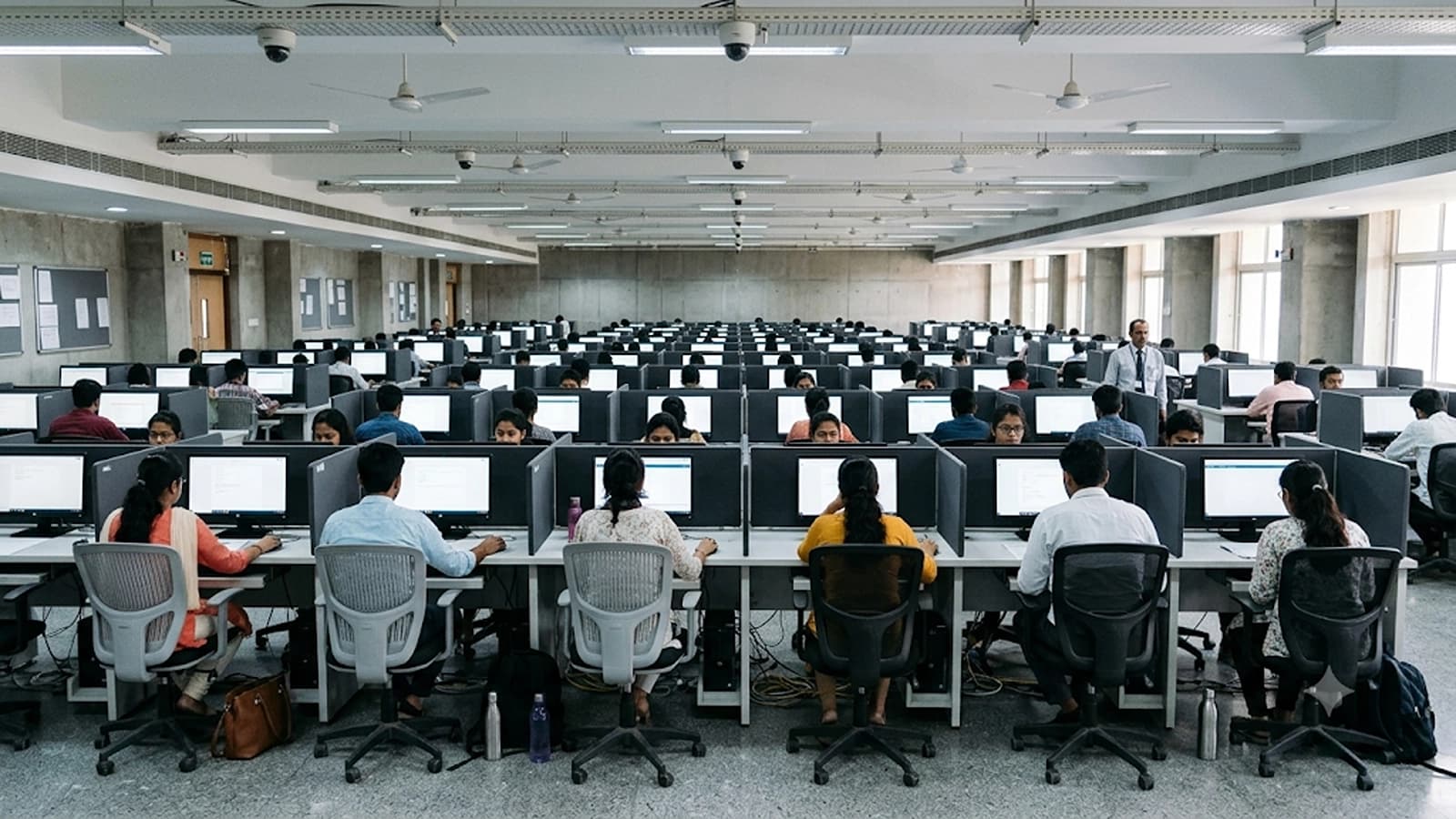
A parliamentary committee has recommended shifting NEET-UG to computer-based testing and strengthening NTA infrastructure to reduce the risk of examination malpractice.
For nearly 20 lakh students who appeared in the NEET-UG re-examination on June 21, 2026, the experience was more than another attempt at securing a medical college seat. They had already faced an examination on May 3, only for the National Testing Agency (NTA) to cancel it nine days later following allegations of malpractice and findings shared by investigating agencies.
The agency promised a fresh examination without an additional fee and announced refunds for the cancelled test. But the decision meant that candidates who had prepared for months had to sit through one of India's most competitive examinations again. It was the second major controversy surrounding NEET within three years. In 2024, the Supreme Court confirmed that a question-paper leak had occurred in Hazaribagh and Patna, although it declined to order a nationwide re-examination because the evidence available did not establish a systemic breach warranting cancellation. The recurring controversies have shifted attention from catching those responsible for paper leaks to a more fundamental question: whether India's national examinations need to be redesigned.

On October 9, 2026, the Parliamentary Standing Committee on Education, Women, Children, Youth and Sports, headed by Rajya Sabha MP Mukul Wasnik, presented its 382nd report on reforms and strengthening of the NTA. The committee recommended replacing conventional paper-based NEET with computer-based testing, creating large question banks, investing in government-owned examination centres and establishing independent supervision. It also identified staffing shortages, reliance on private contractors and weaknesses in the agency's institutional capacity.
However, the report is a set of recommendations, not a notification implementing a new examination system. Although NTA informed the Supreme Court in May that it intended to shift NEET to computer-based testing from the next examination cycle, the final arrangements and operational readiness still require confirmation.
Why does the government want to change the examination system?
Established in 2017, the NTA conducts major entrance and eligibility examinations, including NEET-UG, JEE Main, CUET and UGC-NET. According to the parliamentary committee, approximately 1.2 crore examination sittings take place annually under the agency's responsibilities. Unlike JEE Main and several other national examinations, NEET-UG continues to rely on pen-and-paper testing.
Under this system, question papers must be prepared, printed, packaged, stored and transported to thousands of examination centres before candidates begin writing. Each stage creates a potential opportunity for unauthorised access, particularly when large numbers of institutions and personnel are involved. The 2024 NEET controversy demonstrated the consequences. The Supreme Court accepted that a leak had occurred but found insufficient evidence, at the time of its judgment, of widespread malpractice that justified cancelling the entire examination.
The situation was different in 2026. After receiving information about suspected irregularities, NTA cancelled the May 3 examination, referred the matter to the Central Bureau of Investigation and conducted a fresh test on June 21. The re-examination was held at 5,440 centres across 551 Indian cities and 14 cities abroad. The parliamentary committee acknowledged security measures introduced since 2024, including biometric authentication, mobile jammers, state- and district-level coordination committees and AI-assisted CCTV monitoring. Nevertheless, it concluded that the 2026 cancellation showed the need for further institutional and procedural changes.
Can computer-based NEET prevent question-paper leaks?
Computer-based testing could remove some of the most vulnerable stages of the existing system, particularly the advance printing, physical storage and transportation of a common question paper. Instead of sending printed papers across the country, NTA could securely deliver encrypted examination content to authorised centres. Candidates would answer questions on computers, while their responses would be recorded electronically.
The committee has proposed a further measure: a large, continuously updated question bank from which examination papers could be generated shortly before the test. The idea is straightforward. If the final paper does not exist as a complete document weeks before an examination, there are fewer opportunities for someone to obtain and circulate it.
The committee recommended that experts from institutions such as IITs, AIIMS and IIMs help develop and translate questions. It also called for background checks to identify potential conflicts of interest among question-setters and for strict isolation of those vetting final papers until the examination concludes. A question bank, however, cannot make an examination automatically leak-proof. Its contents still have to be written, checked, stored and protected. Individuals with privileged access could compromise questions before they reach students.
Secure systems would require controlled access, encryption, audit logs, independent testing and procedures to investigate suspicious activity. Nor is every computer-based examination protected against manipulation. The parliamentary report cited an alleged remote-access cheating attempt investigated by the CBI during JEE Main 2021. In that case, investigators examined allegations that candidates' answers were being entered remotely through compromised examination computers.
The example exposes an important distinction: digital delivery can reduce risks associated with printed question papers while introducing threats involving software, networks, computer terminals and insider access. The committee therefore recommended a dedicated cybersecurity team within NTA, secure examination software, restrictions on remote access and AI-supported analysis to identify unusual answering patterns.
Computerisation changes the nature of examination security. It does not eliminate the need for it.
The rural access question: Who benefits from a digital examination?
The largest challenge may be ensuring that every candidate has a fair opportunity to take the examination. Students attending well-equipped schools or coaching centres may already be familiar with computer-based tests. Others may have limited experience using a desktop computer, navigating digital questions or managing examination time through an on-screen interface.
The gap is visible in the government's own school infrastructure data. According to the Ministry of Education's UDISE+ 2025–26 report, 69.9% of Indian schools had computer facilities, while 67.4% had internet connectivity. Both figures had improved from the previous academic year, but they show that access remains uneven. These statistics do not directly measure whether candidates are capable of taking a computer-based examination. They do, however, indicate that opportunities to practise with digital technology are not uniformly available.
For a student accustomed to answering questions on paper, the change could involve learning to navigate between questions, review answers on screen and handle technical interruptions. The format may also affect students with disabilities who require accessible software, scribes or compensatory time. Recognising these concerns, the parliamentary committee recommended free mock examinations, improved digital access and at least one secure testing centre in every district.
It also supported developing 1,000 government-owned secure examination centres, including facilities in smaller cities and rural areas. Schools and colleges could provide space for computer laboratories equipped with 100 to 200 terminals, while NTA would finance the necessary hardware and use the facilities during national examinations. For regions without adequate computer facilities or connectivity, the committee proposed an interim hybrid arrangement. Encrypted questions could be delivered electronically and printed securely at the examination centre shortly before the test, allowing candidates to continue answering on paper.
This approach could reduce the need to transport printed papers over long distances without immediately requiring every student to use a computer. But it would still involve local printing, handling and supervision, leaving security responsibilities at the examination centre.
Would computer-based NEET cost more?
Moving an examination taken by millions of candidates to computers would require substantial investment in secure terminals, servers, networking equipment, power backup, surveillance systems, accessibility facilities and trained technical staff. The cost would extend beyond purchasing computers. Equipment would need maintenance, replacement, cybersecurity testing and secure storage between examinations.
The scale of the challenge becomes clearer when testing capacity is considered. If 1,000 government centres each accommodated 100 candidates in one session, they could test one lakh students simultaneously. At 200 terminals per centre, capacity would rise to two lakh.
For an examination involving approximately 20 lakh candidates, those configurations would require roughly 20 or 10 sessions respectively, assuming full utilisation. These are illustrative calculations rather than the government's operational projections. Existing centres, additional laboratories and the eventual mix of facilities would affect the actual requirement. Conducting examinations across multiple sessions might reduce the number of terminals needed at once, but it would create additional logistical problems. Candidates could face different question sets or varying levels of difficulty. NTA would then need to ensure that marks obtained in separate sessions remained comparable.
The parliamentary committee specifically recommended an independently audited and publicly explained score-normalisation method before NEET moves to multi-session computer-based testing. This is especially important in a medical entrance examination where relatively small score differences can affect thousands of candidates' rankings and admission opportunities. The committee also identified a possible source of funding. Between 2018–19 and 2024–25, NTA accumulated a reported revenue surplus of ₹590 crore, with surplus funds invested in fixed deposits until needed for operations.
It suggested using available funds to improve government-owned testing centres and provide computer-based mock examinations. However, the cumulative surplus is not the same as a verified current cash balance or a sanctioned infrastructure budget. The report does not establish how much the proposed nationwide transition would cost. A credible implementation plan would therefore require a public expenditure estimate, district-wise infrastructure mapping and a timetable for establishing and maintaining the facilities.
Can different questions be equally fair?
One of the committee's longer-term proposals is computer-adaptive testing, under which the difficulty of questions changes according to a candidate's responses. Unlike a conventional examination, in which candidates answer the same or equivalent fixed papers, an adaptive system selects questions from a calibrated bank to estimate each candidate's ability.
Such a model could make cheating through shared answer sequences more difficult because neighbouring candidates would not necessarily receive identical questions. But it would also demand greater technical expertise. Questions must be tested for difficulty and discrimination, calibrated using appropriate statistical methods, translated consistently and evaluated for possible bias across languages and groups of candidates.
The scoring model would need to establish that candidates receiving different questions are assessed on a comparable basis. An adaptive test could be statistically sophisticated yet still face legitimate concerns if students cannot understand how their marks and ranks were determined. The committee recommended developing these capabilities only after NTA's digital infrastructure matures. It did not direct the agency to introduce adaptive NEET immediately.
Can NTA manage reforms of this scale?
The parliamentary report identified another problem that technology alone cannot solve: the agency's staffing and institutional structure. At the time of the committee's review, only 23 of the NTA's 39 sanctioned officer positions were filled, leaving 16 vacant, or approximately 41%. The committee noted that these posts were staffed through deputation arrangements, under which officials generally serve for limited periods before returning to their parent departments.
National examination systems require specialist expertise in assessment design, cybersecurity, data analysis, examination logistics and psychometrics. Such capabilities cannot necessarily be developed through short administrative postings. The committee recommended permanent recruitment of specialists and a dedicated research wing.
It also raised concerns about dependence on private contractors. Even if all 39 sanctioned positions were filled, NTA would still rely extensively on outside agencies to deliver examinations.To strengthen accountability, the committee proposed a publicly accessible national registry of blacklisted examination vendors and a separate oversight mechanism empowered to audit examination security, investigate candidate grievances and report to the Ministry of Education.
These recommendations are particularly important because a secure examination is dependent on everyone involved, from the officials preparing questions to the personnel managing computers and entry procedures at individual centres. The committee also recommended annual equity audits to examine participation, qualification and cut-off outcomes by state, gender, social category, medium of instruction and type of school attended. Such audits could help establish whether changes intended to improve security were creating unintended disadvantages for particular groups of students.
Can India's biggest examinations ever be leak-proof?
A completely leak-proof examination is an unrealistic standard for a system involving millions of candidates, thousands of workers, sensitive digital infrastructure and multiple organisations. The more practical objective is to reduce the opportunities for wrongdoing, detect suspicious activity quickly, preserve evidence and ensure that candidates are not unfairly punished when failures occur. The parliamentary committee's proposals recognise that examination security extends beyond question-paper secrecy. It also involves reliable infrastructure, institutional accountability, fair scoring and effective grievance redressal.
Computer-based testing could substantially reduce the physical handling of examination papers. Large question banks could limit opportunities for advance leaks. Independent audits could expose weaknesses before they become national controversies. But these benefits depend on implementation.
If secure examination centres remain concentrated in major cities, rural candidates could face higher travel costs. If multiple sessions are introduced without a credible normalisation process, students may challenge the fairness of their rankings. If NTA expands its digital infrastructure without building its own technical expertise, it could simply replace dependence on printing and logistics contractors with dependence on technology vendors.
The central test of the reform programme is therefore not whether India can replace paper with computers. It is whether the country can build an examination system that is demonstrably more secure while remaining accessible, transparent and fair to every candidate. For students whose admissions depend on a single examination, that distinction matters more than the technology used to conduct it.

Magnitude 5.1 Earthquake Strikes Near Andaman and Nicobar Islands; No Immediate Reports of Damage

Earth’s life story may not have begun with comets, new study finds
Can India's Biggest Examinations Become Leak-Proof?
IIM Lucknow Launches MBA in Family Business 2027: Check Eligibility, Fees, Admission Dates

Less juggling for parents? Singapore to unite kindergarten learning and after-school care by 2030
Earth’s life story may not have begun with comets, new study finds
Can India's Biggest Examinations Become Leak-Proof?
Less juggling for parents? Singapore to unite kindergarten learning and after-school care by 2030
Bihar’s NMCH suspends 146 students over ragging: Wake-up call for medical colleges

Bihar Teacher Salary Scam 2026: ₹1.85 Crore Irregularities Detected in Three Districts

Magnitude 5.1 Earthquake Strikes Near Andaman and Nicobar Islands; No Immediate Reports of Damage
Earth’s life story may not have begun with comets, new study finds
Can India's Biggest Examinations Become Leak-Proof?
IIM Lucknow Launches MBA in Family Business 2027: Check Eligibility, Fees, Admission Dates
Less juggling for parents? Singapore to unite kindergarten learning and after-school care by 2030
Earth’s life story may not have begun with comets, new study finds
Can India's Biggest Examinations Become Leak-Proof?
Less juggling for parents? Singapore to unite kindergarten learning and after-school care by 2030
Bihar’s NMCH suspends 146 students over ragging: Wake-up call for medical colleges
Bihar Teacher Salary Scam 2026: ₹1.85 Crore Irregularities Detected in Three Districts
Copyright© educationpost.in 2026 All Rights Reserved.