What Is APAAR ID, the ‘One Nation, One Student ID’? Benefits, Registration, Uses and Privacy Concerns: Explained
APAAR ID, or One Nation, One Student ID, aims to connect students’ academic records across India. Here is how it works, its benefits, registration process, parental consent rules and data privacy concerns.
Prabhav Anand09 October 2026 11:36
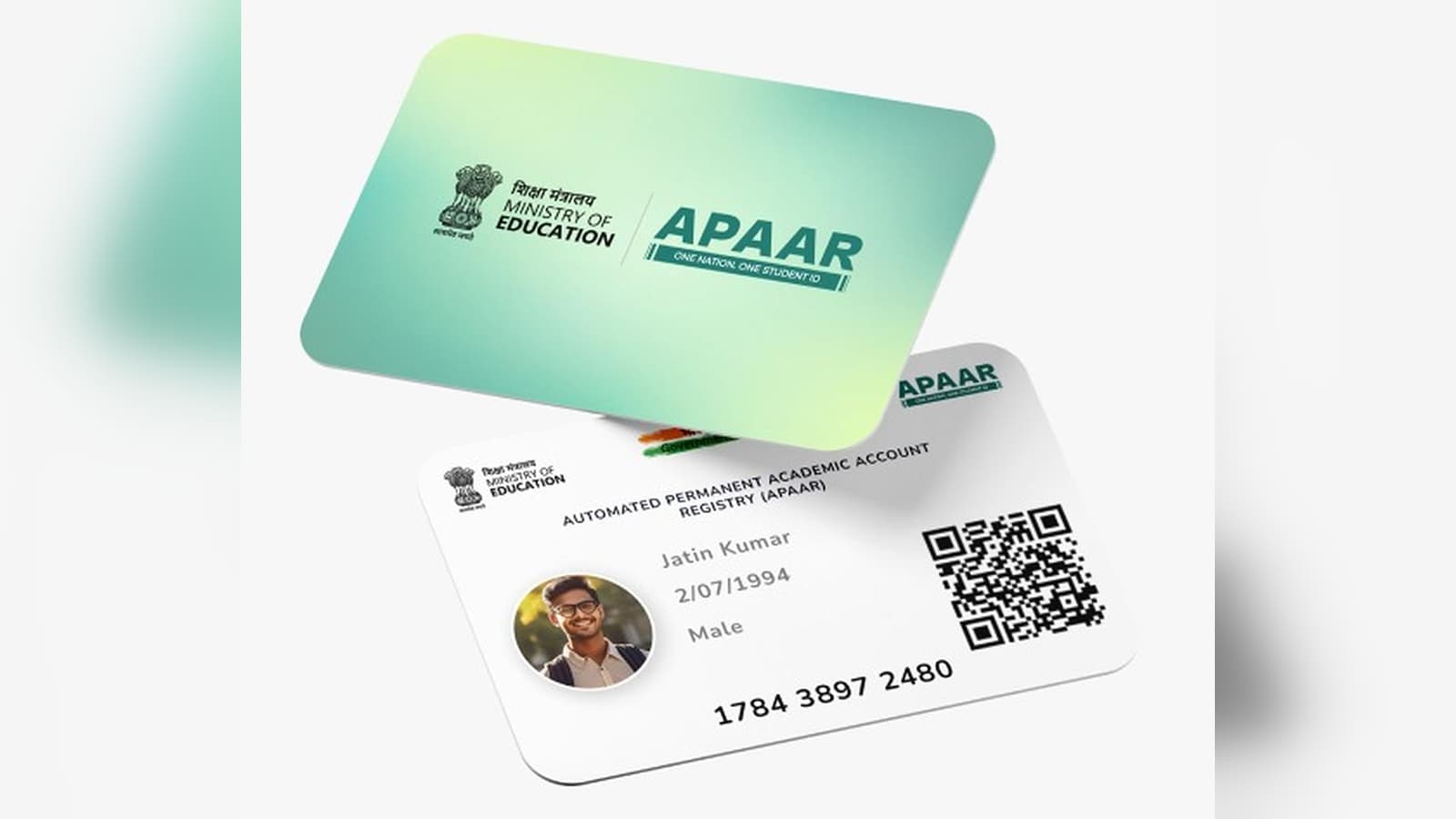
APAAR ID, the government's One Nation, One Student ID initiative, aims to connect students' academic records across India's education system.
APAAR ID is a 12-digit digital identity designed to bring students’ academic records into one place. Here is how it works, how students can register, and what parents should know about consent and data privacy.
India is moving towards a system in which students can access their academic records digitally instead of depending entirely on paper certificates, marksheets and transcripts. One of the key initiatives behind this change is the APAAR ID, also known as the ‘One Nation, One Student ID’.
The government has designed APAAR to give students a unique academic identity that can remain with them as they move from school to college, change institutions or pursue different courses. It is linked to digital platforms that help store and manage academic credentials and, in higher education, transfer eligible academic credits between institutions.
However, APAAR is not just a digital identity card. Its implementation also raises practical questions about registration, Aadhaar-linked verification, parental consent for minors, data security and whether students can be compelled to obtain it.
As of March 30, 2026, the Union government reported that 24.25 crore APAAR IDs had been generated across school, higher and skill education in a written reply to the Rajya Sabha. The scale of this rollout makes it important for students and parents to understand what the system does, what it does not do, and how their information is handled.
What Is APAAR ID and How Does the One Nation, One Student ID System Work?
APAAR stands for Automated Permanent Academic Account Registry. It is a 12-digit identification number intended to give each student a continuing digital identity within India's education system.
The Ministry of Education introduced the initiative in line with the goals of the National Education Policy (NEP) 2020, which promotes flexible learning, recognition of academic credits and multiple entry and exit options in higher education. The Academic Bank of Credits (ABC) scheme, launched in July 2021, provides the broader framework for managing academic credits.
To understand the idea, consider a student who completes school in Bihar, moves to Delhi for college and later joins a different university to complete another course. Each institution may maintain its own records, making it difficult to verify qualifications and transfer eligible credits.
APAAR is intended to make this process easier by linking the student's academic identity with records held by participating institutions and connected digital platforms.
The system can support the digital management of:
School marksheets, report cards and examination records, where uploaded by the relevant institution.
College and university marksheets, degrees, diplomas and transcripts.
Eligible academic credits earned through recognised programmes.
Skill and vocational education credentials.
Other recorded achievements, including eligible co-curricular accomplishments.
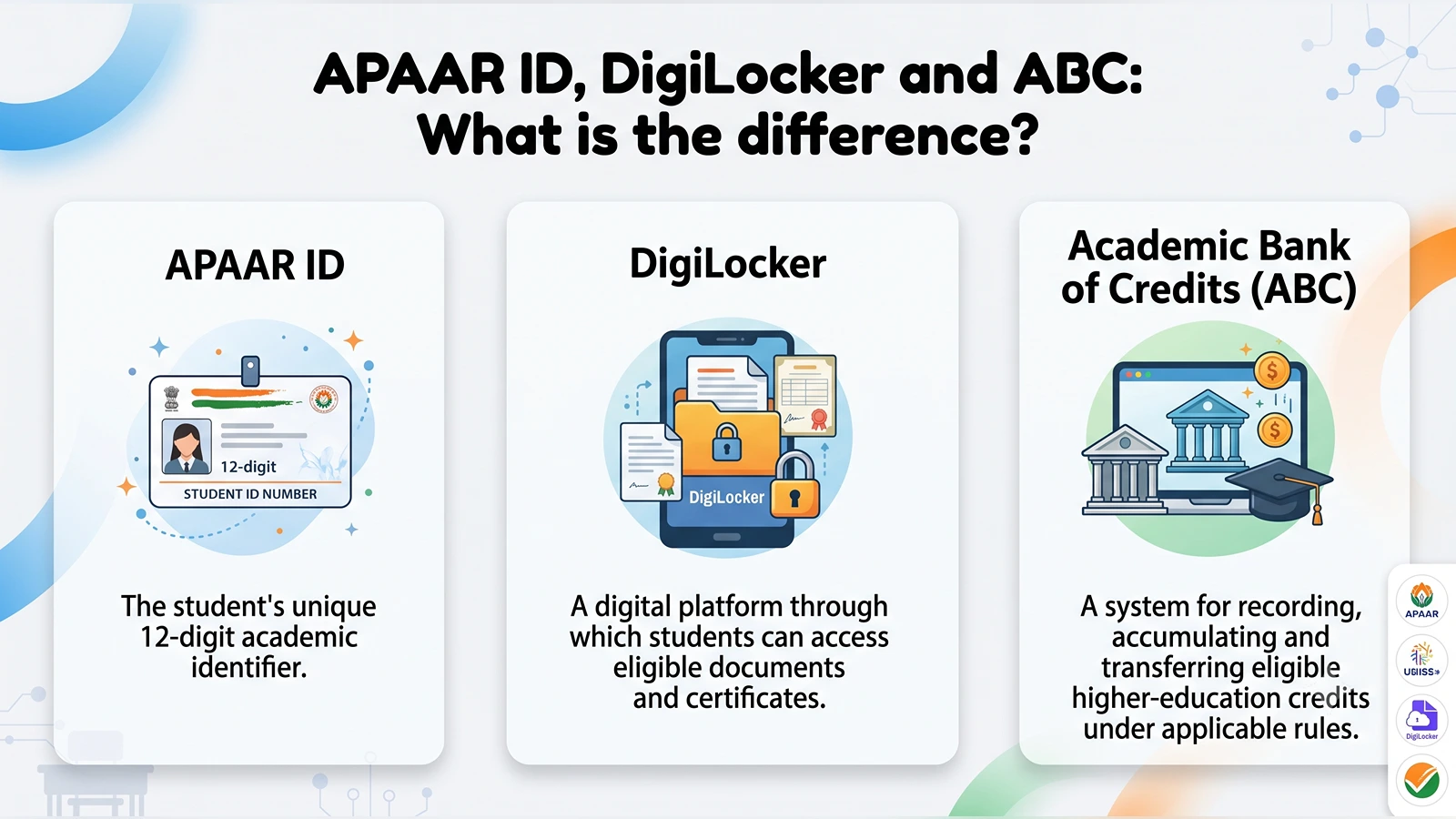
The important distinction is that APAAR ID is the identifier, not the academic certificate itself. The records are issued or uploaded by the relevant institutions through connected systems. DigiLocker helps students access their digital documents, while the Academic Bank of Credits helps manage eligible credits earned in higher education. The National Academic Depository supports the digital issuance and storage of academic awards. These systems are connected, but they do not all perform the same function.
The programme has expanded rapidly. In a Press Information Bureau backgrounder published on July 4, 2026, the government reported 26.35 crore verified APAAR IDs as of July 2, 2026. The same report recorded 2,899 higher education institutions registered with ABC, alongside participation by skill-awarding bodies. These figures cover different education sectors and should not be interpreted as the number of unique schoolchildren alone.
What Are the Benefits of APAAR ID for Students, Parents and Colleges?
The main objective of APAAR ID is to make academic records easier to maintain, access and verify throughout a student's education. Easier access to academic documents: Students can access eligible digital marksheets, certificates and other academic records through connected platforms. This can reduce dependence on physical copies when applying for further studies or seeking document verification, although individual institutions may still require specific documents or procedures.
Simpler transfers between institutions: When a student changes schools or colleges, digital records can help the receiving institution verify the student's academic history. In higher education, eligible credits can be transferred through the ABC framework when the relevant institutions and courses meet the applicable rules.
Support for flexible learning: NEP 2020 encourages multiple entry and exit options and greater flexibility in choosing courses. ABC can help students retain eligible credits when they interrupt their studies and later return, subject to the relevant credit-validity rules and institutional requirements. The government describes a maximum validity of seven years for credits under the general ABC framework, or the period prescribed for the relevant discipline. This does not mean every qualification or certificate automatically remains valid for seven years.
Reduced paperwork and duplication: A linked digital record can reduce repeated submission and manual verification of documents. It may also make it easier for institutions to identify duplicate records and verify credentials, helping limit certain forms of academic fraud.
Better education planning: Consistent student records can help institutions and authorities understand enrolment and educational progression. However, the quality of any analysis depends on whether the underlying records are accurate, complete and regularly updated.
For parents, one potential advantage is easier access to a child's academic records. For schools and colleges, the system could reduce administrative work. For students, its biggest long-term value lies in making eligible educational achievements easier to carry from one institution or course to another.
There are limits, however. An APAAR ID does not guarantee admission to a college, a scholarship, employment or automatic recognition of every course. It does not replace entrance examinations, eligibility conditions or the rules of universities and examination boards. The benefits depend on institutions uploading correct records and using the connected systems properly.
How to Apply for APAAR ID: Registration Process, Documents and Status Check
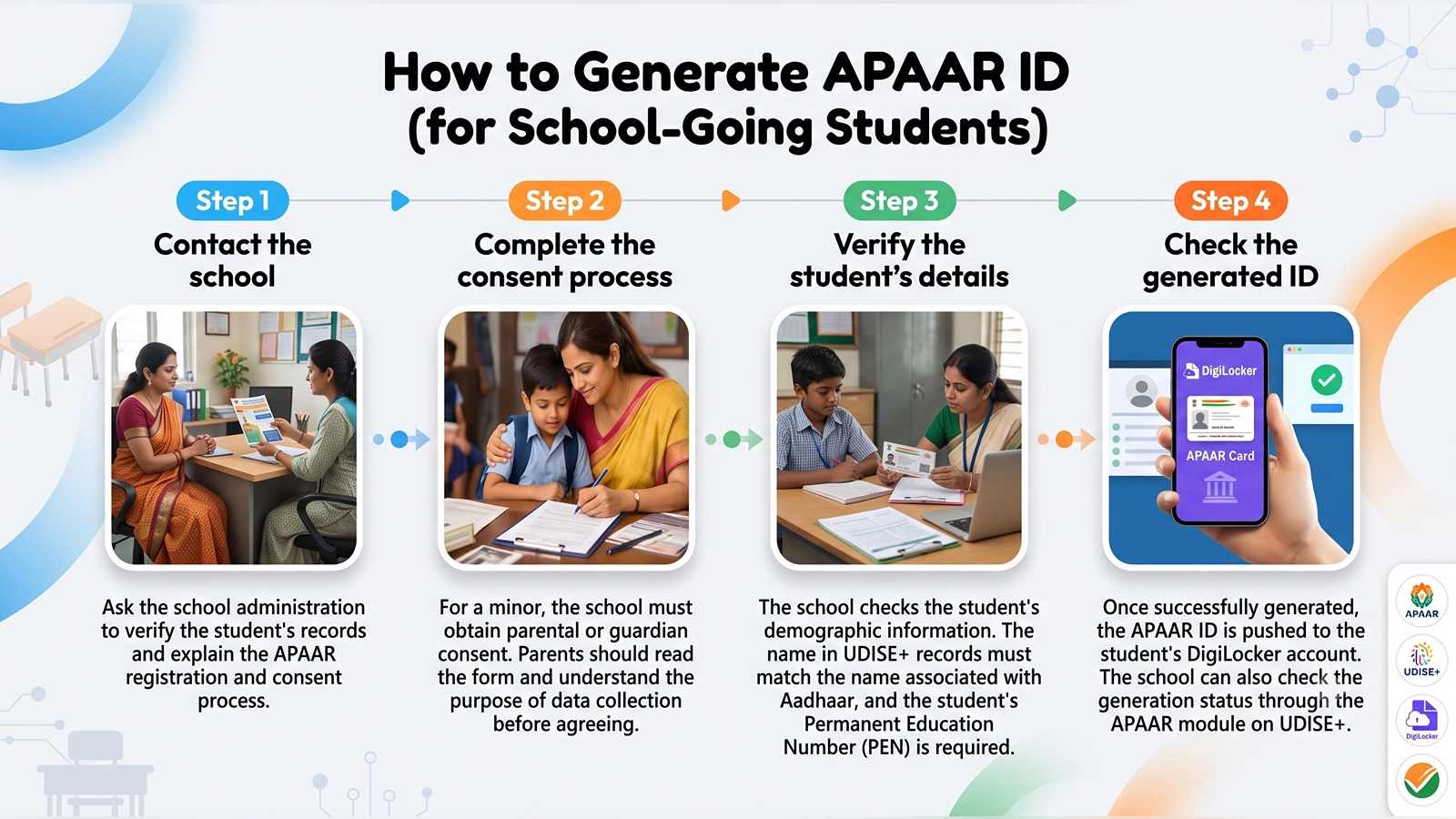
For school students, APAAR ID generation is generally coordinated through the school and the UDISE+ system. Students and parents should use the official portal or contact the school rather than rely on unofficial registration websites.
The official APAAR FAQs list the information required for school-based generation, including the student's name, date of birth, gender, parents' names, mobile number, Aadhaar details and PEN. Requirements and the route used can differ by education level, so higher-education students should follow the applicable ABC/APAAR registration process rather than assume that the school procedure applies to them.
What if the APAAR ID is not generated?
A common problem is a mismatch between the student's name or other demographic details in Aadhaar and school records. Parents should ask the school to identify the mismatch, correct the relevant record and resubmit the request. They should not create another ID simply because the first attempt failed.
Students and parents can check the official APAAR portal and FAQs. The portal also provides a help facility and lists a toll-free support number, 1800-889-3511.
Is APAAR ID Mandatory? Parental Consent, Aadhaar and Data Privacy Concerns
One of the most important questions surrounding APAAR ID is whether students must obtain it and whether schools can insist on registration.
The Ministry of Education told the Rajya Sabha on April 2, 2025, that APAAR enrolment is voluntary and consent-based, with parents or guardians providing consent for school students. However, the rollout has faced questions about how that choice works in practice when schools encourage or press families to enrol.
The issue has also reached the courts. In December 2025, the Orissa High Court issued directions concerning the APAAR consent process. According to The Times of India, on July 21, 2026, the Supreme Court directed the Central Board of Secondary Education (CBSE) to implement the High Court's consent-related directions nationwide and examine concerns about parental consent and data protection. The report said the Supreme Court had not stayed the APAAR scheme. The legal issue is therefore about how consent and safeguards should operate, not a blanket cancellation of APAAR.
For parents, this distinction matters: a school asking for an APAAR ID does not, by itself, establish that enrolment is compulsory in every circumstance. Parents should ask for the written policy applicable to their school and examination board, and should not assume that refusing consent automatically makes a child ineligible for education or board examinations.
What happens to students' personal data?
APAAR's registration and connected services involve personal and academic information. The official privacy policy describes information such as names, dates of birth, contact details, educational records and technical information. Its stated safeguards include encryption and access controls. It also explains that information may be shared with authorised institutions and other parties for academic verification.
This makes data protection a significant part of the debate, particularly because many of the students covered by the initiative are children.
Key concerns include:
Meaningful consent: Parents should understand what information is collected, why it is needed and whether they can decline enrolment.
Data security: A large, connected database requires strong protection against unauthorised access, misuse and data breaches.
Control over records: Students and parents need clear ways to correct inaccurate information and understand how deletion or withdrawal requests are handled.
Transparency and accountability: The authorities should clearly explain who can access student information, for what purposes and under what safeguards.
The APAAR privacy policy, updated on October 9, 2026, states that users can seek corrections and request account deletion, while noting that some information may be retained for legal, compliance and record-keeping purposes. It also identifies a grievance email address. The existence of a published policy is important, but effective protection depends on how consent, access, complaints and deletion requests work in practice.
The government has stated that APAAR follows applicable data-protection and security requirements. Nevertheless, parents should read the current consent form and privacy policy rather than assume that a digital ID automatically makes all data handling risk-free.
Ultimately, APAAR ID could make India's education system more connected by helping students carry their academic records between institutions. But its success will depend on more than the number of IDs generated. Accurate records, reliable digital access, transparent consent and effective protection of children's information are equally important.







.webp&w=256&q=75)




.webp&w=256&q=75)
