Why Elon Musk Called Out Mukesh Ambani and What Starlink’s India Licence Delay Is Really About: Explained
Elon Musk has accused unnamed Indian billionaires of blocking Starlink to protect their market dominance. The dispute involves satellite internet licences, spectrum allocation, national security and the battle for India’s broadband market.
Prabhav Anand11 October 2026 11:03
Elon Musk’s Starlink is awaiting final regulatory clearances to begin commercial satellite internet services in India amid a dispute over spectrum allocation and market competition.
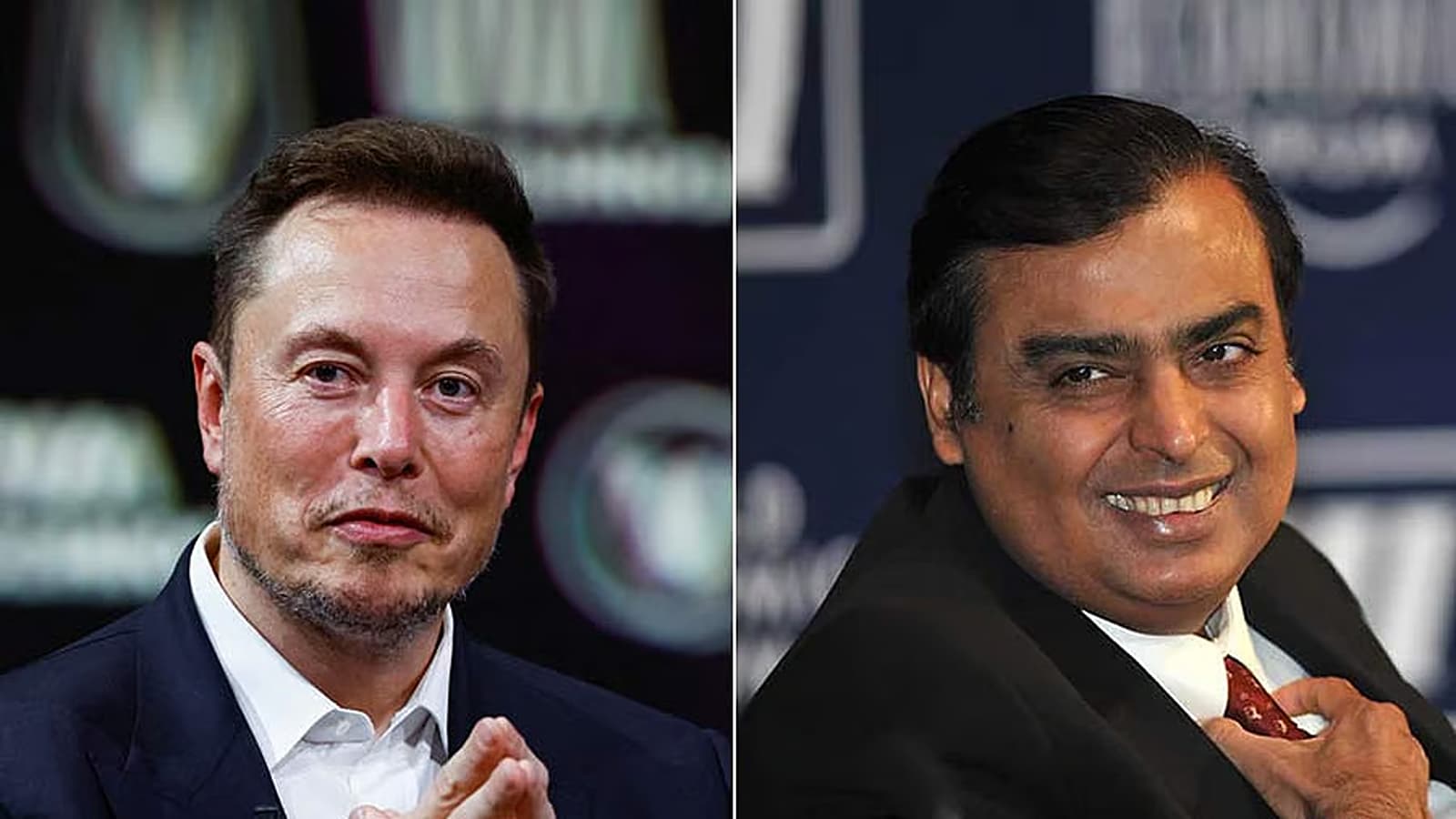
Elon Musk’s latest criticism of India’s telecom industry has reignited a long-running dispute over the entry of his satellite internet company, Starlink, into one of the world’s largest internet markets. On October 7, 2026, Musk accused unnamed “oligarchs” of preventing Starlink from launching in India to protect their control over the market. His remarks appeared to point towards powerful telecom businesses associated with Mukesh Ambani’s Reliance Jio and Sunil Bharti Mittal’s Bharti Airtel, although Musk did not name either businessman directly.
The controversy is not simply about whether India should allow another internet company to operate. It concerns a bigger question: Should satellite internet companies receive access to spectrum under different rules from traditional telecom operators, and who should decide how that access is granted?
Starlink has obtained important regulatory approvals in India, but it is still waiting for the remaining permissions needed to begin commercial services. The government says its approval process is not discriminatory and that the companies involved are at broadly similar stages of regulatory scrutiny.
To understand why Musk is challenging India’s telecom establishment, it is necessary to look at the competition between satellite and traditional broadband, the disagreement over spectrum pricing, and the security concerns that have complicated Starlink’s entry.
What did Elon Musk say about Mukesh Ambani and Starlink?
On October 7, Musk posted on X that Starlink was being blocked by “certain oligarchs” to maintain their “monopolistic chokehold” over Indian consumers. He described the alleged obstruction as a “crime against the people of India”. He followed this up on October 8, questioning why Starlink was still unable to begin commercial operations after spending years complying with Indian government requirements.
Although Musk did not explicitly identify Ambani, the dispute has a clear commercial background. Reliance Jio is one of India’s largest telecom operators, while Bharti Airtel is another major player. Both groups also have interests in satellite communications, putting them in a position to compete with Starlink as well as potentially partner with it.
The allegation, however, needs to be separated from the established facts. There is no publicly established evidence that Ambani personally intervened to block Starlink’s approval. The government has rejected the suggestion that its regulatory process is unfair and says the relevant satellite operators are undergoing security assessments.
The disagreement is rooted in a question that has divided the industry for years: Should satellite internet companies receive access to spectrum through government allocation, or should they have to compete for it in an auction?
Why are Mukesh Ambani and Elon Musk fighting over spectrum?
To understand the dispute, it helps to know what spectrum means. Spectrum refers to the range of radio frequencies used to carry information wirelessly. Mobile operators need it to connect phones to their networks, while satellite internet providers use radio frequencies to communicate between satellites, ground stations and user terminals. Spectrum is a limited public resource. Governments decide how it can be used, who can access it and what companies must pay.
The disagreement between Musk and Ambani became particularly visible in 2024, when India debated how to assign spectrum for satellite broadband services. Musk supported the administrative allocation of satellite spectrum rather than a competitive auction. Under this approach, the government assigns spectrum to eligible operators under a regulatory framework and charges them for its use.
Reliance Jio, meanwhile, argued that satellite broadband providers could compete with traditional telecom companies for similar customers and should not receive an unfair cost advantage. The company favoured an auction-based approach to ensure a level playing field.
The difference is important because the two technologies have different cost structures. Traditional telecom operators invest heavily in mobile towers, fibre-optic cables, spectrum auctions and network equipment. Satellite internet providers use satellites in orbit, ground infrastructure and specialised user terminals to deliver connectivity.
Jio’s argument is that if satellite broadband competes directly with terrestrial broadband, the rules should account for the costs and obligations borne by both. Musk’s position is that satellite spectrum should be allocated administratively, as the law provides for satellite services, rather than subjected to the same auction model used for terrestrial mobile spectrum.
India ultimately adopted the administrative allocation route under the Telecommunications Act, 2023. But that did not settle every issue: spectrum pricing, security clearances and the conditions for commercial operations remained outstanding.
The dispute is therefore not simply a personal rivalry between two billionaires. It is a conflict over regulation, the cost of entering the market and the rules under which competing technologies should operate.
Why is Starlink’s India licence still delayed?
One of the biggest sources of confusion is the claim that Starlink has no Indian licence at all. The regulatory position is more complicated.
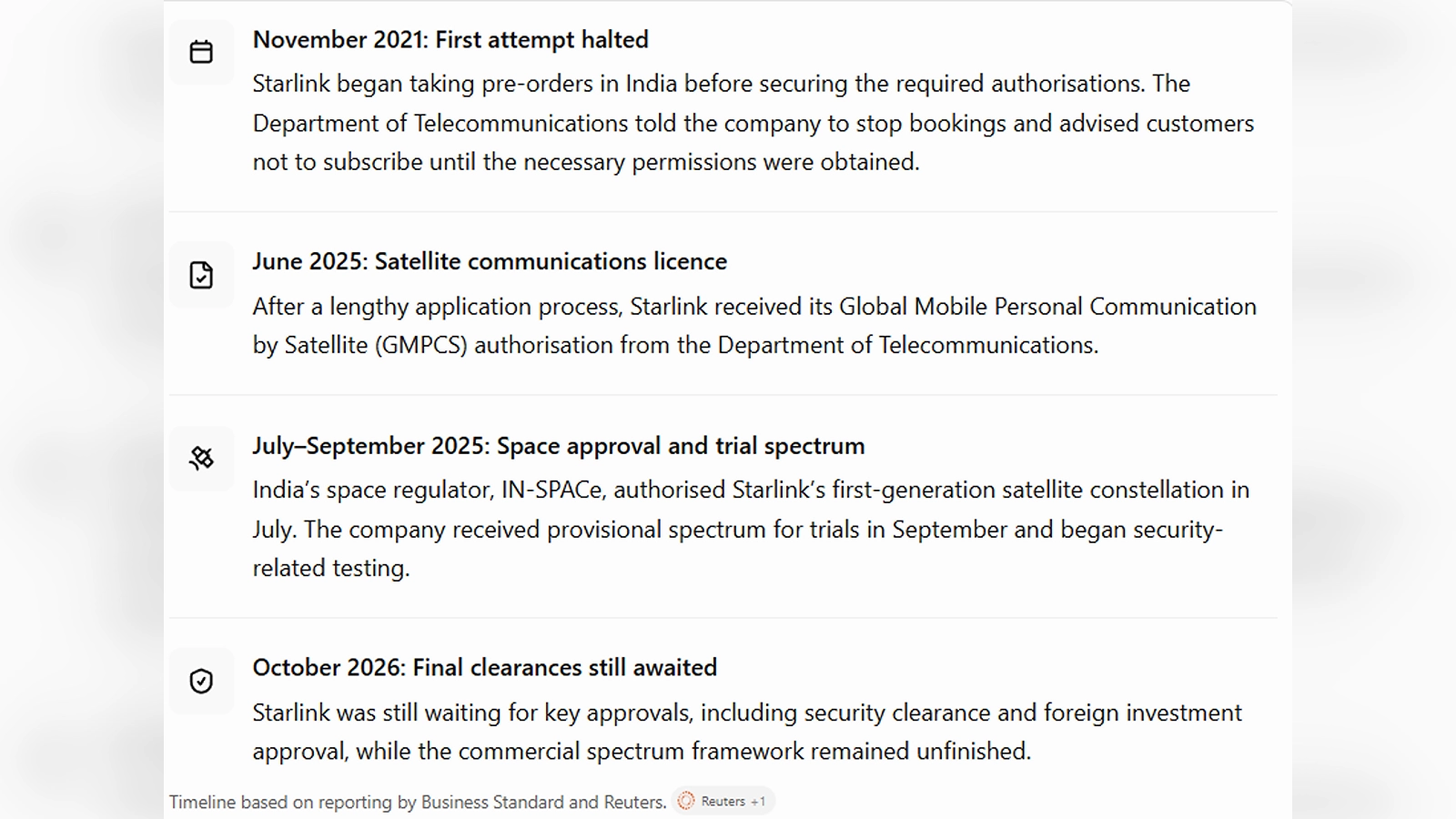
As of October 8, 2026, Starlink had secured important permissions but had not received all the approvals needed to start commercial services. Business Standard reported that the outstanding issues included security clearance, foreign investment approval and the final arrangements for commercial spectrum allocation.
Here is how the process has unfolded.
Three issues help explain the delay.
1. National security and control over the network
Satellite internet does not rely on mobile towers in the same way as conventional broadband. Starlink uses a large constellation of low-Earth-orbit satellites to connect user terminals with its network and ground infrastructure.
Indian authorities need assurances that they can enforce lawful interception requirements, monitor relevant communications under the law, and restrict service in specific areas or to particular users when legally required. They also need to know that Indian user traffic can be controlled in accordance with domestic requirements.
Business Standard reported that officials have examined whether Starlink’s inter-satellite laser links could allow Indian traffic to bypass domestic ground gateways, potentially complicating monitoring and control. The government has also sought assurances about its ability to direct the network during emergencies or conflict.
These are not merely commercial questions. Satellite communications can be important during natural disasters, in border areas and during security operations. The government has a legitimate responsibility to establish enforceable safeguards before authorising a service.
2. Foreign investment approval
Starlink is a wholly owned subsidiary of SpaceX, the US company founded by Musk. India permits foreign investment in satellite services, but applicable ownership and approval requirements must still be met.
Business Standard reported on October 8 that Starlink’s foreign direct investment proposal remained among the pending approvals. This is a separate regulatory issue from the satellite communications licence itself.
3. Commercial spectrum allocation and pricing
Receiving a licence does not automatically give a company the right to start selling satellite internet services. The operator also needs the relevant spectrum rights and must satisfy the applicable regulatory conditions.
The Department of Telecommunications has backed a spectrum usage charge of 5% of adjusted gross revenue, with an incentive for operators providing connectivity in remote areas. Business Standard reported that this charge was still awaiting Union Cabinet approval as of October 8, 2026.
The distinction matters: Starlink has already received a satellite communications licence and permission for its constellation, but those approvals are not equivalent to final authorisation for a nationwide commercial launch.
What does Starlink want from India, and why does it matter?
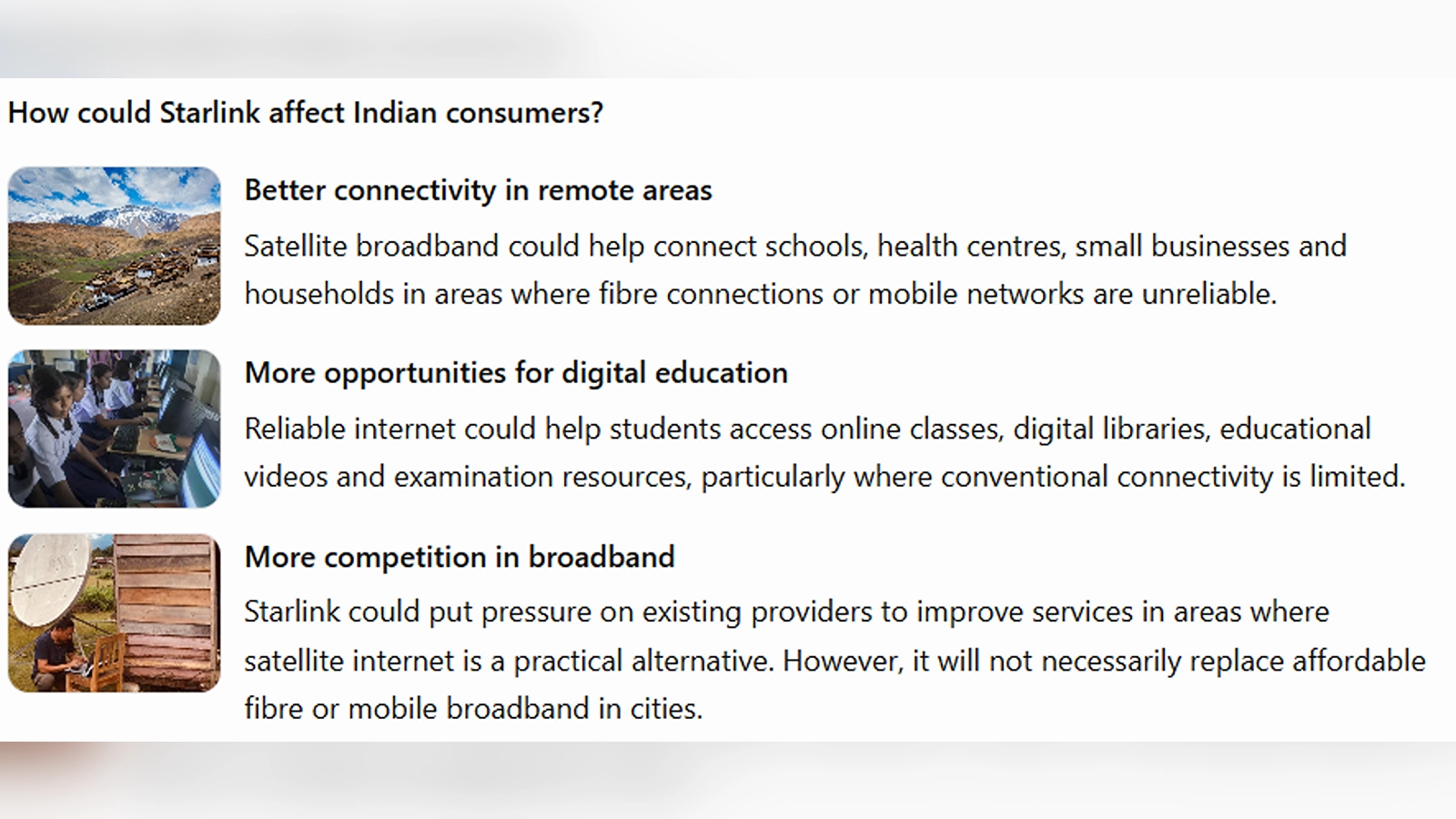
Starlink is operated by SpaceX and uses satellites in low-Earth orbit to provide internet access. Unlike conventional broadband, which often depends on fibre-optic cables, or mobile internet, which relies on cellular towers, satellite internet can connect users in areas where building terrestrial infrastructure is difficult or expensive.
This makes India an attractive market, particularly in remote villages, mountainous regions, border areas and locations where reliable broadband remains difficult to provide.
Starlink’s entry could also increase competition in the Indian internet market, although its actual impact will depend on pricing, network performance, equipment costs and regulatory conditions.
How could Starlink affect Indian consumers?
There is a significant limitation: satellite internet is not automatically cheaper than conventional broadband. Customers generally need compatible equipment, and the service must be priced competitively to attract Indian households. Starlink’s eventual subscription fees, equipment costs and service conditions will determine how accessible it becomes.
The commercial opportunity is substantial. Reuters reported on October 8, 2026, that Deloitte had projected India’s satellite broadband market could reach $1.9 billion by 2030. This is a market forecast, not a guarantee of future revenue.
The competition is also not limited to Starlink and Jio. Bharti Airtel has an association with Eutelsat OneWeb, while Reliance Jio has its own satellite communications interests through its partnership with SES. These companies are pursuing satellite connectivity alongside their existing telecom businesses.
Interestingly, Starlink has also entered into agreements with Jio and Airtel to explore the distribution of its services in India, subject to regulatory approvals. These partnerships show that the companies can be competitors in one area and commercial partners in another.
Is the government deliberately favouring Mukesh Ambani?
At present, the publicly available evidence does not establish that the government is deliberately delaying Starlink to protect Reliance Jio, or that Ambani personally caused the delay.
India’s telecommunications ministry rejected Musk’s accusation on October 8, describing the suggestion of unfair or discriminatory treatment as baseless. It said the relevant operators were at broadly similar stages of the approval process, with security assessments underway.
That response does not automatically settle every question about the speed or transparency of the regulatory process. Starlink has spent years preparing to enter India, and the continued wait raises legitimate questions about how efficiently approvals are being handled.
At the same time, Musk’s allegations should not be treated as proven simply because his company has faced delays. The existence of competing commercial interests does not, by itself, demonstrate regulatory interference.
The central issue is whether India is applying clear, consistent and proportionate rules to all satellite operators, including those with Indian and foreign ownership.
The government must protect national security and ensure that spectrum is used responsibly. It must also provide predictable rules so companies can make investment decisions and consumers can benefit from competition. Both objectives matter.
What happens next in the Starlink India dispute?
As of October 9, 2026, Starlink’s immediate challenge is to obtain the remaining regulatory clearances and secure the conditions necessary to begin commercial operations. The government must complete the relevant security assessments and finalise the spectrum framework.
The outcome will matter beyond one company. If Starlink launches, India will gain another potential provider of broadband connectivity, particularly in areas underserved by existing networks. If the process continues to stall, questions about regulatory predictability and the practical barriers facing new entrants are likely to remain.
For Mukesh Ambani’s Reliance Jio, the arrival of Starlink could introduce a new competitor in parts of the broadband market. But satellite internet and conventional telecom networks have different strengths, costs and customer segments. The two technologies may compete in some areas while complementing each other in others.
The bigger story is not simply Elon Musk versus Mukesh Ambani. It is about who gets access to India’s digital market, how public resources are allocated and whether the rules allow consumers to benefit from fair competition.
Musk has framed the delay as a battle against powerful business interests. The government has framed it as a matter of fair regulation and security. The facts currently available point to a more complicated dispute involving spectrum policy, foreign investment, network control and commercial competition.
Ultimately, the test will be whether India can resolve these issues transparently, apply its rules consistently and allow satellite internet to develop without compromising national security.





.jpg&w=256&q=75)





.jpg&w=256&q=75)
