India's Olympic ambitions have often been expressed in terms of medals: more athletes, more disciplines and, ultimately, a bigger medal tally. Prime Minister Narendra Modi's latest remarks have now put another part of the equation in focus: participation itself.
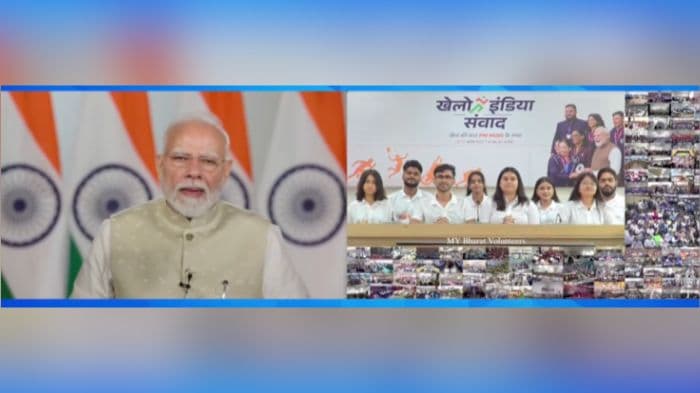
Speaking at the Khelo India Dialogue, Modi pointed out that India does not participate in half of the sports on the Olympic programme and said the country needs to expand its presence across disciplines. He specifically pointed to sports such as surfing and sport climbing as areas where India could explore its potential.

But there is another question that needs to accompany that ambition: what happens to an athlete between being identified as talent and actually reaching the Olympic stage?
For many athletes, the challenge is not simply finding a sport to participate in. It is finding a functioning ecosystem in which they can train, compete, access quality coaching, receive timely financial support and progress without having to navigate an opaque administrative system.
Infrastructure remains one of the most persistent concerns. Research on India's sports system has identified inadequate sporting facilities and limited access to quality coaching and training among the challenges confronting Olympic sport.
And infrastructure is not merely about building another stadium. An athlete needs usable training facilities, equipment, coaching, medical support and regular competition. A facility that exists on paper but cannot adequately serve athletes does little to expand India's Olympic pipeline.
Then comes the question of how public money meant for sport is actually used.
A 2026 investigation report by The Indian Express found out that money from the National Sports Development Fund, created to support athletes and sports infrastructure, was allegedly used for upgrading facilities linked to Delhi bureaucrats and exclusive government institutions.
That raises a question far more fundamental than whether India competes in 16 or 32 Olympic sports: is the system directing resources towards athletes who need them most?
Governance is another part of the problem. India's sports ecosystem has repeatedly had to deal with administrative disputes, delays and questions over the functioning of sporting bodies. The government itself introduced the National Sports Governance Act in 2025 with provisions aimed at governance, ethics, athlete welfare and dispute resolution.
The country's anti-doping record also shows why simply expanding participation cannot be separated from the quality of the sporting ecosystem. India's athletics federation was placed in the highest-risk category by the Athletics Integrity Unit in 2026 following continued anti-doping violations, while India had topped the World Anti-Doping Agency's list of doping offenders for three consecutive years.
So yes, India needs to participate in more Olympic disciplines.
But participation cannot be manufactured by announcing that India should enter more events.
If the government wants children to move from playgrounds to Olympic podiums, the pathway has to work from the bottom up.
Talent identification must be followed by sustained training. Training must be supported by qualified coaches and proper facilities.
Athletes must be able to access funding without unnecessary administrative obstacles. And sports bodies entrusted with public resources must be transparent and accountable.
Asking India to enter more Olympic sports is the easy part. Building a system in which an athlete from a small town can actually survive, train and compete in those sports is the harder one.
And that is where India's Olympic medal race will ultimately be won or lost.