


The initiative targets young international audiences, aims to expand access to language education in underserved regions, and supports Japan's broader efforts to promote its culture globally.
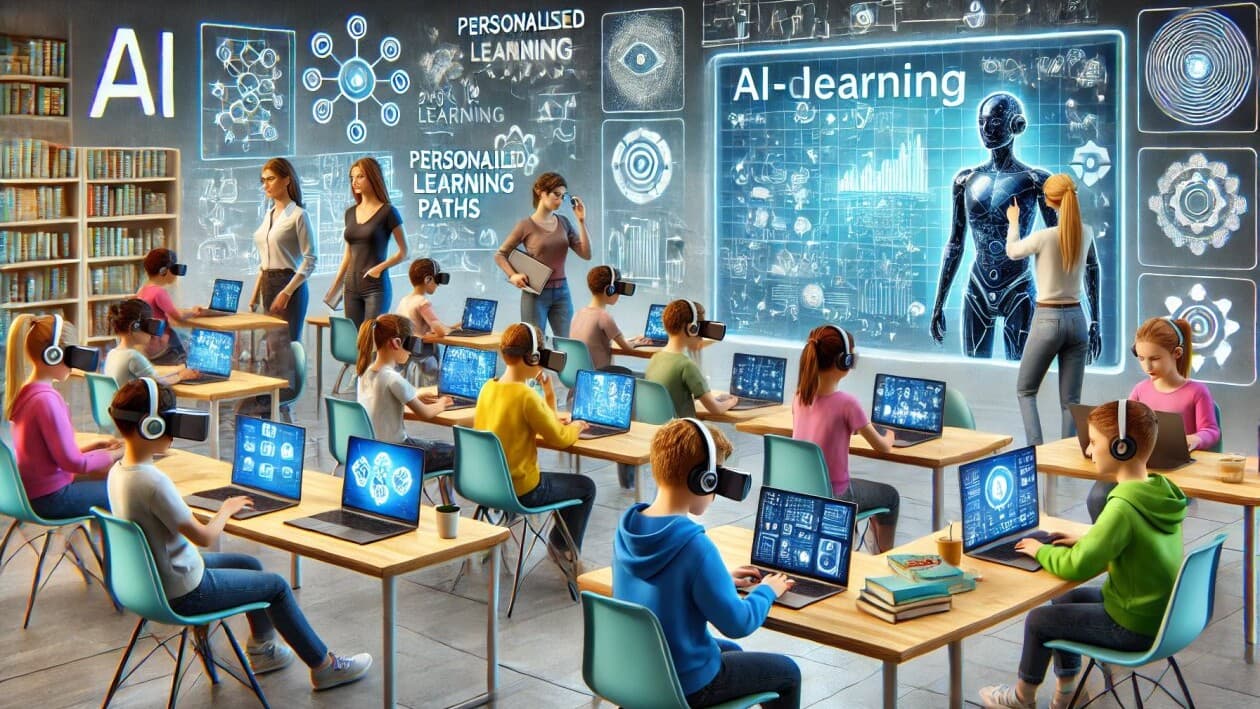
Japan is planning to develop an artificial intelligence-powered language-learning app that will allow users to practice Japanese conversations with popular anime and manga characters, using the country's growing pop-culture appeal to attract more international learners.
The proposed application will be developed by the Japan Foundation (JF) at the request of the Ministry of Foreign Affairs, following budget approval for the next fiscal year.

The project is expected to be completed by fiscal 2028 and will primarily target young people overseas who are interested in Japanese anime and manga.
The app will use artificial intelligence (AI) to create interactive language-learning experiences, allowing users to practice conversations with characters from well-known Japanese entertainment franchises.
Unlike the foundation's earlier language-learning applications and websites, which relied on original characters because of copyright restrictions, the new project will involve negotiations with copyright holders to obtain permission to feature popular anime and manga characters.
The initiative will also mark the first time the Japan Foundation incorporates AI technology into its language-learning services.
Japan plans AI language-learning app to attract anime and manga fans
The proposed application is part of Japan's broader efforts to strengthen its cultural influence internationally by turning growing interest in Japanese entertainment into wider engagement with the country's language, education and society.
The government is increasingly looking to use its cultural exports as an instrument of soft power diplomacy, particularly in regions where Japanese popular culture has gained attention but the country's cultural presence remains comparatively limited.
These efforts include emerging and developing economies across Africa, Central America and South America, where Japan hopes to build a stronger international following.
By combining AI-powered conversations with familiar characters from anime and manga, the proposed platform aims to make Japanese-language learning more appealing to young international audiences.
The approach is expected to connect entertainment interests with language education, encouraging people who already follow Japanese popular culture to develop their language skills.
Anime, manga and J-pop drive overseas interest in Japanese language
A 2024 survey conducted by the Japan Foundation found that interest in Japanese popular culture was the leading motivation for studying the language among overseas learners.
Around 61.3% of students enrolled in Japanese-language education institutions outside Japan cited their interest in anime, manga, J-pop and J-fashion as a reason for learning Japanese.
The survey also recorded a new high in the number of people studying Japanese overseas, with the total reaching 4 million learners.
This represented a 5.4% increase compared with the previous survey conducted in 2021.
Interest in pursuing education and employment opportunities in Japan also featured prominently among the reasons for learning the language.
Around 37.3% of respondents identified studying in Japan as a motivation, while 36.4% said they were interested in future employment opportunities in the country.
The findings indicate that Japanese-language learning is driven by a combination of cultural interests and practical aspirations, including higher education and career opportunities.
The proposed AI application seeks to build on this existing interest by offering an additional way to learn Japanese beyond conventional classroom-based instruction.
Japan seeks ¥1.83 billion budget for overseas expansion of Japanese content
The Ministry of Foreign Affairs has requested ¥1.83 billion ($11.6 million) for fiscal 2027 to support the international expansion of Japanese content.
The proposed funding is part of the government's wider strategy to strengthen Japan's soft power and increase the global reach of its creative industries.
Alongside the planned language-learning application, the government is considering several initiatives to promote Japanese cultural products and improve their accessibility in international markets.
These include creating networks that connect Japanese content industry professionals with counterparts in other countries.
The initiatives also aim to encourage the use of legitimate distribution channels to address piracy and support translators who help introduce Japanese creative works to overseas audiences.
Supporting translation professionals is expected to help Japanese content reach international audiences across different languages and markets.
The measures reflect Japan's efforts to expand the overseas presence of its entertainment and creative industries while building stronger connections with local content professionals.
AI app could expand Japanese-language education in underserved regions
The Japan Foundation's proposed application is also expected to address limited access to Japanese-language education in countries and regions where educational infrastructure remains inadequate.
In some areas, schools offering Japanese-language courses and qualified teachers are scarce, making it difficult for interested learners to access formal instruction.
The ministry hopes the AI-powered platform will provide an alternative learning option in such locations without requiring the establishment of additional overseas teaching facilities.
By allowing users to practice conversations digitally, the application could offer a relatively low-cost approach to expanding access to Japanese-language education.
The project is expected to combine Japan's international popularity in anime and manga with emerging AI technology to reach a wider group of learners.
If completed as planned by fiscal 2028, the application could become a new component of Japan's efforts to promote its language and culture internationally.

India Wins Five Medals at Junior Astronomy Olympiad 2026; Students Secure Two Golds

Want to speak Japanese with anime characters? Japan is developing an AI-powered language education app

India’s Race to the Bottom of the Ocean: MATSYA-6000 Aims to Take Three Indians 6,000 Metres Deep

Why are 3 in 4 Singapore parents turning to private tuition despite trust in schools?

Delhi-NCR schools go hybrid: Which classes are affected and what parents should know?
Want to speak Japanese with anime characters? Japan is developing an AI-powered language education app
Why are 3 in 4 Singapore parents turning to private tuition despite trust in schools?
Delhi-NCR schools go hybrid: Which classes are affected and what parents should know?

One in three New Zealand students more than a year behind at school

Australia launches free disability resources to help teachers build inclusive classrooms

India Wins Five Medals at Junior Astronomy Olympiad 2026; Students Secure Two Golds
Want to speak Japanese with anime characters? Japan is developing an AI-powered language education app
India’s Race to the Bottom of the Ocean: MATSYA-6000 Aims to Take Three Indians 6,000 Metres Deep
Why are 3 in 4 Singapore parents turning to private tuition despite trust in schools?
Delhi-NCR schools go hybrid: Which classes are affected and what parents should know?
Want to speak Japanese with anime characters? Japan is developing an AI-powered language education app
Why are 3 in 4 Singapore parents turning to private tuition despite trust in schools?
Delhi-NCR schools go hybrid: Which classes are affected and what parents should know?
One in three New Zealand students more than a year behind at school
Australia launches free disability resources to help teachers build inclusive classrooms
Copyright© educationpost.in 2026 All Rights Reserved.