


Supreme Court Directs Rajasthan High Court to Complete Appointment of Visually Impaired Judicial Candidate
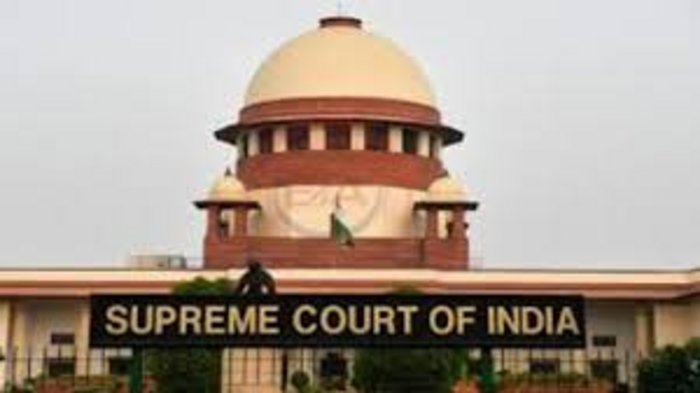
The Supreme Court has directed the Rajasthan High Court to complete the appointment of Rekha Sharma as a Civil Judge (Junior Division), bringing renewed attention to the challenges faced by persons with benchmark disabilities in public recruitment. Sharma, who has low vision, cleared the Rajasthan Judicial Service examination but faced delays after a medical board reduced her certified disability percentage from 40% to 30%.
The matter began with a recruitment advertisement issued by the Rajasthan High Court on April 9, 2024, for 222 civil judge vacancies, including nine posts reserved for persons with benchmark disabilities. Sharma qualified for the Main examination and became eligible for an interview but was initially not called.

The Supreme Court intervened in a suo motu case on October 24, 2024, directing that candidates, including Sharma, who had secured the minimum qualifying marks under the reserved category be called for interviews. In April 2025, the court also ordered her appointment as a Civil Judge (Junior Division).
However, during the subsequent verification of her antecedents, character and medical fitness under the Rajasthan Judicial Service Rules, 2010, a medical board assessed her disability at 30%. This differed from her disability certificate issued by the Rajasthan government's Department of Medical and Health on November 2, 2020, which recorded it at 40%.
The revised assessment resulted in her being declared ineligible under the physically handicapped category, preventing her from receiving the reservation benefit.
Challenging the reassessment, Sharma argued that the medical board was authorised to evaluate her functional fitness to perform judicial duties, not to alter the disability percentage recorded in her statutory certificate. Her counsel also submitted that the certificate had not been challenged through the appeal mechanism under Section 59 of the Rights of Persons with Disabilities (RPwD) Act, 2016.
Sharma subsequently approached the Supreme Court again on September 19, seeking relief against the reduction in her disability percentage. Her legal team maintained that a person with benchmark disability must have a certified disability of at least 40% to qualify for reservation under the law.
On October 27, the Supreme Court dismissed an application filed by the Rajasthan High Court, describing it as “highly frivolous” and observing that it appeared intended to avoid compliance with the court’s earlier directions. It directed the High Court to complete the appointment process.
The ruling also raises questions about the scope of medical boards in recruitment involving persons with disabilities. Sharma’s counsel argued that such boards should assess a candidate’s functional ability to perform a particular job, while challenges to disability certificates must follow the separate statutory appeal procedure.
The case highlights how disputes over disability assessments can delay appointments and affect the implementation of reservation rights for persons with benchmark disabilities.
Rekha Sharma’s 40% Disability Certificate Disputed After Medical Board Reassessed It at 30%

Arctic Seals Face Rising Extinction Risk as Climate Change Accelerates Sea Ice Loss
India's Multi-Alignment Policy Faces Fresh Diplomatic Challenges

AI Model Can Identify Zero-Day Vulnerabilities in Critical Software
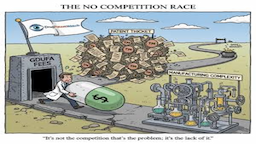
Patent Rejection Opens Possibilities for Generic Competition

Canada shifts focus to research talent as New Zealand targets growth in international education

Delhi to Attempt Artificial Rain Again as Pollution Chokes Capital; New Aircraft to Be Deployed

Want to speak Japanese with anime characters? Japan is developing an AI-powered language education app

Why are 3 in 4 Singapore parents turning to private tuition despite trust in schools?
Delhi-NCR schools go hybrid: Which classes are affected and what parents should know?

Rekha Sharma’s 40% Disability Certificate Disputed After Medical Board Reassessed It at 30%
Arctic Seals Face Rising Extinction Risk as Climate Change Accelerates Sea Ice Loss
India's Multi-Alignment Policy Faces Fresh Diplomatic Challenges
AI Model Can Identify Zero-Day Vulnerabilities in Critical Software
Patent Rejection Opens Possibilities for Generic Competition
Canada shifts focus to research talent as New Zealand targets growth in international education
Delhi to Attempt Artificial Rain Again as Pollution Chokes Capital; New Aircraft to Be Deployed
Want to speak Japanese with anime characters? Japan is developing an AI-powered language education app
Why are 3 in 4 Singapore parents turning to private tuition despite trust in schools?
Delhi-NCR schools go hybrid: Which classes are affected and what parents should know?
Copyright© educationpost.in 2026 All Rights Reserved.