


Hooded Seal Classified as Endangered, While Harp and Bearded Seals Move to Near Threatened Category
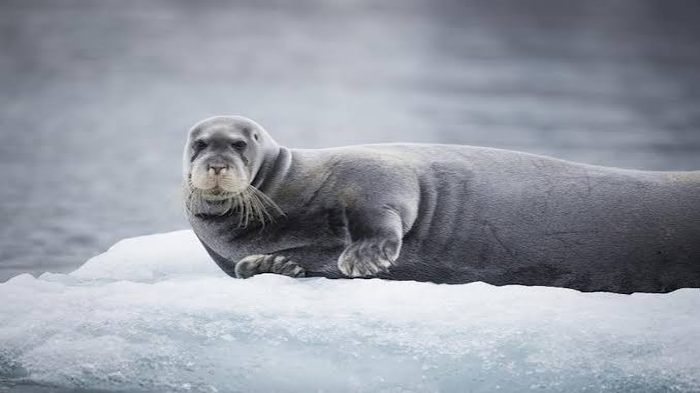
Three Arctic seal species are facing an increased risk of extinction as rising global temperatures accelerate the melting of sea ice, threatening the habitats they depend on for survival. According to an update to the International Union for Conservation of Nature (IUCN) Red List, the hooded seal has been reclassified from Vulnerable to Endangered, while the harp seal and bearded seal have moved from Least Concern to Near Threatened.
The updated classifications were announced at the IUCN World Conservation Congress in Abu Dhabi on October 10, 2025. The changes underline the growing impact of climate change on Arctic wildlife, particularly animals that depend on sea ice for breeding, raising their young, moulting and accessing feeding grounds.

Arctic seals play a significant role in maintaining marine ecosystems. They feed on fish and invertebrates, help recycle nutrients and serve as an important food source for predators such as polar bears. Indigenous communities across the Arctic also depend on them. Their ecological importance makes them keystone species, meaning their decline could disrupt the wider marine food web.
The primary threat to these species is the rapid loss of sea ice caused by global warming. Thinning and retreating ice reduces suitable areas for breeding, resting and raising pups. It also affects feeding patterns and makes previously inaccessible Arctic habitats more exposed to human activities.
The IUCN has highlighted that the Arctic is warming significantly faster than other parts of the world. This process, known as Arctic amplification, contributes to shrinking sea ice, changing precipitation patterns and the intensification of atmospheric rivers. Permafrost thawing also releases iron and other potentially toxic metals, affecting river water quality and biodiversity.
Another major development is Atlantification, in which warmer Atlantic Ocean water increasingly enters the Arctic Ocean. This leads to ocean warming, changes in water circulation and mixing, further sea ice loss and shifts in marine ecosystems.
Apart from climate change, Arctic seals face threats from shipping, underwater noise pollution, oil and mineral exploration, hunting and accidental capture in fishing equipment. The IUCN has recommended protecting critical habitats, reducing accidental catches, promoting sustainable hunting and limiting noise from human activities.
Established in 1948, the IUCN is a global environmental network bringing together governments, non-governmental organisations and Indigenous communities to support nature conservation. Its Red List assessment highlights the urgent need to protect ice-dependent species as climate change transforms the Arctic ecosystem.

Rekha Sharma’s 40% Disability Certificate Disputed After Medical Board Reassessed It at 30%
Arctic Seals Face Rising Extinction Risk as Climate Change Accelerates Sea Ice Loss
India's Multi-Alignment Policy Faces Fresh Diplomatic Challenges

AI Model Can Identify Zero-Day Vulnerabilities in Critical Software
Patent Rejection Opens Possibilities for Generic Competition

Canada shifts focus to research talent as New Zealand targets growth in international education

Delhi to Attempt Artificial Rain Again as Pollution Chokes Capital; New Aircraft to Be Deployed

Want to speak Japanese with anime characters? Japan is developing an AI-powered language education app

Why are 3 in 4 Singapore parents turning to private tuition despite trust in schools?
Delhi-NCR schools go hybrid: Which classes are affected and what parents should know?

Rekha Sharma’s 40% Disability Certificate Disputed After Medical Board Reassessed It at 30%
Arctic Seals Face Rising Extinction Risk as Climate Change Accelerates Sea Ice Loss
India's Multi-Alignment Policy Faces Fresh Diplomatic Challenges
AI Model Can Identify Zero-Day Vulnerabilities in Critical Software
Patent Rejection Opens Possibilities for Generic Competition
Canada shifts focus to research talent as New Zealand targets growth in international education
Delhi to Attempt Artificial Rain Again as Pollution Chokes Capital; New Aircraft to Be Deployed
Want to speak Japanese with anime characters? Japan is developing an AI-powered language education app
Why are 3 in 4 Singapore parents turning to private tuition despite trust in schools?
Delhi-NCR schools go hybrid: Which classes are affected and what parents should know?
Copyright© educationpost.in 2026 All Rights Reserved.