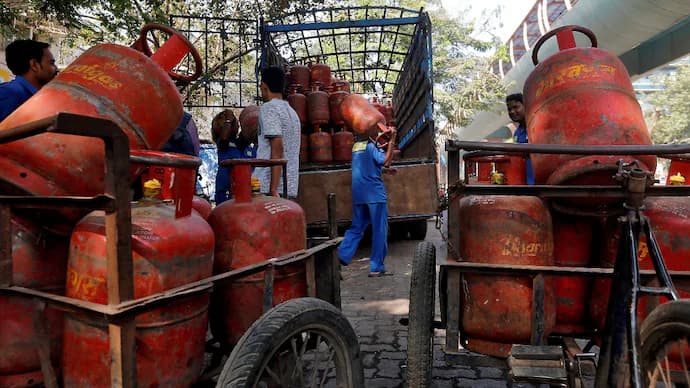
Domestic cooking gas prices have been raised across India, with the cost of a 14.2-kg household LPG cylinder increasing by ₹60 and commercial cylinders becoming costlier by around ₹115. The revised prices came into effect on March 7 amid a sharp surge in global energy costs triggered by the escalating conflict in West Asia.
According to the Indian Oil Corporation (IOC), the price of a non-subsidized domestic LPG cylinder in Delhi has increased from ₹853 to ₹913.

Similar increases have been reported across major cities. In Mumbai, a domestic LPG cylinder now costs ₹912.50, while in Kolkata the price has risen to about ₹939. In Chennai, the revised rate stands at ₹928.50 per cylinder.
Industry officials attributed the hike to rising international energy prices following disruptions and tensions in West Asia — a region that plays a critical role in global oil and gas supply chains.
Despite the increase, officials said cooking gas prices in India remain lower than in several neighboring countries.
This marks the second revision in domestic LPG prices in less than a year. The last hike came in April 2025, when prices were raised by ₹50. LPG rates vary slightly across states due to differences in local taxes and VAT.
Beneficiaries under the government’s Pradhan Mantri Ujjwala Yojana will continue to receive a subsidy of ₹300 per 14.2-kg cylinder for up to 12 refills annually. The scheme currently covers more than 10 crore low-income households.
Commercial entities feel the heat
Commercial LPG cylinders, widely used by restaurants, hotels and other businesses, have also witnessed a significant price rise.
In Delhi, the cost of a 19-kg commercial cylinder has increased from ₹1,768.50 to ₹1,883. In Mumbai, the price now stands at ₹1,835. Rates have climbed to around ₹1,990 in Kolkata and ₹2,043.50 in Chennai.
Overall, commercial LPG prices have risen by more than ₹300 so far this year.
The price revision comes as tensions in West Asia continue to unsettle global energy markets, particularly raising concerns over the safety of shipments moving through the strategic Strait of Hormuz.
The narrow waterway carries a significant share of the world’s oil and gas supplies, and nearly half of India’s crude oil and LPG imports pass through this route.
Recent US and Israeli strikes on Iranian positions, followed by warnings from Tehran to vessels and insurers scaling back coverage, have added to disruptions in tanker movement across the region.
Government assures stable fuel supply
The government has sought to reassure consumers that India’s fuel supply remains stable despite the geopolitical tensions.
Union Petroleum and Natural Gas Minister Hardeep Singh Puri said there was no shortage of energy in the country.
“Our priority is to ensure the availability of affordable and sustainable fuel for our citizens, and we are doing it comfortably. There is no shortage of energy in India, and there is no cause of worry for our energy consumers,” he said in a post on X.
Authorities also dismissed rumors circulating on social media about shortages of petrol and diesel.
In a statement, Indian Oil Corporation said India has sufficient fuel stocks and that supply and distribution networks are functioning normally.
“India has sufficient fuel stocks, and supply and distribution networks are functioning normally. Indian Oil is committed to maintaining uninterrupted fuel supply across the country. Citizens are requested not to panic or crowd fuel stations and to rely only on official sources for accurate information,” the company said.
Government sources said India remains in a “very comfortable position” regarding the availability of crude oil, petroleum products and LPG.
Officials noted that the country has diversified its crude import sources in recent years, expanding purchases from suppliers such as Russia and the United States to strengthen energy security.
India currently holds combined stocks of crude oil and refined petroleum products sufficient for around 50 days — including about 25 days of crude reserves and another 25 days of petroleum products, according to government sources.
At the same time, authorities are exploring alternative suppliers for crude oil, LPG and LNG as tensions in the Middle East continue to escalate.