


Nearly 130 public schools across Western Australia now teach sign language, helping children build communication skills and understand the importance of inclusion from an early age.
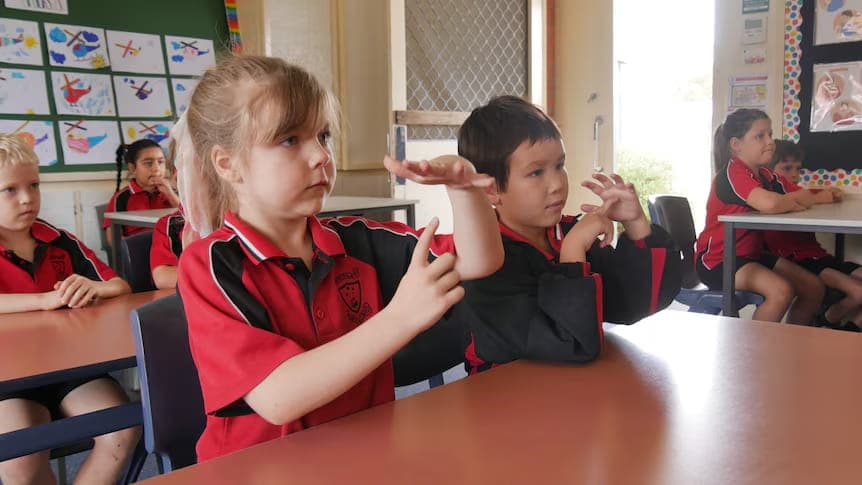
Students learn Auslan as their languages other than English subject at Beverley District High School. (Photo courtesy: ABC Midwest and Wheatbelt/Eliza Bidstrup)
In a classroom at Beverley District High School, about 120 kilometres east of Perth, silence does not mean a lack of communication. Instead, students are actively engaging with one another through hand movements, facial expressions and signs as they learn Auslan, Australia's sign language.
The classes have become a favourite among students at the regional school, reflecting growing interest in Auslan across Western Australia's public education system. Department of Education figures show that nearly 130 public schools in the state now offer the language, giving children an opportunity to develop communication skills that extend beyond spoken words.

At Beverley District High School, students from pre-primary to Year 8 attend up to two Auslan lessons a week, led by hearing teacher Isabel Freeman. What began as an opportunity to support a student with communication needs has developed into a broader school programme, with lessons helping children understand deaf culture and communicate with people who use sign language.
From classroom support to a school-wide programme
Ms Freeman, who initially worked as a secondary English and Humanities and Social Sciences (HASS) teacher, began teaching Auslan almost by chance.
"We had a non-verbal student at the school, and I was teaching her Auslan," she said. When the school's Italian teacher retired, Auslan emerged as an alternative to the language previously offered under the school's Languages Other Than English programme.
Ms Freeman was asked to take up the teaching role, turning her existing knowledge of sign language into an opportunity to introduce it to a wider group of students. However, ensuring that the language is taught accurately and with an understanding of Deaf culture has required professional guidance.
Throughout her teaching journey, Ms Freeman has received mentoring from Angela Linfitt, a qualified Deaf teacher. She said the involvement of a Deaf mentor had made the programme more authentic and culturally appropriate. Ms Linfitt believes the growing presence of Auslan in schools should also create greater professional opportunities for Deaf people, whose expertise is central to teaching the language.
"Deaf people are professionals, they are specialists of their own language," she said, stressing the importance of having Deaf professionals involved in school programmes.
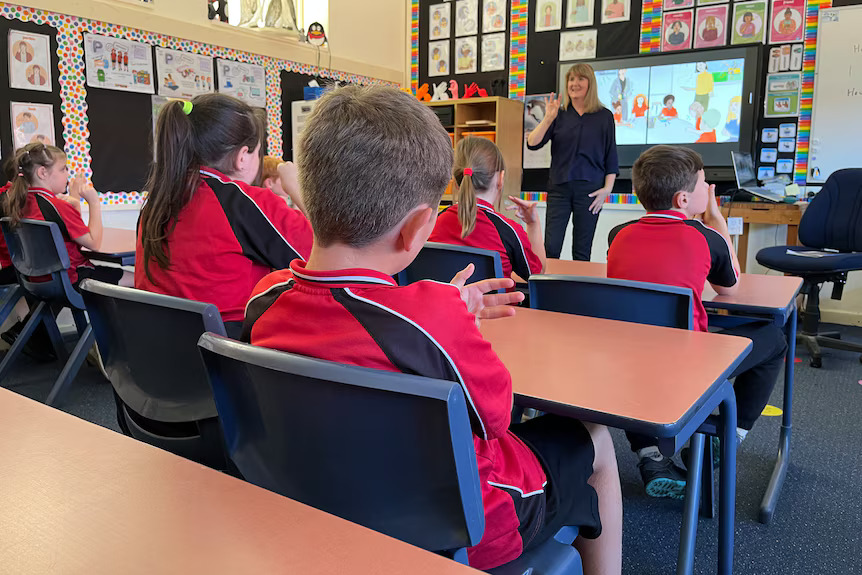
She added that their participation helps ensure Auslan is taught correctly and with an understanding of the community and culture behind it.
However, she said existing qualification and registration requirements could make it difficult for some Deaf professionals to enter school-based teaching roles.
In Western Australia, Auslan teachers are required to hold teacher registration and receive training in the language. While these requirements support teaching standards, Ms Linfitt said barriers to university education and inadequate funding could limit opportunities for Deaf people to qualify and work in schools.
"Unfortunately there isn't enough funding at the moment for deaf people to be involved in those roles," she said.
She pointed to the additional support and services that Deaf students may need to access higher education, calling for greater assistance to help them overcome these barriers.
Students take sign language beyond the classroom
For students, learning Auslan is not simply about mastering a new language. It is also about making communication more accessible in their everyday lives.
Bethel Fraser is among the enthusiastic learners who eagerly participate in lessons, often sitting at the front of the classroom and practising signs and phrases.
She said she enjoyed sharing what she learned with others so that more people could communicate with the Deaf community. "In Auslan we can teach other people around us so that soon everybody knows Auslan so we can communicate with the deaf," she said.
The programme has particular relevance for the school, which has a student with a diagnosed hearing impairment. However, its benefits are not limited to those who need sign language to communicate. Principal Wendy Norris, who joined the school earlier this year, said she had been impressed by the enthusiasm with which students had embraced the lessons.
She believes the programme is helping children develop an understanding of inclusion that they can carry into their communities and everyday interactions. "It's not just something they do in the classroom," she said.
"They can take these skill sets as life skills to be able to communicate with all people from all cultures and all diverse populations." The school has also taken learning beyond its classrooms. Students have previously visited Beverley Frail Aged Lodge, where they taught residents everyday signs, creating an opportunity for children and older people to learn from one another.
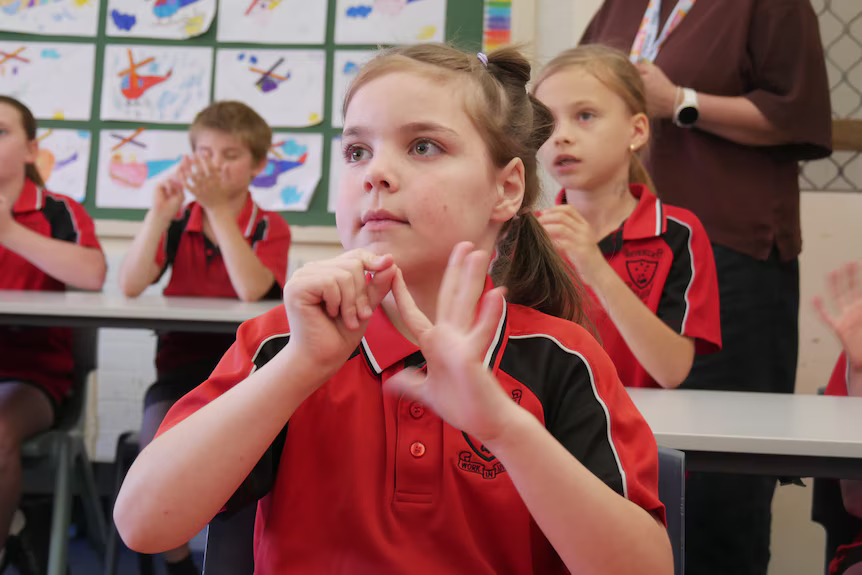
Ms Freeman said the experience had been particularly rewarding for the students, who enjoyed taking on the role of teachers. "The children loved it because they were the real experts teaching the older generation," she said.
A language where every student can succeed
For Ms Freeman, one of the biggest strengths of Auslan is that it gives students an opportunity to learn and participate on equal terms. Unlike subjects that rely heavily on reading, writing or mathematical ability, sign language allows students to engage through visual learning, movement and interaction.
She said the enthusiasm of the children had made teaching Auslan especially rewarding. "I feel I have the best job in the world because the students are so enthusiastic, they want to learn," she said.
"It's a level playing field so they're not having problems reading or writing or doing maths. Everybody can enjoy it and everybody can learn and everybody can have success." she added.
As Auslan finds a place in more Western Australian schools, programmes such as the one at Beverley are demonstrating how language education can do more than teach vocabulary. By helping children communicate across differences, they are laying the foundations for more inclusive classrooms and communities.
Auslan gains ground in Western Australian schools

Children’s Right to Internet: What Supreme Court Ruling Means for Parents, Schools and Social Media Platforms

RTE Act School Distance Rules: 60.6% of Children Travel Over 1 Km to Reach Educational Institutions

CBSE Class 10 Board Exams 2028: Five Compulsory Subjects, Optional Skill Paper to Offer Second Chance

Bihar Schools: 75% Attendance Mandatory for Girl Students; Special Classes for Class 9 Failed Students
Auslan gains ground in Western Australian schools

Serbia elects student-backed parliament with more than 160 PhD holders on candidate list
The Future Belongs to Those Who Can Collaborate Intelligently with AI

Diljit Dosanjh Delhi Concert Today: Traffic Restrictions from 1 PM, Check Roads to Avoid, Metro Timings and Parking Details

Why Are Women Still Only 20% of IIT Admissions? JEE Advanced 2026 Data Explained

Auslan gains ground in Western Australian schools
Children’s Right to Internet: What Supreme Court Ruling Means for Parents, Schools and Social Media Platforms
RTE Act School Distance Rules: 60.6% of Children Travel Over 1 Km to Reach Educational Institutions
CBSE Class 10 Board Exams 2028: Five Compulsory Subjects, Optional Skill Paper to Offer Second Chance
Bihar Schools: 75% Attendance Mandatory for Girl Students; Special Classes for Class 9 Failed Students
Auslan gains ground in Western Australian schools
Serbia elects student-backed parliament with more than 160 PhD holders on candidate list
The Future Belongs to Those Who Can Collaborate Intelligently with AI
Diljit Dosanjh Delhi Concert Today: Traffic Restrictions from 1 PM, Check Roads to Avoid, Metro Timings and Parking Details
Why Are Women Still Only 20% of IIT Admissions? JEE Advanced 2026 Data Explained
Copyright© educationpost.in 2026 All Rights Reserved.