


The EXCITE infrared telescope will travel aboard a high-altitude balloon to around 130,000 feet above Earth, allowing researchers to study the atmospheres of exoplanets known as hot Jupiters.
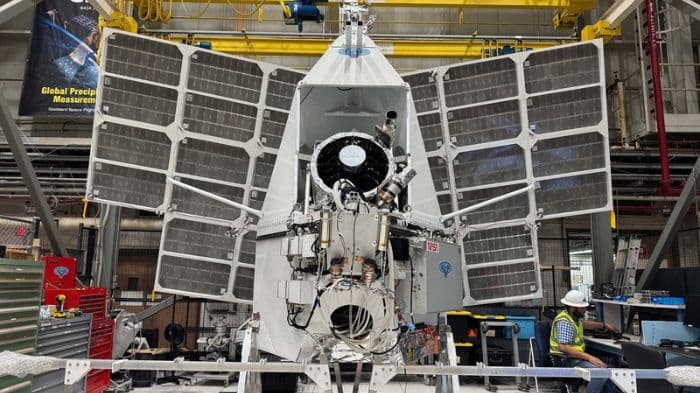
Researchers from Brown University are preparing to travel to Antarctica to support NASA's EXCITE mission, which will use a balloon-borne infrared telescope to study giant planets orbiting stars beyond the solar system.
The EXoplanet Climate Infrared TElescope (EXCITE) will be carried to an altitude of approximately 130,000 feet beneath a high-altitude balloon. At this height, the instrument will operate above more than 99% of Earth's atmosphere, allowing it to observe distant planets with fewer atmospheric disturbances.

Brown University researchers have been part of the NASA mission since 2020, contributing to the construction of key components of the telescope and planning its scientific programme. The team will now help prepare the instrument for its first science flight from Antarctica.
The launch window is scheduled to open in December 2026. Before then, the researchers will travel to McMurdo Station, a US scientific research base in Antarctica, to reassemble and test the telescope's gondola after its transportation.
Telescope to study hot Jupiters
EXCITE is designed to observe hot Jupiters, a class of giant exoplanets that orbit extremely close to their host stars. Some of these planets travel around their stars at distances shorter than Mercury's orbit around the Sun.
These planets offer researchers an opportunity to investigate atmospheric conditions under extreme temperatures. Many hot Jupiters are tidally locked, meaning one side constantly faces the host star while the other remains in darkness.
The temperature difference between the two sides can drive powerful atmospheric winds, with speeds exceeding 1,000 miles per hour.
By observing these planets throughout their orbits, EXCITE aims to help scientists understand their atmospheric dynamics, including wind patterns and chemical composition. Some hot Jupiters complete an orbit in only a few Earth days, allowing researchers to observe substantial changes during the telescope's planned flight.
Why is Antarctica suitable for the mission?
The telescope will be suspended beneath a balloon and carried by stratospheric winds around the Antarctic continent. The mission is expected to last between 11 and 14 days, during which the balloon could complete one or two circuits before landing near its launch site on the Ross Ice Shelf.
Antarctica offers favourable conditions for the mission because the Sun remains above the horizon during the austral summer, providing continuous sunlight for the balloon's solar panels. The planets targeted by EXCITE also remain visible above the horizon, allowing the telescope to observe them for extended periods.
The balloon will carry a gondola containing the telescope and its instruments. The research team will monitor the observations and analyse the data collected during the flight.
Brown students to support NASA research
The Brown University team includes physics professor Greg Tucker and graduate students Khing Klangboonkrong and Caitlyn Altermatt, who will travel to Antarctica for the mission. Another graduate student, Oliver Carey, will monitor the flight from Providence, Rhode Island.
The telescope previously completed a test flight in August 2024. The upcoming Antarctic mission will be its first science flight, giving researchers an opportunity to use its observations to investigate the formation and atmospheric evolution of giant exoplanets.
NASA is expected to retrieve the telescope and its instruments after the flight. However, the recovery could be delayed if the balloon lands farther from its planned landing area than anticipated.
The mission is expected to provide new observations of hot Jupiters and contribute to research into how giant planets form and evolve.
Brown University team joins NASA mission to study giant planets from Antarctica

Princeton marks 25 years of no-loan financial aid, says nearly 90% of graduates leave debt-free
UAE ministry dismisses viral first-term exam timetable as fake

IIT Kanpur to Establish ₹104-Crore UP Cyber Security Operations Centre

IIM Ahmedabad Summer Placements 2028: AI Startups, Fashion Brands and Top Companies Recruit Students

South Korea's student suicide toll nears 1,000 in four years, with India's figures also drawing attention

Want to explore the world without leaving your classroom? Seoul students show how

When smart glasses become cheating tools: South Korea draws tougher exam rules

Jeans out, formals in: Bihar rolls out stricter rules for government school staff

Auslan gains ground in Western Australian schools

Brown University team joins NASA mission to study giant planets from Antarctica
Princeton marks 25 years of no-loan financial aid, says nearly 90% of graduates leave debt-free
UAE ministry dismisses viral first-term exam timetable as fake
IIT Kanpur to Establish ₹104-Crore UP Cyber Security Operations Centre
IIM Ahmedabad Summer Placements 2028: AI Startups, Fashion Brands and Top Companies Recruit Students
South Korea's student suicide toll nears 1,000 in four years, with India's figures also drawing attention
Want to explore the world without leaving your classroom? Seoul students show how
When smart glasses become cheating tools: South Korea draws tougher exam rules
Jeans out, formals in: Bihar rolls out stricter rules for government school staff
Auslan gains ground in Western Australian schools
Copyright© educationpost.in 2026 All Rights Reserved.