


The proposed measures include criminal complaints, longer restrictions on retaking the Suneung examination, designated staff to identify suspicious eyewear, and possible radio-signal detectors at test centers.
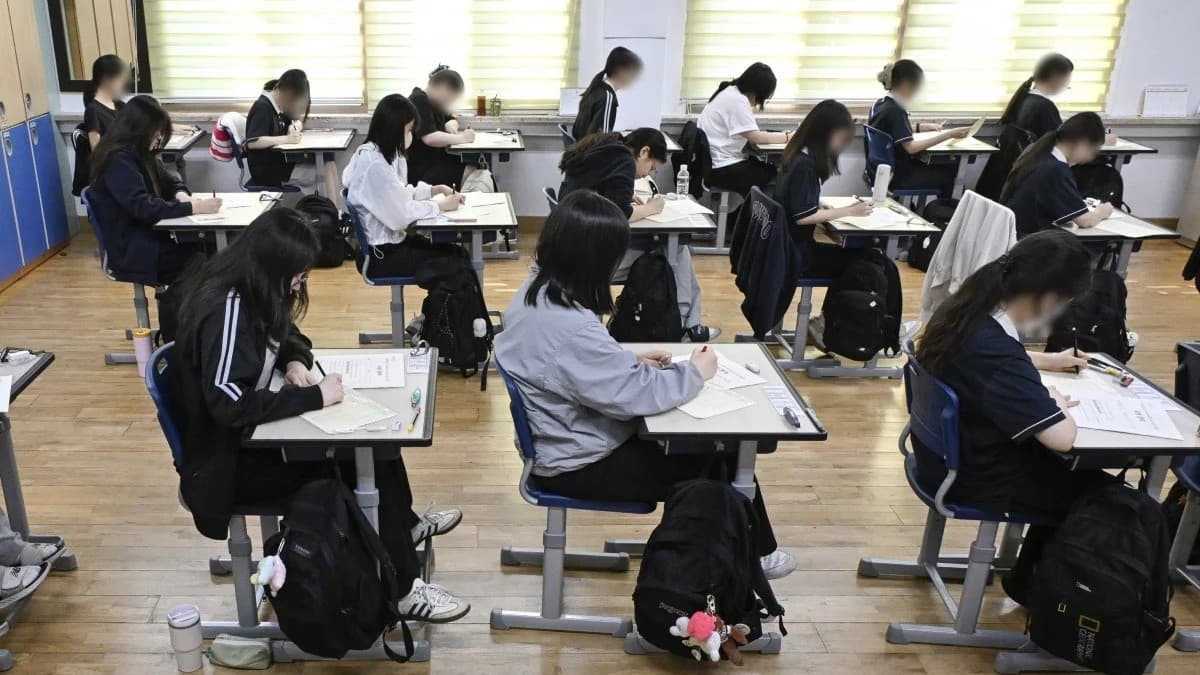
South Korea is preparing to introduce tougher penalties for students caught using AI-powered smart glasses to cheat in university entrance examinations, including criminal complaints and a possible three-year ban on retaking the test.
The proposed measures come as wearable technology becomes increasingly sophisticated and raises concerns about its misuse during high-stakes examinations.

The country's Education Ministry plans to increase the existing one-year restriction on repeat examinations to three years for students found cheating with smart glasses. Authorities are also considering stricter enforcement measures at examination centers to prevent candidates from using concealed electronic devices.
"The ministry will seek criminal charges against students caught cheating with smart glasses" in the future, Lee Joon-hyuk, an education ministry official, told AFP.
The proposed changes are unlikely to apply to the upcoming university entrance examination scheduled for next month. With approximately 20 days remaining before the test, officials said there was insufficient time to amend the existing law.
"We plan to push for the changes to take effect from next year's exam," Lee said.
The ministry's announcement follows incidents involving three students who were caught wearing or carrying smart glasses during university essay examinations in Seoul. The cases have prompted authorities to strengthen examination supervision and reconsider existing penalties for technology-assisted cheating.
South Korea plans three-year ban and criminal complaints for smart glasses cheating
Under the proposed changes, students caught using smart glasses to gain an unfair advantage during the national university entrance examination could face a three-year restriction on appearing for the test again.
This would increase the existing one-year disqualification period under current regulations. The ministry is also considering filing criminal complaints or requesting investigations against students involved in such cases.
The proposed action is part of a broader effort to prevent the misuse of emerging technologies in competitive examinations. The ministry also plans to encourage universities to introduce similarly strict penalties for their own admission tests in 2026.
However, the revised penalties are not expected to be implemented for next month's national examination. The government intends to complete the necessary legal changes before introducing the stricter provisions from the following examination cycle.
Under the existing regulations, wearing or using smart glasses during the examination can result in the cancellation of a candidate's results and disqualification from appearing for the following year's test.
Students found carrying such devices must surrender them before the examination begins. If they fail to hand over prohibited devices before the first session, their results for the current year can also be invalidated.
Candidates who refuse an examination supervisor's request to inspect a smart device may face cancellation of their current examination results and disqualification from the following year's test, subject to a review.
Smart glasses checks at 1,312 examination centers
Alongside tougher penalties, South Korea's Education Ministry is planning additional monitoring arrangements to identify candidates using prohibited eyewear during examinations.
The authorities will assign one designated staff member at each of the country's 1,312 examination centers to identify smart glasses and other suspicious devices during this year's College Scholastic Ability Test, commonly known as Suneung.
The measure is intended to help examination authorities identify wearable technology that may not be immediately distinguishable from ordinary spectacles.
In measures announced on Thursday, the ministry also said every examination center would have a designated staff member responsible for spotting suspicious eyewear.
Authorities are additionally examining the possibility of introducing radio-signal detection technology at examination venues. The ministry plans to assess detectors being developed by specialist institutions to determine whether they can effectively identify devices used for cheating.
If the technology is considered feasible, the equipment could be distributed to examination centers beginning in 2027.
The latest measures build on restrictions announced in July, when smart glasses were included in the list of prohibited items for the 2027 academic year's Suneung examination.
The ministry has also said it will protect teachers and examination supervisors who diligently perform their monitoring responsibilities. They will not be held responsible or disadvantaged when cheating cases involve smart glasses or other electronic devices.
AI smart glasses raise concerns over examination integrity
The growing availability of smart glasses equipped with cameras, video-recording facilities and artificial intelligence assistants has created new challenges for examination authorities.
Unlike conventional electronic devices, these products can resemble ordinary eyewear, making them difficult to identify during routine security checks.
Depending on their features, users can capture photographs and videos, access AI-powered assistance and interact with digital services without visibly handling a smartphone or computer.
These capabilities have raised concerns about candidates potentially using the devices to obtain answers or access unauthorized assistance during examinations.
The issue is also attracting attention beyond South Korea. Taiwan's prestigious National Taiwan University in Taipei reportedly disqualified an entrance examination candidate this summer after the student was found cheating with AI-powered smart glasses.
The incident indicates that educational institutions in other countries are also facing challenges associated with the use of emerging wearable technologies during admission tests.
Smart glasses have also attracted criticism over privacy concerns, particularly because their cameras can record people without their knowledge or consent. Their increasing commercial availability has further intensified discussions about regulating their use in sensitive public and institutional settings.
Why South Korea's Suneung examination carries high stakes
South Korea's national university entrance examination, known as Suneung, is among the country's most consequential academic assessments. Performance in the examination plays a major role in determining admission to leading universities and can influence students' future educational and career opportunities.
The examination is widely regarded as a gateway to economic security and social mobility. Admission to prestigious universities is considered particularly important in the country's highly competitive education system.
The pressure surrounding Suneung is reflected in the extensive arrangements made across the country on examination day. Authorities impose a nationwide flight restriction for 35 minutes during the English listening section to prevent aircraft noise from disturbing candidates.
Flights are prohibited during this period except in emergencies. Banks and public offices also ask employees to begin work an hour later to ease traffic congestion and help candidates reach their examination centers without disruption.
The intense competition associated with university admissions has also been linked to concerns about student mental health. Academic pressure in South Korea's education system has been partly blamed for teenage depression and suicide rates that are among the highest in the world.
With smart glasses becoming more advanced and accessible, the Education Ministry is now seeking to strengthen examination security and protect the credibility of the country's admission process.
The proposed criminal complaints, longer disqualification period, additional personnel and possible introduction of signal detectors form part of its wider effort to prevent technology-assisted cheating.
When smart glasses become cheating tools: South Korea draws tougher exam rules

Jeans out, formals in: Bihar rolls out stricter rules for government school staff

Building India's chip talent: IIT Guwahati joins hands with Tata Electronics

Auslan gains ground in Western Australian schools

Children’s Right to Internet: What Supreme Court Ruling Means for Parents, Schools and Social Media Platforms
When smart glasses become cheating tools: South Korea draws tougher exam rules
Jeans out, formals in: Bihar rolls out stricter rules for government school staff
Auslan gains ground in Western Australian schools
CBSE revises Class IX curriculum for 2028 board batch: Drops three subjects, check details

Serbia elects student-backed parliament with more than 160 PhD holders on candidate list

When smart glasses become cheating tools: South Korea draws tougher exam rules
Jeans out, formals in: Bihar rolls out stricter rules for government school staff
Building India's chip talent: IIT Guwahati joins hands with Tata Electronics
Auslan gains ground in Western Australian schools
Children’s Right to Internet: What Supreme Court Ruling Means for Parents, Schools and Social Media Platforms
When smart glasses become cheating tools: South Korea draws tougher exam rules
Jeans out, formals in: Bihar rolls out stricter rules for government school staff
Auslan gains ground in Western Australian schools
CBSE revises Class IX curriculum for 2028 board batch: Drops three subjects, check details
Serbia elects student-backed parliament with more than 160 PhD holders on candidate list
Copyright© educationpost.in 2026 All Rights Reserved.