


A faculty union survey highlights concerns over shrinking operating grants, rising utility expenses, limited research budgets and mounting pressure on academics to sustain teaching and research activities.
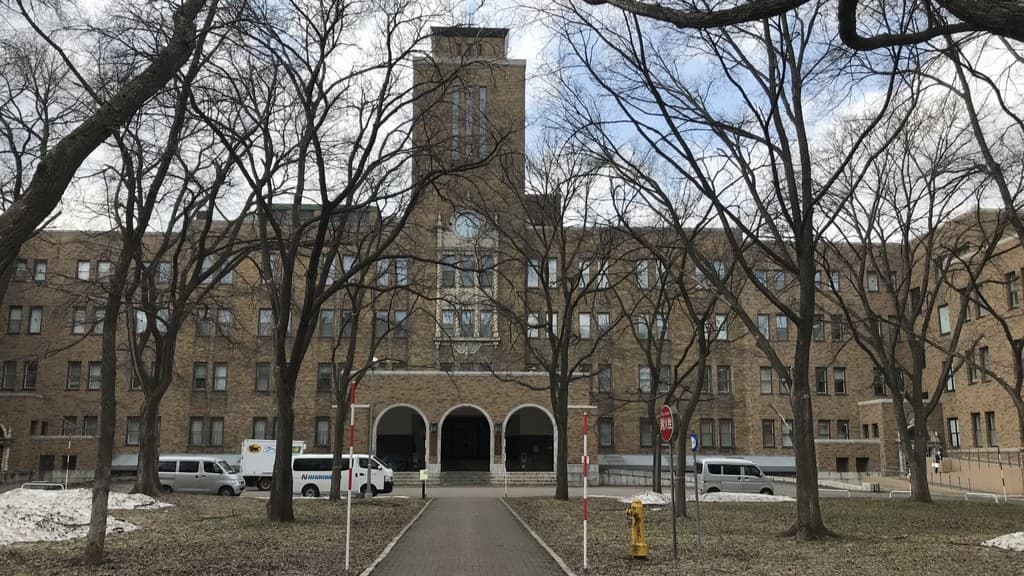
A deteriorating research and teaching environment at Hokkaido University, Japan has prompted nearly two-thirds of surveyed faculty members to consider leaving the institution, with some already preparing to move to other universities or organizations.
According to The Mainichi, 64.3% of faculty members who participated in a university union survey said they had considered changing institutions or were already taking steps to do so. The findings point to growing concerns over funding shortages, rising operating expenses and their impact on academic work.

The survey, released on Oct 27, was conducted by Hokkaido University's faculty and staff union. The union initiated the exercise over concerns that repeated reductions in government operating grants and increasing utility expenses were undermining the university's ability to maintain its education and research activities.
Operating grants provide financial support for the basic expenses of Japan's national universities. However, the union said funding cuts had increasingly affected the budgets allocated to individual faculty members, directly restricting their capacity to teach students and conduct research.
Several respondents also expressed dissatisfaction with the government's approach to research funding. Some described its policies as "a path to national ruin."
Funding cuts and rising utility costs affect academic work
The survey was conducted between December 2025 and January 2026. It was distributed to faculty members whose contact information was available to the union, and 399 people submitted responses.
The participants represented a range of academic disciplines. Medical, dental and pharmaceutical sciences accounted for 19.5% of respondents, while 13.1% came from social sciences.
Another 12.8% specialized in agriculture or environmental studies, followed by engineering and information science at 12.1%. Mathematical and physical sciences accounted for 10.8%, while 10.3% were from biological sciences, alongside respondents from other fields.
The responses revealed considerable reductions in the financial resources available to individual faculty members. Around 39.2% said their allocated funding had been "somewhat reduced," while 32.4% reported that it had been "substantially reduced."
Rising electricity, heating and other utility expenses have added to the pressure on university budgets. When asked whether higher utility costs had affected the funds available for teaching and research, 65.2% of respondents said they had experienced an impact.
The consequences were visible in several aspects of academic work. The most commonly reported difficulty was having to reduce participation in academic conferences and research exchanges in Japan and overseas, cited by 18.6% of respondents.
Another 16.8% said they had cut spending on teaching materials and other resources required for student education. Meanwhile, 16.2% reported delays in replacing aging laboratory equipment and computers.
An additional 14.7% identified difficulties in meeting expenses such as academic journal submission fees, further highlighting how financial constraints are affecting routine research activities.
The impact extended beyond immediate spending decisions. Asked whether funding reductions were restricting their freedom to pursue research and their ability to sustain projects over the medium and long term, 64.1% said they felt a strong impact.
Another 26.8% reported experiencing some impact. Together, these figures indicate that more than 90% of respondents believed funding cuts were affecting their research activities.
64.3% of faculty members consider leaving Hokkaido University
The survey also examined whether dissatisfaction with the university's education and research environment had influenced faculty members' decisions about their careers.
A total of 64.3% said the deteriorating conditions had led them to consider moving to another university or institution. Within this group, 39.5% said they had given the possibility some consideration, while 17% had seriously thought about leaving.
Another 7.8% reported that they were already making concrete preparations to move to a different institution. The findings indicate that concerns about academic working conditions are translating into potential staff departures.
The results have raised questions about the university's ability to retain experienced academics and maintain its research capacity, particularly as faculty members face increasing pressure to manage teaching and research responsibilities with fewer resources.
Faculty members criticize government research funding policies
The survey's open-response section included strong criticism of the government's approach to funding universities, particularly its policy of selectively directing investment toward specific academic fields under the "selection and concentration" model.
One respondent questioned the effectiveness of prioritizing certain disciplines over others, writing, "This is an unacceptable approach to investment in educational institutions, where a long-term perspective is essential for evaluation. It will only lead to national ruin by hindering the development of students who will carry the next generation."
Another faculty member also challenged the policy, stating, "It is clear that selection and concentration do not produce results. The education ministry should take another look at reality."
Operating grant reductions were another major source of dissatisfaction. One respondent described the difficulties of continuing academic responsibilities without institutional financial support.
"I receive no funding at all for either research or teaching. It is impossible to conduct research or provide education under these circumstances. I may be reaching the limit of my ability to stay motivated."
The faculty member also explained that securing a competitive Grant-in-Aid for Scientific Research had not fully resolved the financial difficulties.
A weak yen and sharply increasing travel expenses meant the entire research grant was exhausted by a single overseas trip. As a result, the researcher had to pay the remaining expenses personally.
The experience illustrates how rising international travel costs and currency fluctuations can reduce the practical value of research funding, even when academics successfully secure competitive grants.
Hokkaido University management faces criticism over working conditions
Several respondents also questioned the university administration's handling of financial constraints, staff shortages and the deteriorating academic environment. Their comments highlighted concerns about excessive workloads, insufficient institutional support and limited opportunities for younger researchers.
One faculty member described how reductions in operating grants, combined with continuing staff cuts, had increased responsibilities for academic employees.
"With cuts to operating grants compounded by ongoing staff reductions, the multitasking burden placed on faculty members, who must fulfill the roles of both educators and researchers, has already reached its limit. This is far from an ideal educational environment."
Another respondent said the institution was increasingly relying on individual employees to maintain academic standards rather than providing adequate organizational support.
"The quality of education and research, as well as the continuity of research, should be supported institutionally. Instead, they are barely being maintained through individual dedication and personal sacrifice."
The lack of adequate financial assistance for early-career academics also emerged as a concern. One respondent said insufficient funding for younger researchers had weakened confidence in their future at the university.
"Funding is not being adequately allocated to younger researchers. Regrettably, I have concluded that there are no prospects for the future under the current conditions, leaving me no choice but to resign from Hokkaido University and seek a position at another university."
Another faculty member expressed disappointment with the administration's priorities, questioning its focus on anniversary celebrations rather than improvements to research facilities and working conditions.
"The university is preoccupied with its 150th-anniversary projects and other celebrations. I no longer have any expectations for the university administration, which does not appear to be seriously considering ways to improve the research environment. It would be quicker for me to move elsewhere."
Some respondents also compared the university's financial position with that of private institutions, arguing that its resources were inadequate for an institution with ambitions of maintaining a leading research profile.
"There is no question that the university's financial situation is worse than that of private universities. It is not at a level that warrants calling itself a leading research university."
Concerns about basic infrastructure and campus facilities also featured in the responses. One faculty member described an unsuccessful request to repair an air conditioner, citing the university's response as an example of inadequate working conditions.
"I requested that an air conditioner be repaired, but the request was rejected. The reason given was, 'We cannot spend money just to lower the temperature.' The university should at least provide a minimally acceptable environment."
Union warns funding crisis extends beyond one university
Yoshiharu Shimizuike, chair of the union's executive committee, said the open-ended responses reflected widespread frustration and disappointment among faculty and staff members over the worsening academic environment.
Referring to the concerns raised by respondents, he said, "The open responses are filled with expressions of anger and despair from many faculty and staff members. I was deeply shocked that, in response to the deteriorating environment, roughly two-thirds of respondents said they were considering leaving Hokkaido University."
He also emphasized that the institution's day-to-day academic operations were increasingly dependent on the personal efforts of its employees rather than adequate financial and administrative support.
"We want people to understand that the university is barely being kept operational through the personal efforts of numerous faculty and staff members," he added. "This is not a problem limited to Hokkaido University. It is an issue facing every national university in Japan."
The union's findings have brought attention to the broader financial challenges confronting Japan's national universities, particularly the effects of operating grant reductions, rising utility expenses and limited funding for individual researchers.
The possibility of faculty departures also raises concerns about the long-term sustainability of academic research, institutional knowledge and teaching quality.
With more than 90% of respondents reporting that funding cuts had affected their research, the survey highlights the pressure on universities to maintain academic standards while operating under financial constraints.

IIT Gandhinagar Researchers Develop Two Compounds That Show Promise Against Drug-Resistant Brain Cancer

Japan's Hokkaido University faces faculty exodus as funding cuts hit research environment

Satya School Gurugram Organises Annual Sports Day Satyan Spardha; Asian Games Double Medallist Ganesh Thirumuru Inspires Students

NCTE Forms Two Committees to Revise CTET, STET Eligibility Rules for ITEP Graduates

Why are Japanese families paying more for private high schools despite tuition subsidies?
Japan's Hokkaido University faces faculty exodus as funding cuts hit research environment
Why are Japanese families paying more for private high schools despite tuition subsidies?
China honors five scholars from four countries with global education research award
IIT Kanpur, BIT Mesra sign five-year agreement to strengthen academic and research collaboration
Why are India's leading universities slipping in QS Asia Rankings 2027 despite growing representation?

IIT Gandhinagar Researchers Develop Two Compounds That Show Promise Against Drug-Resistant Brain Cancer
Japan's Hokkaido University faces faculty exodus as funding cuts hit research environment
Satya School Gurugram Organises Annual Sports Day Satyan Spardha; Asian Games Double Medallist Ganesh Thirumuru Inspires Students
NCTE Forms Two Committees to Revise CTET, STET Eligibility Rules for ITEP Graduates
Why are Japanese families paying more for private high schools despite tuition subsidies?
Japan's Hokkaido University faces faculty exodus as funding cuts hit research environment
Why are Japanese families paying more for private high schools despite tuition subsidies?
China honors five scholars from four countries with global education research award
IIT Kanpur, BIT Mesra sign five-year agreement to strengthen academic and research collaboration
Why are India's leading universities slipping in QS Asia Rankings 2027 despite growing representation?
Copyright© educationpost.in 2026 All Rights Reserved.