


The compounds SPK17 and SPK17b suppressed glioblastoma cell growth in laboratory experiments by targeting the TTK protein, offering potential leads for future cancer drug research.
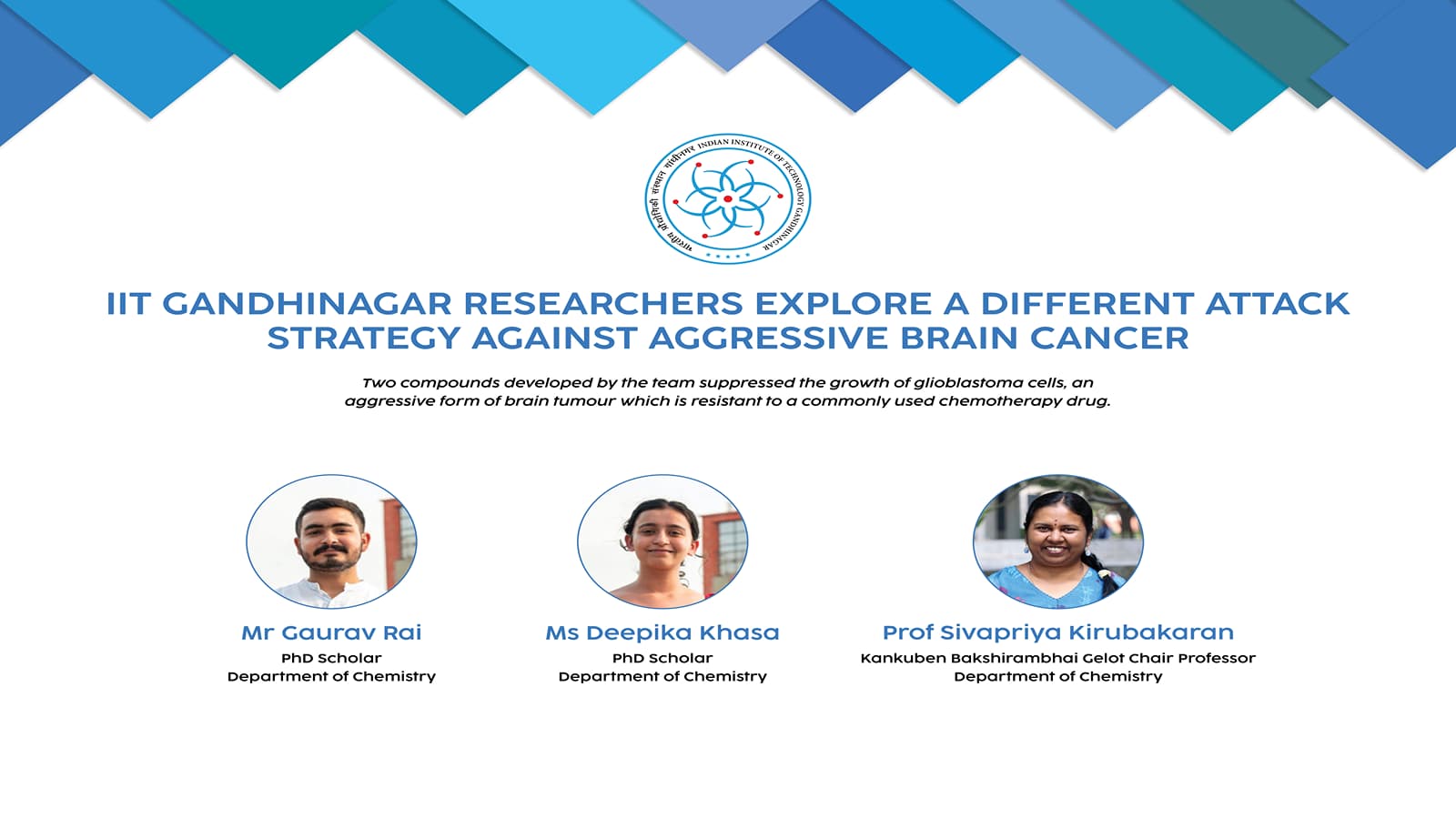
Researchers at the Indian Institute of Technology Gandhinagar (IITGN) have identified two experimental compounds that could help scientists explore new treatment strategies for glioblastoma, an aggressive form of brain cancer that often develops resistance to existing chemotherapy.
The compounds, named SPK17 and SPK17b, demonstrated the ability to inhibit the growth of glioblastoma cells in laboratory experiments. Both target a protein called TTK, also known as Mps1, which plays an important role in regulating cell division.

The findings are significant because glioblastoma cells can develop resistance to temozolomide (TMZ), a commonly used chemotherapy drug. By interfering with the mechanisms that allow cancer cells to divide and survive, the IIT Gandhinagar researchers explored an alternative approach to tackling drug-resistant tumour cells.
The research findings have been published in two international scientific journals: the Journal of Biological Chemistry and RSC Medicinal Chemistry.
The researchers focused on TTK, a protein kinase involved in controlling the process of cell division. It regulates an important biological checkpoint that helps ensure chromosomes are distributed correctly when cells multiply.
Under normal conditions, this checkpoint acts as a quality-control mechanism. It allows cells to pause the division process when problems arise, helping maintain the accuracy of chromosome separation.
However, cancer cells frequently undergo rapid and abnormal division. Their dependence on cell-cycle regulatory mechanisms creates opportunities for researchers to explore treatments that disrupt these processes.
The IITGN team investigated whether inhibiting TTK could weaken glioblastoma cells' ability to manage DNA damage and continue multiplying.
Gaurav Rai, a PhD researcher in IIT Gandhinagar's Department of Chemistry and a recipient of the Prime Minister's Research Fellowship, explained that the team built on its earlier work involving J54, a selective TTK inhibitor.
The objective was to modify the earlier compound and develop molecules that could target the protein more effectively, particularly in glioblastoma cells that show resistance to temozolomide.
In one of the studies, researchers developed more than 10 compounds and identified SPK17, referred to as G17 in the research paper, as a particularly promising candidate.
Laboratory testing was conducted using two human glioblastoma cell lines, LN229 and U87MG.
The researchers reported that the concentration of SPK17 associated with a 50% reduction in cancer cell viability was approximately 176 times lower than that of temozolomide in LN229 cells and 85 times lower in U87MG cells.
The compound also demonstrated activity against LN229-TMZ-R cells, a laboratory model of glioblastoma that had developed resistance to temozolomide.
At a concentration of 10 micromolar, SPK17 produced approximately eight times the cell-death signal observed with temozolomide at 200 micromolar in the resistant cells.
These findings suggest that SPK17 could offer researchers a different way to target glioblastoma cells that respond poorly to conventional chemotherapy.
A second study examined another experimental molecule, SPK17b, identified as G17b in the corresponding research paper.
The compound emerged as the most promising candidate among five molecules evaluated in this part of the research.
According to the study, SPK17b showed a substantially lower concentration requirement for reducing the viability of glioblastoma cells compared with temozolomide.
Its reported IC50 values were approximately 81 times lower in LN229 cells and 59 times lower in U87MG cells.
The researchers also observed activity against temozolomide-resistant glioblastoma cells. At 10 micromolar, SPK17b produced a cell-death signal at a concentration at least 59 times lower than the corresponding temozolomide concentration of 200 micromolar.
Another notable finding was its effect on the movement of cancer cells. Laboratory observations indicated that SPK17b reduced the ability of treated glioblastoma cells to migrate, suggesting that the compound could interfere with processes associated with tumour progression.
Deepika Khasa, a PhD researcher in IITGN's Chemistry Department and a co-author of the study, highlighted that the compound's effects extended beyond slowing cancer cell growth, with experiments also indicating reduced cellular migration.
Although both experimental molecules target the same TTK protein, the researchers identified differences in how they affect glioblastoma cells.
SPK17: This compound interferes with the cell-division checkpoint. As a result, cancer cells may proceed through division before repairing accumulated DNA damage. The resulting damage can weaken their ability to survive and multiply.
SPK17b: The second compound works through a different mechanism. Researchers observed an increase in reactive oxygen species (ROS), which are chemically reactive molecules that can damage cellular components when they accumulate beyond the cell's ability to control them. This process was associated with increased cancer cell death and reduced cellular migration.
Together, the findings indicate that targeting TTK could affect multiple biological processes involved in the growth and survival of drug-resistant glioblastoma cells.
Commenting on the findings, Professor Sivapriya Kirubakaran, Kankuben Bakshirambhai Gelot Chair Professor in the Department of Chemistry at IIT Gandhinagar, said that developing better treatment options for glioblastoma remains an important research priority.
She explained that the two compounds provide a mechanism-based approach for investigating ways to target tumour cells that have developed resistance to existing treatments.
Professor Kirubakaran leads IITGN's Cancer Chemical Biology Laboratory. She also highlighted that further investigations are necessary to establish the effectiveness and safety of these experimental molecules.
The research team is undertaking additional studies to evaluate the compounds in animal models. These investigations will help determine whether the laboratory findings can translate into meaningful therapeutic potential.
The IIT Gandhinagar studies represent an early-stage contribution to research on drug-resistant glioblastoma. By exploring TTK inhibition as a potential therapeutic strategy, the researchers have identified two experimental molecules that warrant further investigation.
However, the findings are based on laboratory experiments involving cancer cell lines. The compounds have not yet been established as safe or effective treatments for patients.
Further research, including animal studies, toxicity assessments and eventual clinical trials, will be necessary before their potential use in human cancer treatment can be determined.
The work also connects with United Nations Sustainable Development Goal 3, particularly its focus on supporting research and development of treatments for non-communicable diseases.
IIT Gandhinagar Researchers Develop Two Compounds That Show Promise Against Drug-Resistant Brain Cancer

Japan's Hokkaido University faces faculty exodus as funding cuts hit research environment

Satya School Gurugram Organises Annual Sports Day Satyan Spardha; Asian Games Double Medallist Ganesh Thirumuru Inspires Students

NCTE Forms Two Committees to Revise CTET, STET Eligibility Rules for ITEP Graduates

Why are Japanese families paying more for private high schools despite tuition subsidies?
Japan's Hokkaido University faces faculty exodus as funding cuts hit research environment
Why are Japanese families paying more for private high schools despite tuition subsidies?

China honors five scholars from four countries with global education research award
IIT Kanpur, BIT Mesra sign five-year agreement to strengthen academic and research collaboration

Why are India's leading universities slipping in QS Asia Rankings 2027 despite growing representation?

IIT Gandhinagar Researchers Develop Two Compounds That Show Promise Against Drug-Resistant Brain Cancer
Japan's Hokkaido University faces faculty exodus as funding cuts hit research environment
Satya School Gurugram Organises Annual Sports Day Satyan Spardha; Asian Games Double Medallist Ganesh Thirumuru Inspires Students
NCTE Forms Two Committees to Revise CTET, STET Eligibility Rules for ITEP Graduates
Why are Japanese families paying more for private high schools despite tuition subsidies?
Japan's Hokkaido University faces faculty exodus as funding cuts hit research environment
Why are Japanese families paying more for private high schools despite tuition subsidies?
China honors five scholars from four countries with global education research award
IIT Kanpur, BIT Mesra sign five-year agreement to strengthen academic and research collaboration
Why are India's leading universities slipping in QS Asia Rankings 2027 despite growing representation?
Copyright© educationpost.in 2026 All Rights Reserved.