


The latest rankings highlight changing institutional performance across Asia, with research impact, academic reputation, internationalisation and faculty-student ratios shaping the competitive landscape for Indian higher education institutions.
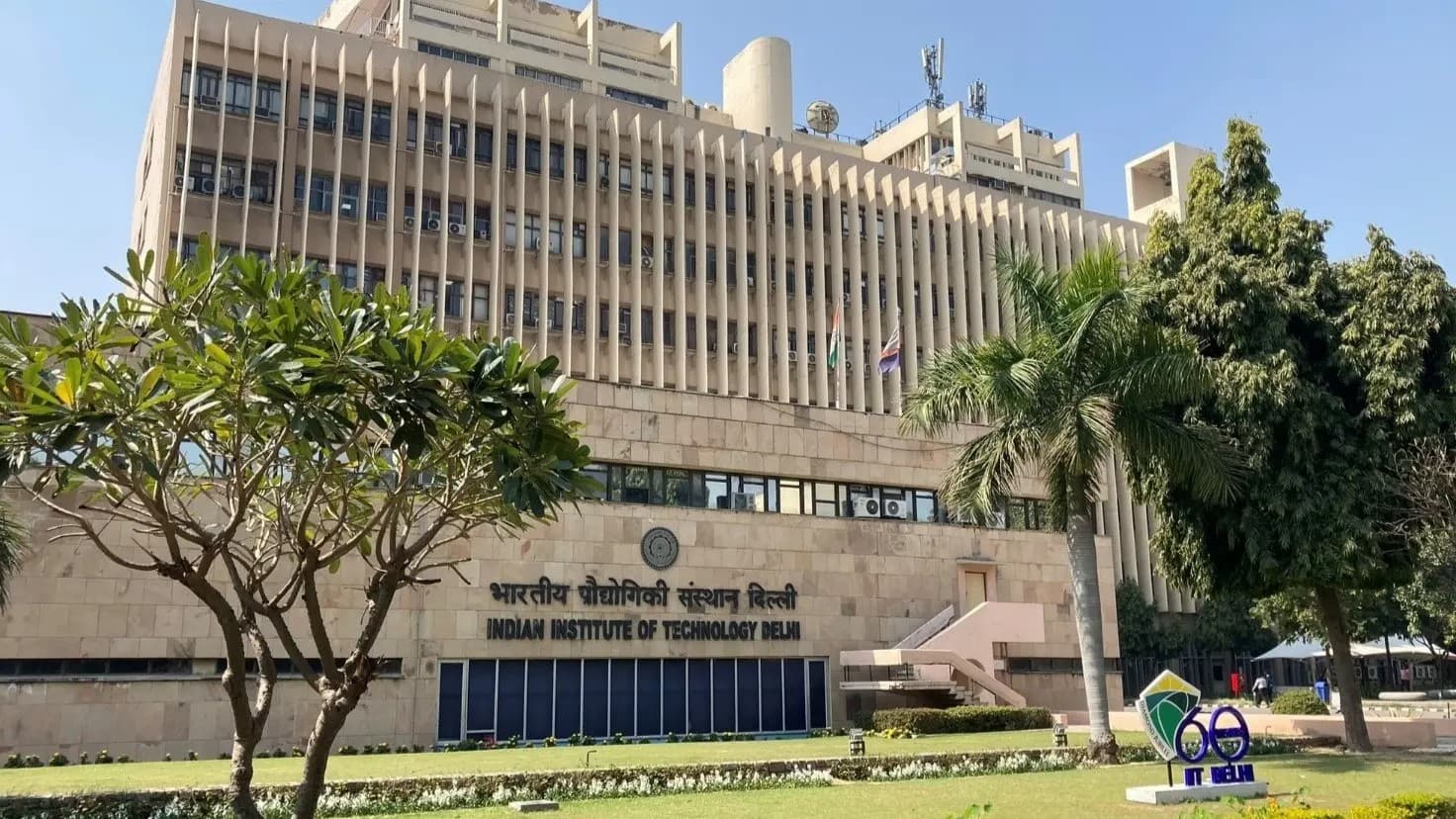
India has increased its representation in the QS World University Rankings: Asia 2027, but its leading institutions have lost ground in the latest edition. IIT Delhi continues to be the country's highest-ranked institution at 66th, although all six Indian universities in the top positions have dropped compared with last year's rankings.
India has 325 universities in this year's rankings, including 34 new entrants, making it Asia's second most represented higher education system after Mainland China. However, none of its institutions has secured a place in the regional top 50 for the second consecutive year.

The rankings, released by global higher education analyst Quacquarelli Symonds (QS) on Nov 3, 2026, feature 1,722 universities across 26 higher education systems. A total of 195 institutions have entered the list for the first time this year, intensifying competition among universities across the region.
IIT Delhi has retained its position as India's highest-ranked institution, although it dropped seven places from 59th in the previous edition to 66th. The Indian Institute of Science (IISc), Bengaluru, also declined from 64th to 79th, losing 15 positions.
Other leading Indian institutions recorded similar falls. IIT Bombay moved from 71st to 83rd, while IIT Madras slipped from 70th to 85th. IIT Kharagpur dropped from 77th to 90th, and IIT Kanpur fell from 77th to 97th.
The last time an Indian university featured in the regional top 50 was in 2024, when IIT Delhi secured 44th position and IIT Bombay ranked 48th.
Despite the decline in rankings, India has expanded its presence in the regional list. Its representation in the top 200 has increased from 20 universities to 21 in the 2027 edition.
The QS office told ThePrint that rankings are relative, meaning an institution may lose positions even when its overall score improves if competing universities make greater progress.
“Two-thirds of the Indian universities that dropped in rank improved their overall scores, while leading institutions such as IIT Bombay, IIT Delhi and IISc broadly maintained them. In 2027, seven Indian institutions scored above 90 in the Academic Reputation indicator, compared with six last year. Three years ago, in 2024, no Indian institution scored above 90,” the QS office said.
The organization also pointed to the growing number of participating institutions as a factor contributing to the increasingly competitive rankings.
“Japan saw 85 per cent of its ranked universities fall, while Taiwan and Indonesia recorded declines among 70 per cent of their institutions each,” the QS office said.
QS Asia Ranking 2027: Top Indian universities
IIT Delhi continues to lead the Indian institutions in the QS World University Rankings: Asia 2027, followed by IISc Bengaluru and IIT Bombay. The list also includes several other IITs, central universities and private institutions.
The top 15 Indian universities in the latest edition are:
Indian university | Asia ranking 2027 |
| Indian Institute of Technology (IIT) Delhi | 66 |
| Indian Institute of Science (IISc), Bangalore | 79 |
| Indian Institute of Technology (IIT) Bombay | 83 |
| Indian Institute of Technology (IIT) Madras | 85 |
| Indian Institute of Technology (IIT) Kharagpur | 90 |
| Indian Institute of Technology (IIT) Kanpur | 97 |
| Chandigarh University, Punjab | 104 |
| University of Delhi | 106 |
| Indian Institute of Technology (IIT) Guwahati | 120 |
| Indian Institute of Technology (IIT) Roorkee | 124 |
| Jawaharlal Nehru University | 128 |
| Lovely Professional University (LPU) | 154 |
| Vellore Institute of Technology (VIT), Vellore | 156 |
| Birla Institute of Technology and Science, Pilani | 161 |
| OP Jindal Global University (JGU) | 165 |
Chandigarh University recorded its highest-ever position at 104th in Asia. QS attributed the institution's improved performance to gains in research-related indicators.
Academic reputation and employer recognition remain weak spots
The latest rankings point to weaknesses in academic reputation and employer recognition among Indian universities, alongside challenges in internationalization and research impact.
Academic Reputation accounts for 30% of the QS Asia ranking methodology. It is calculated through a global survey in which academics identify institutions they consider strongest in research and teaching within their respective fields.
Employer Reputation carries a 20% weight and reflects employers' assessments of universities that produce graduates with strong professional capabilities.
Among Indian universities with comparable rankings, 76% recorded a decline in Academic Reputation scores, while 83% experienced a fall in Employer Reputation scores.
Despite the overall decline, employer recognition remains a relative strength for some of India's leading institutions. IIT Bombay secured seventh place in Asia for Employer Reputation, while IIT Delhi ranked 10th. These were the only Indian universities to enter the regional top 10 for this indicator.
However, QS noted that strong employer recognition remains concentrated among a limited number of Indian institutions.
The QS office attributed the decline in academic and employer reputation scores partly to increasing competition from other higher education systems. Mainland China has 22 universities in Asia's top 100 for Academic Reputation, followed by Japan with 14 and South Korea with 11.
Malaysia and Indonesia have eight institutions each in the top 100 for this indicator, matching India's total of eight.
For Employer Reputation, Mainland China and Japan have 18 and 14 universities, respectively, in the top 100, compared with 10 from India.
India leads Asia in research output per faculty
Research productivity remains one of India's strongest areas in the QS Asia Ranking 2027. The country has the highest number of universities among the regional top 10 for Papers per Faculty, an indicator that measures research publications relative to the number of academic staff.
According to the report, 27 Indian universities feature in Asia's top 50 for this indicator, including five in the top 10. Mainland China follows with three institutions in the top 10.
The five Indian universities securing positions in the regional top 10 for Papers per Faculty are:
Indian university | Asia rank | Score |
| Indian Institute of Science (IISc), Bangalore | 1 | 100 |
| Indian Institute of Technology (IIT) Madras | 3 | 100 |
| Indian Institute of Technology (IIT) Delhi | 7 | 100 |
| Indian Institute of Technology (IIT) Roorkee | 8 | 100 |
| Indian Institute of Technology (IIT) Ropar | 9 | 100 |
The performance reflects India's expanding research capacity across higher education institutions. The National Education Policy (NEP) 2020 placed research at the center of higher education reforms, while the establishment of the Anusandhan National Research Foundation (ANRF) in 2024 was intended to strengthen research infrastructure and encourage collaboration between established and emerging institutions.
The report also highlighted the ₹1 lakh crore research and development fund announced in 2025, which is intended to support research activities and encourage greater private-sector participation.
India's research output is also supported by its capacity to develop doctoral-qualified academic staff. According to QS, 15 Indian universities share first place in the Staff with PhD category, more than twice the number recorded by the next strongest-performing system, Iran.
Indian institutions also account for 47 of Asia's top 100 universities for this indicator, compared with just 16 in 2018.
However, higher research output has not translated into comparable research impact. Only three Indian universities feature in Asia's top 50 for Citations per Paper, which measures how frequently published research is cited by other researchers.
The QS analysis found that 77% of Indian universities with comparable rankings recorded a decline in their Citations per Paper scores.
Internationalization and student exchange remain challenges
Internationalization continues to be another area where Indian universities are performing below the regional average. QS evaluates this indicator through factors such as international student and faculty representation, international research networks and student exchange programs.
Only 15% of Indian universities improved their International Students scores, while 85% recorded a decline.
The figures for student exchange programs also indicate challenges in attracting international students and increasing opportunities for Indian students to study abroad through exchange arrangements.
For inbound student exchange, which measures the number of international students coming to Indian universities, 91% of institutions recorded a decline. In outbound exchange, which tracks Indian students participating in overseas exchange programs, 89% experienced a fall in their scores.
The report also highlighted the country's relatively low research and development expenditure. National spending on research and development remains around 0.64% of GDP, according to QS.
QS Senior Vice President Ben Sowter said India had developed considerable research capacity, with its universities leading Asia in the number of institutions among the top 10 for Papers per Faculty. He also highlighted the 15 Indian universities sharing first place for Staff with PhD.
“The challenge now is to translate this strength more consistently into research impact and international recognition. Although several leading institutions have fallen in this year’s rankings as competition grows across Asia, India has a strong foundation on which to build,” he said.
He added that greater investment in research quality, international partnerships and global visibility would be essential for India to sustain its progress in higher education.
Competition intensifies across Asia as India expands representation
The QS Asia Ranking 2027 also reflects changing competition among higher education systems across the region. Mainland China and Hong Kong SAR have strengthened their positions in academic and employer reputation, with universities from the two systems occupying all five leading positions in the overall rankings for the first time.
The University of Hong Kong retained the first position for the second consecutive year, while Peking University remained second. Tsinghua University climbed from ninth to third, giving China two universities among the top three for the first time since 2023.
Other higher education systems also recorded notable improvements in specific indicators. Bangladesh and Pakistan strengthened their performance in Citations per Paper, while Malaysia had 16 universities achieve their highest-ever positions in the 2027 edition.
South Korea also recorded a major improvement through Inje University, which climbed 337 places to rank 366th, making it the region's most improved university among institutions with a numerical ranking.
“Competition is growing across the region among both new entries as well as peers that have featured in previous editions of the rankings,” the QS office said.
The report also highlighted India's long-term expansion in regional representation. The country's presence in the QS Asia rankings has increased from 24 universities in 2016 to 325 in 2027.
India now accounts for almost one in five universities ranked across Asia, compared with around one in 12 in 2018. However, the latest results indicate that increasing the number of participating institutions has not yet translated into stronger positions for the country's leading universities.

IIT Gandhinagar Researchers Develop Two Compounds That Show Promise Against Drug-Resistant Brain Cancer

Japan's Hokkaido University faces faculty exodus as funding cuts hit research environment

Satya School Gurugram Organises Annual Sports Day Satyan Spardha; Asian Games Double Medallist Ganesh Thirumuru Inspires Students

NCTE Forms Two Committees to Revise CTET, STET Eligibility Rules for ITEP Graduates

Why are Japanese families paying more for private high schools despite tuition subsidies?
Japan's Hokkaido University faces faculty exodus as funding cuts hit research environment
Why are Japanese families paying more for private high schools despite tuition subsidies?

China honors five scholars from four countries with global education research award
IIT Kanpur, BIT Mesra sign five-year agreement to strengthen academic and research collaboration

Why are India's leading universities slipping in QS Asia Rankings 2027 despite growing representation?

IIT Gandhinagar Researchers Develop Two Compounds That Show Promise Against Drug-Resistant Brain Cancer
Japan's Hokkaido University faces faculty exodus as funding cuts hit research environment
Satya School Gurugram Organises Annual Sports Day Satyan Spardha; Asian Games Double Medallist Ganesh Thirumuru Inspires Students
NCTE Forms Two Committees to Revise CTET, STET Eligibility Rules for ITEP Graduates
Why are Japanese families paying more for private high schools despite tuition subsidies?
Japan's Hokkaido University faces faculty exodus as funding cuts hit research environment
Why are Japanese families paying more for private high schools despite tuition subsidies?
China honors five scholars from four countries with global education research award
IIT Kanpur, BIT Mesra sign five-year agreement to strengthen academic and research collaboration
Why are India's leading universities slipping in QS Asia Rankings 2027 despite growing representation?
Copyright© educationpost.in 2026 All Rights Reserved.