


Named the Benjamin Gupta School of Physical AI, the proposed institution will focus on robotics, autonomous systems, scientific AI and interdisciplinary
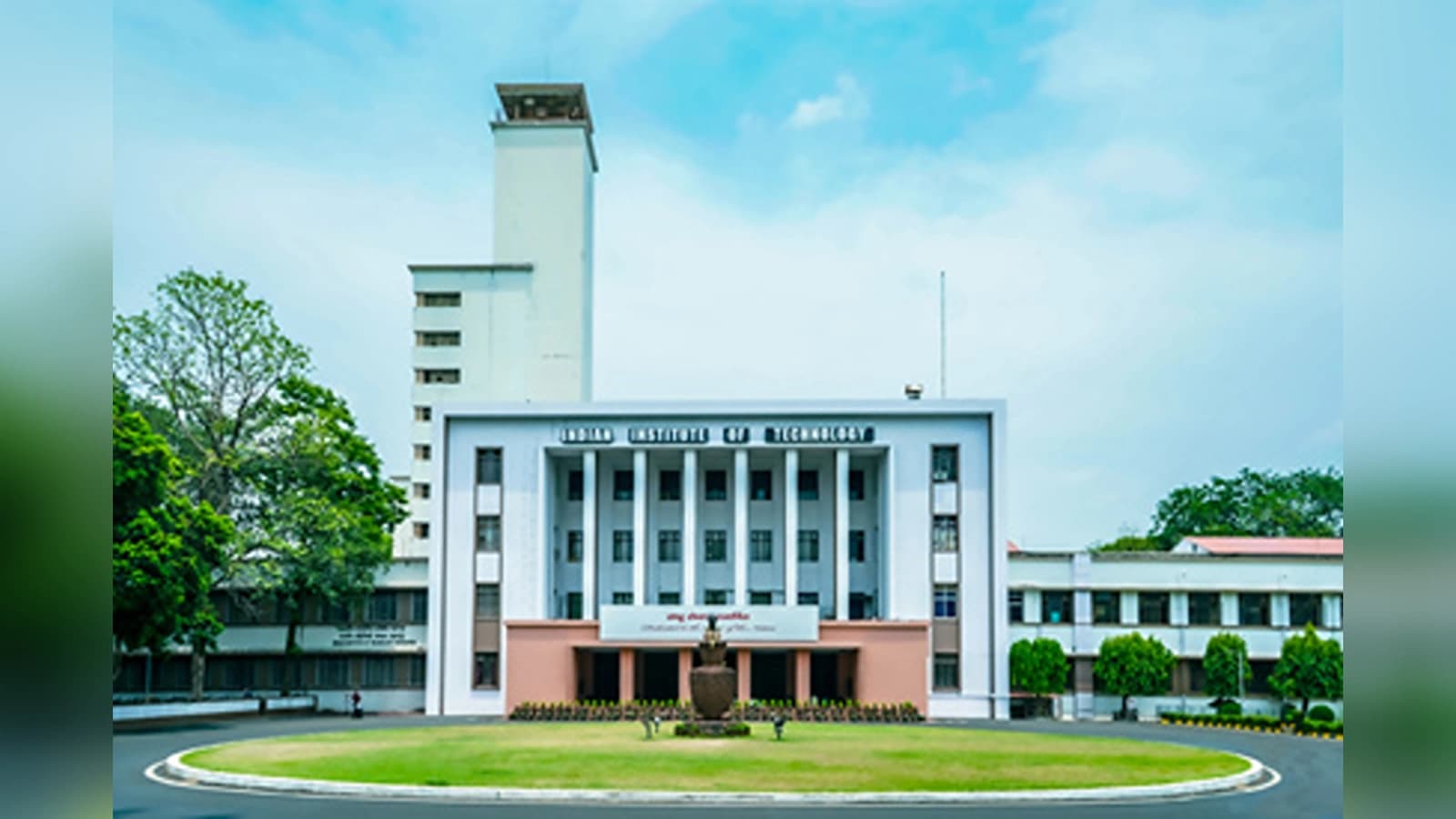
Representational Image
The Indian Institute of Technology (IIT) Kharagpur is set to establish India's first dedicated academic school for Physical Artificial Intelligence (AI), with a proposed investment of ₹35 crore. Named the Benjamin Gupta School of Physical AI, the initiative will focus on developing intelligent systems that can understand, interact with and respond to the physical world.
The institute signed a tripartite Memorandum of Understanding (MoU) with its alumnus and philanthropist Vinod Gupta and the IITKGP Foundation USA to establish the school. According to the Ministry of Education's announcement on October 26, 2026, the initiative aims to bring together artificial intelligence, physics, engineering, biological sciences and specialised scientific research.

Academic programmes are expected to begin in the upcoming academic session, subject to the necessary approvals.
IIT Kharagpur Physical AI School: How Will the ₹35 Crore Be Funded?
The proposed school will be established through a combination of alumni contributions and institutional funding. The total investment of ₹35 crore will be divided among three contributors. The Vinod Gupta family will contribute ₹12.5 crore, while an anonymous IIT Kharagpur alumnus has pledged ₹10 crore. The institute will provide the remaining ₹12.5 crore.
The funding will support dedicated infrastructure for IIT Kharagpur's Department of Artificial Intelligence, along with interdisciplinary academic programmes and research activities. The school has been named after Benjamin Gupta, the late son of Vinod Gupta, in recognition of his memory and as a long-term contribution to scientific education and research.
What Is Physical AI and How Is It Different from Conventional AI?
Unlike conventional AI systems that primarily process data, recognise patterns and generate digital outputs, Physical AI focuses on developing intelligent technologies that can interact with real-world environments. It combines artificial intelligence with physical principles, engineering knowledge, real-world sensing and intelligent control. The objective is to develop systems that can understand their surroundings, predict physical behaviour and respond to changing conditions.
Similarly, AI-powered scientific systems could combine computational predictions with physical laws to improve experiments and engineering research.The proposed school aims to advance this approach by integrating AI with fundamental scientific knowledge rather than treating it as a standalone digital technology.
Research Areas at Benjamin Gupta School of Physical AI
According to the official announcement, the school will focus on several emerging areas of artificial intelligence and scientific research.
These include:
The school will also focus on developing reliable, explainable and responsible AI systems, particularly for applications where accuracy, safety and accountability are important.
Physical AI Applications in Healthcare, Agriculture and Manufacturing
The institute plans to explore applications of Physical AI across several sectors, including advanced manufacturing, healthcare, agriculture, energy systems, climate technologies and intelligent infrastructure.
In manufacturing, AI-powered robotics could improve industrial automation, production processes and quality monitoring. In healthcare, research could explore intelligent medical devices and AI-enabled diagnostic technologies.
In agriculture, intelligent sensing and automated equipment could support precision farming and crop monitoring. Similarly, Physical AI could help improve the monitoring and management of energy infrastructure and environmental systems.
These are proposed research and application areas. The announcement does not suggest that the school has already developed or deployed such technologies.
IIT Kharagpur Physical AI Courses: What Programmes Will Be Offered?
The proposed academic programmes are expected to include hybrid-mode Master's programmes, executive education, professional certifications and specialised interdisciplinary learning modules. The programmes will cater to students, researchers and working professionals from different academic backgrounds, including engineering, physical sciences, life sciences and medicine.
The institute intends to help learners combine their existing subject knowledge with contemporary AI skills. This approach could create opportunities for engineers, scientists, medical professionals and researchers interested in applying artificial intelligence to their respective fields.
However, the institute has not yet announced complete admission details, including confirmed course names, eligibility requirements, programme fees, application dates, entrance examinations or seat availability. Students should wait for official IIT Kharagpur notifications before making admission-related decisions.
IIT Kharagpur Director Suman Chakraborty on the Future of Physical AI
IIT Kharagpur Director Professor Suman Chakraborty said the next major development in artificial intelligence would involve transforming how people understand, engineer and interact with the physical world. He said the institute aims to move beyond treating AI as a "black-box" solution by combining computational capabilities with fundamental scientific principles and specialised knowledge.
The director emphasised that engineers should understand the physics behind intelligent machines, scientists should connect AI predictions with scientific principles, and medical professionals should combine algorithmic intelligence with biological and clinical understanding. The school will also seek to build partnerships with industry, healthcare institutions, research laboratories, startups and international organisations to support research, technology development and professional reskilling.
What Does the New Physical AI School Mean for Indian Students?
The proposed school could create new academic and research opportunities for students interested in artificial intelligence beyond conventional software development and data science. Its interdisciplinary approach is expected to be relevant to engineering graduates, physics students, life sciences researchers and medical professionals seeking to understand how AI can be integrated into their respective fields.
For instance, engineering students could explore intelligent robotics and autonomous systems, while physics graduates could study physics-informed machine learning. Medical professionals and life sciences researchers could explore applications involving biological systems and AI-enabled medical technologies.
The initiative also reflects the growing importance of combining technical AI capabilities with specialised subject knowledge. As AI applications expand into manufacturing, healthcare, agriculture and infrastructure, professionals may increasingly need expertise in both computing and the disciplines in which these technologies are deployed. With a proposed investment of ₹35 crore, IIT Kharagpur aims to strengthen India's academic and research capabilities in Physical AI. The actual opportunities for students, however, will become clearer once the institute publishes its final programme structure and admission notifications.

Apple promotes Indian-origin engineer Rajesh Ambati to vice-president of engineering

Bhutan Glacial Lake Outburst Triggers Flood Alert in Assam and North Bengal; Over 10,000 Evacuated
West Bengal to bar school teachers, non-teaching staff from political activities; considers performance-based increments

Schools closed in Chhattisgarh, Odisha amid heavy rainfall; check district-wise holiday updates

UP schools closed in 60 districts for UPSSSC PET 2026; Noida, Ghaziabad among affected areas
IIT Kharagpur to Establish India’s First Physical AI School with ₹35 Crore Investment
Japan wants more foreign workers, but who will teach them Japanese?

Patrick Stewart Dies at 86: Star Trek's Captain Picard and X-Men's Professor X Remembered

UAE makes schoolchildren priority for free flu vaccines across emirates
NTU Singapore, VFT launch joint research lab to develop safer batteries for renewable energy storage

Apple promotes Indian-origin engineer Rajesh Ambati to vice-president of engineering
Bhutan Glacial Lake Outburst Triggers Flood Alert in Assam and North Bengal; Over 10,000 Evacuated
West Bengal to bar school teachers, non-teaching staff from political activities; considers performance-based increments
Schools closed in Chhattisgarh, Odisha amid heavy rainfall; check district-wise holiday updates
UP schools closed in 60 districts for UPSSSC PET 2026; Noida, Ghaziabad among affected areas
IIT Kharagpur to Establish India’s First Physical AI School with ₹35 Crore Investment
Japan wants more foreign workers, but who will teach them Japanese?
Patrick Stewart Dies at 86: Star Trek's Captain Picard and X-Men's Professor X Remembered
UAE makes schoolchildren priority for free flu vaccines across emirates
NTU Singapore, VFT launch joint research lab to develop safer batteries for renewable energy storage
Copyright© educationpost.in 2026 All Rights Reserved.