


Thousands remain without electricity and running water in Kumamoto as rescuers race to find survivors trapped under collapsed buildings following the powerful earthquake.
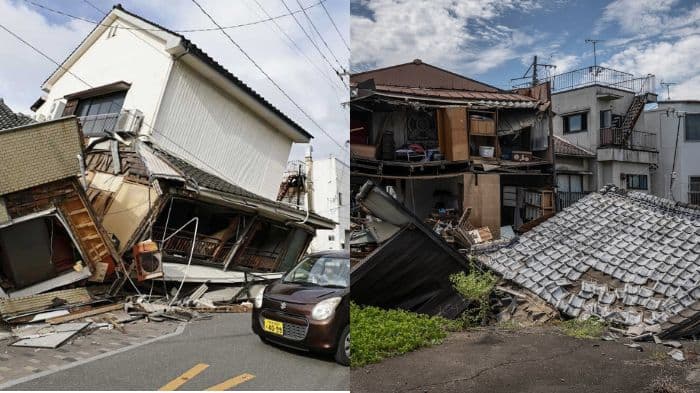
A powerful 7.7-magnitude earthquake struck Japan's southwestern Kumamoto Prefecture on July 28, triggering widespread destruction, collapsing buildings and disrupting power and water supplies across parts of Kyushu.
The disaster has killed at least 28, with rescuers continuing search operations amid strong aftershocks, soaring temperatures and shortages of drinking water complicating relief efforts.

Authorities have deployed thousands of Self-Defence Force personnel across the affected region, where damaged roads, collapsed buildings and disrupted utilities have slowed rescue operations.
More than 15,000 people have taken shelter in evacuation centres, while tens of thousands of households remain without electricity or running water.
Relief efforts are increasingly focused on providing safe drinking water as temperatures in parts of the disaster zone approach 40 degrees Celsius.
Emergency water supplies and portable air-conditioning units are being delivered to shelters, but residents in some areas have been placed under strict water rationing because of damaged infrastructure.
Rescuers are also contending with frequent aftershocks, including a strong tremor overnight, raising concerns over further building collapses and landslides.
Officials have warned that the unstable conditions continue to pose risks to both survivors and emergency personnel.
Among the worst-hit sites are a shopping mall, where a gas explosion following the earthquake caused multiple fatalities, and a paper mill where a collapsed chimney killed several workers. Search operations are continuing for people believed to be trapped beneath the debris.
The earthquake has also disrupted Japan's manufacturing sector, forcing temporary suspensions at automobile and semiconductor plants operated by companies including Toyota, Honda, Sony and Renesas, with authorities assessing the wider economic impact.

Hunter of Underwater Threats: Why INS Mangrol Is Important for the Indian Navy

Delhi Protests Renew Debate Over Constitutional Right to Peaceful Assembly

Household Inflation Rises to 5.54% in September as Price Pressures Spread
Delhi High Court Allows Urgent Hearing on Protest Site Guidelines

India Rejects China’s Objection to Standardised Names of Places in Ladakh

Karnataka student elections return after 37 years: Why political restrictions and university polls remain contentious

Global education is shifting from simply going abroad to creating more flexible routes to opportunity

Delhi Police files FIR against Congress MP Bimol Akoijam over JNU sexual harassment allegations

Utkal University tightens security after late-night explosions ahead of student polls

IET India Scholarship Award 2026: DTU’s Kush Garg wins top honor for AI device for neurodivergent children

Hunter of Underwater Threats: Why INS Mangrol Is Important for the Indian Navy
Delhi Protests Renew Debate Over Constitutional Right to Peaceful Assembly
Household Inflation Rises to 5.54% in September as Price Pressures Spread
Delhi High Court Allows Urgent Hearing on Protest Site Guidelines
India Rejects China’s Objection to Standardised Names of Places in Ladakh
Karnataka student elections return after 37 years: Why political restrictions and university polls remain contentious
Global education is shifting from simply going abroad to creating more flexible routes to opportunity
Delhi Police files FIR against Congress MP Bimol Akoijam over JNU sexual harassment allegations
Utkal University tightens security after late-night explosions ahead of student polls
IET India Scholarship Award 2026: DTU’s Kush Garg wins top honor for AI device for neurodivergent children
Copyright© educationpost.in 2026 All Rights Reserved.