


Israel Election 2026: Arab-Led Joint List Backs Gadi Eisenkot as Netanyahu Faces Coalition Challenge

Israel’s post-election political negotiations intensified on Thursday after the Arab-led Joint List announced its support for Gadi Eisenkot, leader of the Yashar party, in his bid to form the next government. The development comes as Prime Minister Benjamin Netanyahu faces difficulties securing the parliamentary support required to retain power.
The announcement came during the second day of consultations conducted by Israeli President Isaac Herzog with political parties to identify a candidate capable of forming the next government.

Herzog also reportedly confronted representatives of the far-right Otzma Yehudit party over allegations of election fraud, criticism of the attorney general and remarks concerning Arab voters. Responding to the claims, Herzog stressed that allegations must be supported by evidence and cautioned against making generalisations.
The Joint List said its decision to back Eisenkot was aimed at widening the gap between him and Netanyahu, while also raising concerns over incitement against Arab citizens and the legitimacy of their political participation.
Israel’s Central Elections Committee has certified the results of the October 27 election, reporting no evidence of electoral fraud. In the 120-member Knesset, a party or alliance needs at least 61 seats to form a government.
Netanyahu’s bloc secured 53 seats, while the opposition alliance led by Eisenkot won 48. The Arab parties, Joint List and Ra’am, together secured 19 seats, making their support significant in the coalition negotiations.
Several parties, including Likud, Shas, Religious Zionism and Otzma Yehudit, have recommended Netanyahu, while Yashar and other opposition parties have backed Eisenkot.
Herzog has until November 11 to nominate a candidate to form the government. Netanyahu will continue as caretaker prime minister until a new government secures a confidence vote. If neither side manages to assemble a majority, Israel could face another election.

Joint List Extends Support to Eisenkot as Coalition Talks Continue
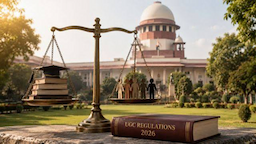
Centre Plans Committee to Reconsider 2026 UGC Equity Regulations After Supreme Court Questions

CERN experiment captures evidence of a rare particle decay that could test physics theories

Cambridge spinout uses AI and quantum computing to explore new treatments for heart disease

Google invests over US$6 million in AI research and education initiatives in Singapore
Google invests over US$6 million in AI research and education initiatives in Singapore

Cabinet Approves ₹4,371 Crore VISTAR Scheme to Modernize India's Statistical System

AI tutor outperforms classroom learning in US university trial, OECD report finds

Why will students lose Google Search access if schools reject Google's AI tools? Company announces new rules

Australian experts back school digital detox as concerns grow over AI and screen use

Joint List Extends Support to Eisenkot as Coalition Talks Continue
Centre Plans Committee to Reconsider 2026 UGC Equity Regulations After Supreme Court Questions
CERN experiment captures evidence of a rare particle decay that could test physics theories
Cambridge spinout uses AI and quantum computing to explore new treatments for heart disease
Google invests over US$6 million in AI research and education initiatives in Singapore
Google invests over US$6 million in AI research and education initiatives in Singapore
Cabinet Approves ₹4,371 Crore VISTAR Scheme to Modernize India's Statistical System
AI tutor outperforms classroom learning in US university trial, OECD report finds
Why will students lose Google Search access if schools reject Google's AI tools? Company announces new rules
Australian experts back school digital detox as concerns grow over AI and screen use
Copyright© educationpost.in 2026 All Rights Reserved.