


The closures have raised questions about access to mother-tongue instruction, the preservation of Tibetan cultural identity, and the long-term impact of China’s education policies on younger generations.
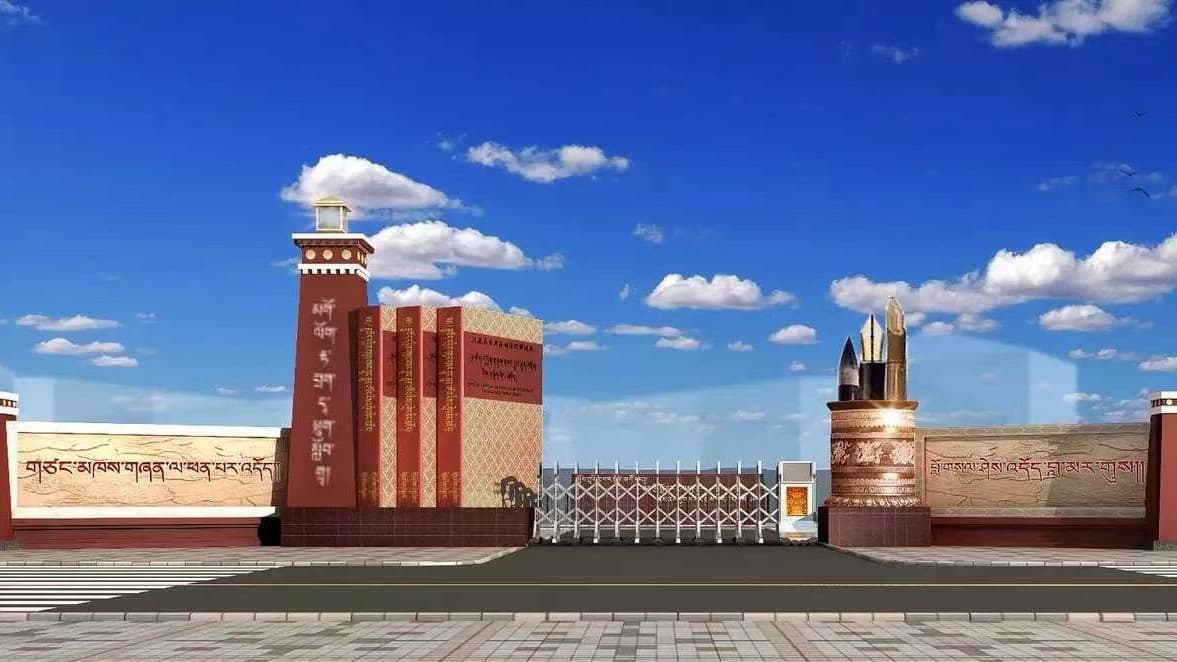
Chinese authorities have closed at least three privately run Tibetan schools in Golog Tibetan Autonomous Prefecture within a few weeks, affecting hundreds of students and raising concerns about access to education in the Tibetan language, according to a report by the Central Tibetan Administration (CTA).
The closures have affected institutions providing academic education, vocational training and residential care to children from nomadic communities and disadvantaged families. The CTA report, citing sources in the region, alleges that the shutdowns are part of a broader policy pushing Tibetan children into state-run schools where Mandarin Chinese is the primary language of instruction.

The report also highlights restrictions on communication and surveillance across Tibetan areas, which have made it difficult to obtain independent information about the closures and the students' current circumstances.
Three Tibetan schools closed in Golog
Authorities closed the Ra-Gya Jigme Gyaltsen Grassland Girls’ School, also known as Gangjong Tsathang Girls’ School, on Aug 27, 2026, according to the CTA report. Founded in 2005 by Tibetan educator Jigme Gyaltsen, the institution provided education and vocational training to girls from nomadic herding communities across Ü-Tsang, Kham and Amdo.
The school offered lessons in Tibetan language, Buddhist philosophy, science, traditional medicine, handicrafts, thangka painting and astrology. It also followed China’s nine-year compulsory education curriculum, including Chinese-language instruction.
The report said the school had around 448 students, 44 teachers and 63 staff members this year. It operated a six-year primary section and a three-year middle school, and many of its graduates continued their education at universities in Tibetan areas and elsewhere.
Footage circulated on Tibetan social media reportedly showed uniformed police arriving at the school and students leaving their dormitories. Several students expressed grief over the closure in online posts.
“We will never forget the kindness of our teachers,” one pupil wrote, while another said: “Our lifeline is lost forever.”
Another message described the closure as the end of an important source of cultural and educational support. One post read: “The golden sun of our mother tongue and script has set.”
The school’s closure follows the shutdown of another institution in the same community in 2024, the Ra-Gya Gangjong Sherig Norbu Lobling School, which the report described as one of Tibet’s leading schools.
Village school established by Tibetan herders also shut
The Jasak Village Boarding School in Ragya township was reportedly closed at the end of August or around Sept 2. Founded by local Tibetan herders in 1995, it served children from nomadic communities, including those living in Jasak Village.
The school was renamed Ragya Township Second Boarding School in 2008. According to a source cited by Tibet Watch, it had approximately 300 students and 20 teachers and staff members.
“The school had about 300 students and about 20 teachers and staff. Over the years, local Tibetans endured great hardship to create an environment where young Tibetans could study a range of subjects, with Tibetan as the main language of instruction. They also built considerable infrastructure, such as a meeting hall and dormitories. But in September 2026, the Machen County government closed the school, accusing it of lacking the necessary legal documents to operate.”
Tibetan sources cited by Tibet Watch said the school’s use of Tibetan as its main teaching language may have contributed to its closure. The report added that local authorities had instructed the institution to stop teaching in Tibetan and use the “national common language,” referring to Mandarin Chinese written in simplified characters.
The school’s students were reportedly transferred to nearby government-run boarding schools. However, the reports did not establish which institutions would receive all the affected students or whether sufficient places would be available.
The village community had previously sought government affiliation to secure the school’s future. According to the source cited by Tibet Watch, a request made in 2004 was rejected.
Orphan school that supported more than 300 children closed
The Golog Tadrak Orphan School in Tabo Village, Machen County, was ordered to close on Sept 2, 2026, according to the CTA report. Established in 2005 with funding from the late Dr Tawu Lobsang Palden and his wife, who lived in Germany, the school provided shelter and education to more than 300 children who had lost both parents or came from broken families.
The institution, also known as Golog Tadra School, offered academic and vocational education in Tibetan and Chinese, Buddhist philosophy, science, traditional medicine, astrology, handicrafts and thangka painting.
It had educated thousands of orphans and disadvantaged children from Tibetan areas. Many former students continued to universities or entered professions across different sectors.
Dr. Tawu’s own childhood experiences influenced his work. He went into exile with his parents at the age of eight and grew up at a children's village in Germany before pursuing medical studies.
According to the Tadra Project website, “The separation from his parents and getting used to a completely alien culture was very difficult for him, but it offered him and 11 other Tibetan orphaned refugees the possibility of a good schooling. With that, he was able to go on to medical studies and fulfil his long-felt desire to become a doctor. His credo was, ‘Education is the key to a better life for all children.’”
Dr. Tawu, who lived in Germany until his death in 2019, had established his first school for orphans in Tawu County in the Tibetan region of Kham in 1997, eight years before the Golog institution was founded.
Closures raise concerns over Tibetan-language education
The latest shutdowns follow a series of school closures across Golog in recent years. Sengdruk Taktse School was closed in July 2021, after which authorities ordered seven more private schools in Darlag, Machen, Gade and Chikdril counties to shut down.
On June 24, 2026, authorities also forced the permanent closure of Hungkar Dorje Vocational High School, which had taught Tibetan language and culture since 2008. The institution was founded by Tibetan Buddhist leader Tulku Hungkar Dorje, who died in March 2025 while in Chinese custody in Vietnam under circumstances described as suspicious by Tibet Watch.
The report said the latest closures reflect a wider tightening of controls over Tibetan-language education. It linked the developments to China's broader policy of cultural assimilation, including a new “Ethnic Unity” law that took effect on July 1, 2026.
The closures have also raised concerns about the ability of Tibetan communities to maintain independent educational institutions. According to Tibet Watch, restrictions on overseas funding have made it harder for private schools and community initiatives to secure financial support.
The New York-based Trace Foundation, which had supported Tibetan-language education, publishing, health and rural development projects for more than two decades, ended its support for these projects in 2018. The organization said it had become increasingly difficult to work directly with communities in Tibet.
UN experts have raised concerns over boarding schools
The CTA report argued that transferring Tibetan children to Mandarin-medium state boarding schools threatens their ability to learn and use their mother tongue, maintain family connections and inherit cultural traditions.
It cited warnings by UN human rights experts in 2023 that around one million Tibetan children were affected by a boarding-school system the experts described as involving “forced assimilation.”
The report also referred to international and domestic legal protections for minority-language education and cultural identity. These include Articles 20, 29 and 30 of the Convention on the Rights of the Child, which address the cultural and linguistic rights of children, including those who have lost their families.
It also cited Article 13 of the International Covenant on Economic, Social and Cultural Rights, provisions of conventions against discrimination toward women and racial discrimination, Article 4 of China's Constitution, and Article 37 of the Regional Ethnic Autonomy Law.
According to the report, these provisions protect aspects of educational choice, equal access to education and the use and development of minority languages.
Teachers and students reportedly face surveillance
The closures have caused distress among students, teachers and former staff members, while concerns about surveillance have made it difficult for people to speak openly, according to Tibet Watch.
“Due to China’s strict crackdown and heavy surveillance across Tibet, no one dares to talk about the closure or the present situation,” said a former pupil of another school in Ragya founded by Jigme Gyaltsen and closed in 2024.
Ginger Yuan, a Chinese dissident living in the West who worked at the same school, said she had seen Tibetan friends expressing grief online but struggling to communicate freely.
The report also said Jigme Gyaltsen had been placed under heavy surveillance and was not allowed to leave the Golog area. Two teachers from the school closed in 2024 were reportedly questioned by local police and warned about their social media posts.
The closure of the three schools has renewed concerns about the future of Tibetan-language education and community-led institutions in the region. The CTA and Tibet Watch reports argue that the shutdowns risk disrupting both students' education and the transmission of Tibetan cultural knowledge across generations.

How penguin droppings could be changing Antarctica’s snowy landscape, study finds

Housing costs, education and austerity fuel protests across Europe

Hundreds of websites go offline as critical PHP flaws trigger global cyber alert

Anti-Putin cyberattack disrupts nationwide school assessments in Russia

SRH University begins 2026–27 winter semester with Indian students across German campuses
How penguin droppings could be changing Antarctica’s snowy landscape, study finds

Delhi Police may seek further custody of CJP leaders Saurav Das, Ashutosh Ranka

SBI probes data leak after personal details in 3,897 customer records surface on dark web
Sharjah schools set boundaries for AI use in homework and exams

Former MIT scientist wins $6 million defamation verdict in misconduct dispute

How penguin droppings could be changing Antarctica’s snowy landscape, study finds
Housing costs, education and austerity fuel protests across Europe
Hundreds of websites go offline as critical PHP flaws trigger global cyber alert
Anti-Putin cyberattack disrupts nationwide school assessments in Russia
SRH University begins 2026–27 winter semester with Indian students across German campuses
How penguin droppings could be changing Antarctica’s snowy landscape, study finds
Delhi Police may seek further custody of CJP leaders Saurav Das, Ashutosh Ranka
SBI probes data leak after personal details in 3,897 customer records surface on dark web
Sharjah schools set boundaries for AI use in homework and exams
Former MIT scientist wins $6 million defamation verdict in misconduct dispute
Copyright© educationpost.in 2026 All Rights Reserved.