


A Massachusetts jury ruled against former colleague Kristin Knouse after a five-year legal battle, but her attorney says she plans to appeal.
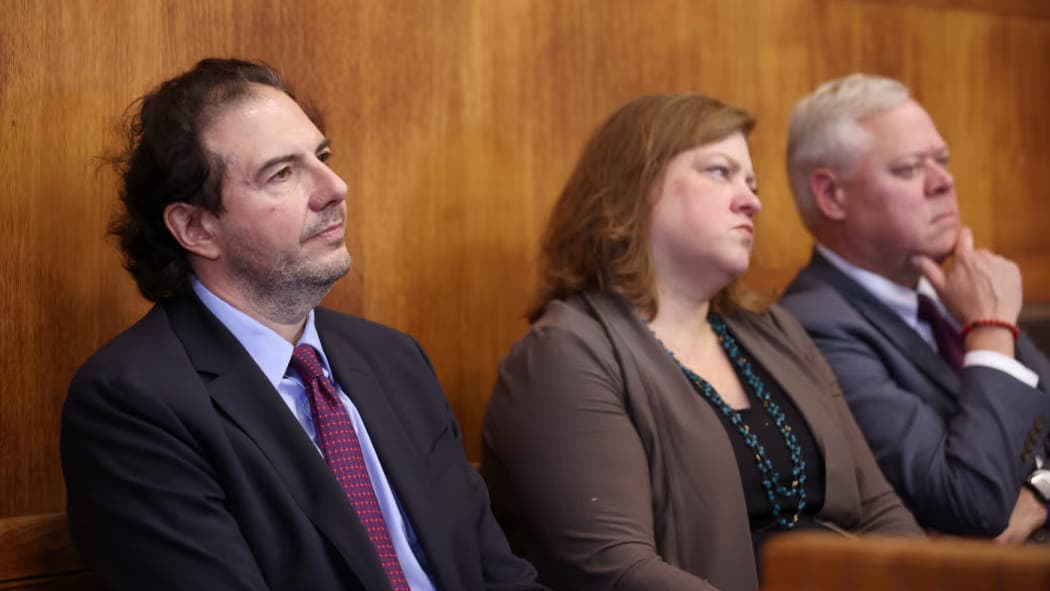
Former MIT scientist David Sabatini has won a $6 million defamation verdict against former colleague Kristin Knouse, bringing a major courtroom development in a five-year dispute that derailed his prominent research career and raised difficult questions about workplace misconduct, professional power and accountability in academia.
The jury in Suffolk County Superior Court in Boston ruled recently that Knouse, now an MIT biology professor, defamed Sabatini by describing him as a sexual predator and interfered with his professional relationships. It ordered her to pay $6 million plus interest.

The verdict marks a significant legal victory for Sabatini, whose scientific career suffered a major setback in 2021 after allegations of workplace misconduct led to his departure from the Whitehead Institute for Biomedical Research in Cambridge, Massachusetts.
However, the ruling has not ended the dispute. Knouse's lawyer has rejected the outcome and said her client intends to appeal, setting the stage for a possible return to Massachusetts appellate courts.
Allegations that reshaped a scientific career
Sabatini, a prominent biologist whose research on cellular growth contributed to advances in the study of cancer and ageing, lost his position at Whitehead in 2021 after an investigation into workplace misconduct allegations. The institute concluded that he had violated policies governing sexual relationships and harassment, prompting his resignation.
MIT placed him on leave, while the Howard Hughes Medical Institute terminated his employment over workplace policy violations.
The investigation followed allegations by Knouse, a former graduate student and researcher whom Sabatini had mentored. She accused him of using his professional influence to pressure her into a sexual relationship and creating a hostile, sexualised working environment. Knouse argued that the power imbalance made it difficult for her to end the relationship.
Sabatini maintained that their relationship, which began in 2018, was consensual. He later accused Knouse of making false and damaging statements that undermined his reputation and obstructed his efforts to secure another academic position.
The competing accounts became the basis of a legal battle that would stretch across several years and reach the state's highest court.
A legal battle spanning five years
On October 20, 2021, Sabatini sued Knouse, Whitehead and institute director Ruth Lehmann, alleging defamation and other wrongdoing. Whitehead and Lehmann were subsequently dismissed from the litigation, leaving Sabatini and Knouse to pursue their competing claims.
The case took another significant turn on May 19, 2026, when the Massachusetts Supreme Judicial Court revived Knouse's sexual harassment counterclaim. The court ruled that state law allows people alleging harassment in academic settings to sue the individuals accused of misconduct directly.
The decision clarified the potential scope of individual liability under Massachusetts' sexual harassment law, particularly in academic environments where professional hierarchies can shape relationships between advisers, researchers and students.
The court's ruling allowed Knouse's counterclaim to proceed to trial. The jury ultimately ruled against her, resulting in the $6 million defamation verdict.
The legal decision addressed who could be held liable under the statute; it did not itself determine whether Knouse's allegations were true.
Lawyers offer sharply different reactions
Sabatini's attorney, Lisa Arrowood, welcomed the verdict, saying it helped restore her client's reputation after years of professional and personal upheaval.
Despite his earlier scientific achievements, Sabatini has struggled to rebuild his research career since leaving MIT and Whitehead. The verdict could become a pivotal development in his efforts to challenge the consequences of the allegations and the damage he says they caused.
Knouse's attorney, Ellen Zucker, criticised the outcome and maintained that her client had truthfully described her experiences. She also pointed to testimony from other women about conditions in Sabatini's laboratory, raising broader concerns about the challenges faced by women who report alleged misconduct involving powerful colleagues.
Zucker said Knouse intends to appeal the verdict, keeping open the possibility of further proceedings in the state's appellate courts.
Whitehead, which was dismissed from the lawsuit, said the verdict concerned Sabatini and Knouse rather than the institute. Its earlier findings that Sabatini violated workplace policies remain unchanged.
Wider implications for academic workplaces
The case highlights the difficult intersection of professional power, workplace misconduct allegations and reputational harm in academic institutions. It also underscores the distinction between institutional investigations, which assess compliance with workplace policies, and civil trials, which determine specific legal claims under the applicable law.
For universities and research institutions, the dispute raises questions about how allegations are investigated, how power imbalances are addressed and how the rights and reputations of everyone involved are protected.
The jury's verdict settles the defamation claims at the trial level, but it does not erase the institute's earlier findings or resolve every issue surrounding the underlying allegations.
With Knouse planning an appeal, the five-year dispute may yet have another chapter. For now, the verdict represents a major courtroom victory for Sabatini, while leaving unresolved the broader debate over misconduct reporting, institutional responsibility and accountability in academic research.

Engineering Research Should Focus on Actual Problem Solving

Ontario launches probe into eight private colleges over suspected OSAP fraud

Former MIT scientist wins $6 million defamation verdict in misconduct dispute

UAE university enrolment rises 15% as institutions expand programmes to attract students

UAE university registration now takes three minutes as digital platform cuts processing time by 70%
Former MIT scientist wins $6 million defamation verdict in misconduct dispute

McMahon highlights Trump’s push to return education powers to states

Could smarter energy solutions make data centres more sustainable?
Cambridge and AstraZeneca extend joint PhD programme for three years

China shuts three Tibetan schools, raising fears for language and cultural identity

Engineering Research Should Focus on Actual Problem Solving
Ontario launches probe into eight private colleges over suspected OSAP fraud
Former MIT scientist wins $6 million defamation verdict in misconduct dispute
UAE university enrolment rises 15% as institutions expand programmes to attract students
UAE university registration now takes three minutes as digital platform cuts processing time by 70%
Former MIT scientist wins $6 million defamation verdict in misconduct dispute
McMahon highlights Trump’s push to return education powers to states
Could smarter energy solutions make data centres more sustainable?
Cambridge and AstraZeneca extend joint PhD programme for three years
China shuts three Tibetan schools, raising fears for language and cultural identity
Copyright© educationpost.in 2026 All Rights Reserved.