


Demonstrations in France, Italy, Belgium, Spain and Portugal have highlighted growing frustration over affordability and public services, while students in Albania have joined protests demanding action on corruption.
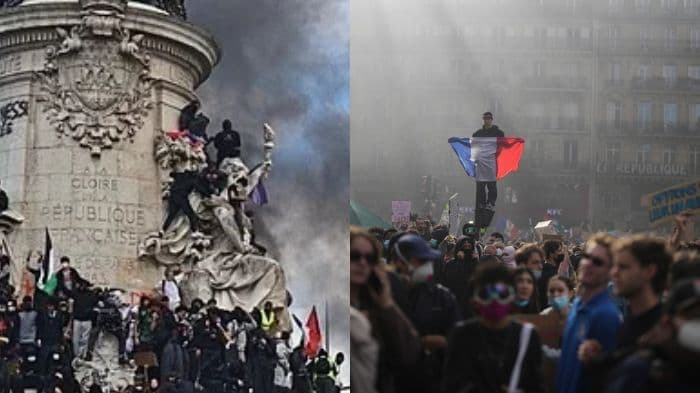
Rising living costs, unaffordable housing and concerns over public services are fuelling demonstrations across several European countries, with students, workers and trade unions demanding government action on economic pressures affecting their daily lives.
The protests have taken different forms across the continent. Demonstrators in Italy have raised concerns over employment, healthcare, education and energy prices, while housing affordability has emerged as a central issue in Spain and Portugal.

In Belgium, opposition to government spending cuts has brought protesters onto the streets, and unrest in France has expanded from student concerns over school conditions to broader grievances about living costs and public services.
Although the movements have different national contexts and demands, their spread highlights the pressure facing governments over household expenses, access to essential services and the resources allocated to education and social welfare.
Italy sees clashes amid economic grievances
In Italy, demonstrations over living costs, employment, healthcare and education turned violent in Milan, Turin and Bologna over the weekend, according to the report. Some masked protesters clashed with police, damaged shops and set property on fire.
Authorities arrested 271 people in Milan, including 220 minors, while 14 security personnel were injured over two days. The city's chamber of commerce estimated the damage at approximately €1 million, including damage to property and lost business revenue.
Students have also been demonstrating since early October over school conditions and government policies. Protesters have criticised Prime Minister Giorgia Meloni's government over energy prices and its spending priorities, including expenditure on the war in Ukraine.
In southern Italy, truck drivers, farmers and fishers have blocked roads and toll booths to protest fuel costs. The country's largest labour union, CGIL, has called a general strike for November 20 over economic and social concerns.
Belgium protests target spending cuts and education
In Belgium, demonstrations have focused on federal government austerity measures, public spending and education.
Tens of thousands of people protested in Brussels on October 9. Further demonstrations in Brussels and Liège over the weekend resulted in clashes with police and nearly 200 arrests, including more than 25 minors, according to the report.
Some protesters erected barricades, threw projectiles and set fire to vehicles. Windows at the Brussels headquarters of the Socialist Party were also smashed.
Teachers have separately protested over working conditions and concerns about the education system. Although the French-speaking community's education minister has established an advisory committee, unions remain sceptical about the government's response.
The demonstrations reflect disputes over how public spending should be allocated and the consequences of austerity measures for social services and education.
Housing affordability drives protests in Spain and Portugal
Housing has become a major source of public frustration in Spain, where rising rents and limited access to homes have made it increasingly difficult for many people, particularly younger residents, to find affordable accommodation.
Protesters have established camps in Madrid's Puerta del Sol and other city squares, demanding measures to make housing more accessible. The issue has gained political significance ahead of Spain's Nov 29 snap election.
The country's two largest trade union federations, UGT and CCOO, have also called a general strike for November 11 over housing costs and wages. Teachers in Madrid have separately demanded better pay and smaller class sizes, adding pressure on regional authorities.
Portugal has witnessed similar demonstrations over housing affordability, wages and the cost of living. Thousands marched in Lisbon and Porto in October, demanding better living conditions and higher incomes.
Property prices and rents have risen sharply since 2017, according to the report. Protesters have also opposed proposed government changes that would make tenant evictions easier and remove rent controls on new leases.
Authorities cleared tent camps in Lisbon and Porto on Oct 20. Fifty-five people were arrested and later released pending court appearances. Protesters have vowed to continue campaigning for affordable housing.
France unrest broadens beyond student concerns
In France, demonstrations initially led by high school students demanding better school facilities and more resources have developed into a wider movement over living costs and public services.
Violence erupted in Paris, Marseille, Lyon and Bordeaux over the weekend, with shops looted, buildings damaged and the historic town hall in Limoges destroyed by fire. Authorities reported nearly 2,400 arrests following the unrest, according to reports published on Oct 18.
The protests have brought education funding and school conditions into a broader debate about economic pressures and government spending. The unrest has also intensified political arguments over public order and the role of radical groups in the demonstrations.
The scale of the disruption in France has been greater than in several other countries experiencing protests, although the underlying grievances vary between national movements.
Students in Albania demand action on corruption
In Albania, students have joined demonstrations in the capital, Tirana, demanding the resignation of Socialist Prime Minister Edi Rama.
The protests centre on corruption allegations and demands for improvements in healthcare, education and pension protection. Demonstrators have also opposed a luxury tourism development linked to Jared Kushner, the son-in-law of US President Donald Trump.
The Albanian demonstrations add a governance dimension to the wider European unrest, with protesters raising concerns extending beyond affordability to public accountability and the delivery of essential services.
Different national disputes, shared pressure on governments
The protests do not represent a single movement with a common leadership or set of demands. Instead, they reflect distinct disputes over housing, wages, education, public spending and government accountability.
For education systems, the demonstrations in France, Italy and Belgium have highlighted concerns over school resources, teachers' working conditions and government spending priorities.
Housing and living costs have featured more prominently in Spain and Portugal, while students in Albania have linked education concerns with wider demands for political accountability.
The protests have placed renewed attention on how governments respond to demands for affordable housing, adequately funded public services and better economic security.
Whether the demonstrations lead to policy changes will depend on the responses of individual governments and the outcomes of country-specific negotiations and political processes.
Housing costs, education and austerity fuel protests across Europe
Hundreds of websites go offline as critical PHP flaws trigger global cyber alert

Anti-Putin cyberattack disrupts nationwide school assessments in Russia

SRH University begins 2026–27 winter semester with Indian students across German campuses

Ghana and Germany discuss closer cooperation in technical education

Delhi Police may seek further custody of CJP leaders Saurav Das, Ashutosh Ranka

SBI probes data leak after personal details in 3,897 customer records surface on dark web
Sharjah schools set boundaries for AI use in homework and exams

Former MIT scientist wins $6 million defamation verdict in misconduct dispute
McMahon highlights Trump’s push to return education powers to states

Housing costs, education and austerity fuel protests across Europe
Hundreds of websites go offline as critical PHP flaws trigger global cyber alert
Anti-Putin cyberattack disrupts nationwide school assessments in Russia
SRH University begins 2026–27 winter semester with Indian students across German campuses
Ghana and Germany discuss closer cooperation in technical education
Delhi Police may seek further custody of CJP leaders Saurav Das, Ashutosh Ranka
SBI probes data leak after personal details in 3,897 customer records surface on dark web
Sharjah schools set boundaries for AI use in homework and exams
Former MIT scientist wins $6 million defamation verdict in misconduct dispute
McMahon highlights Trump’s push to return education powers to states
Copyright© educationpost.in 2026 All Rights Reserved.