


A government survey highlights the gap between neighbourhood school access norms and actual student commuting patterns, raising concerns about accessibility, transport costs and educational infrastructure.
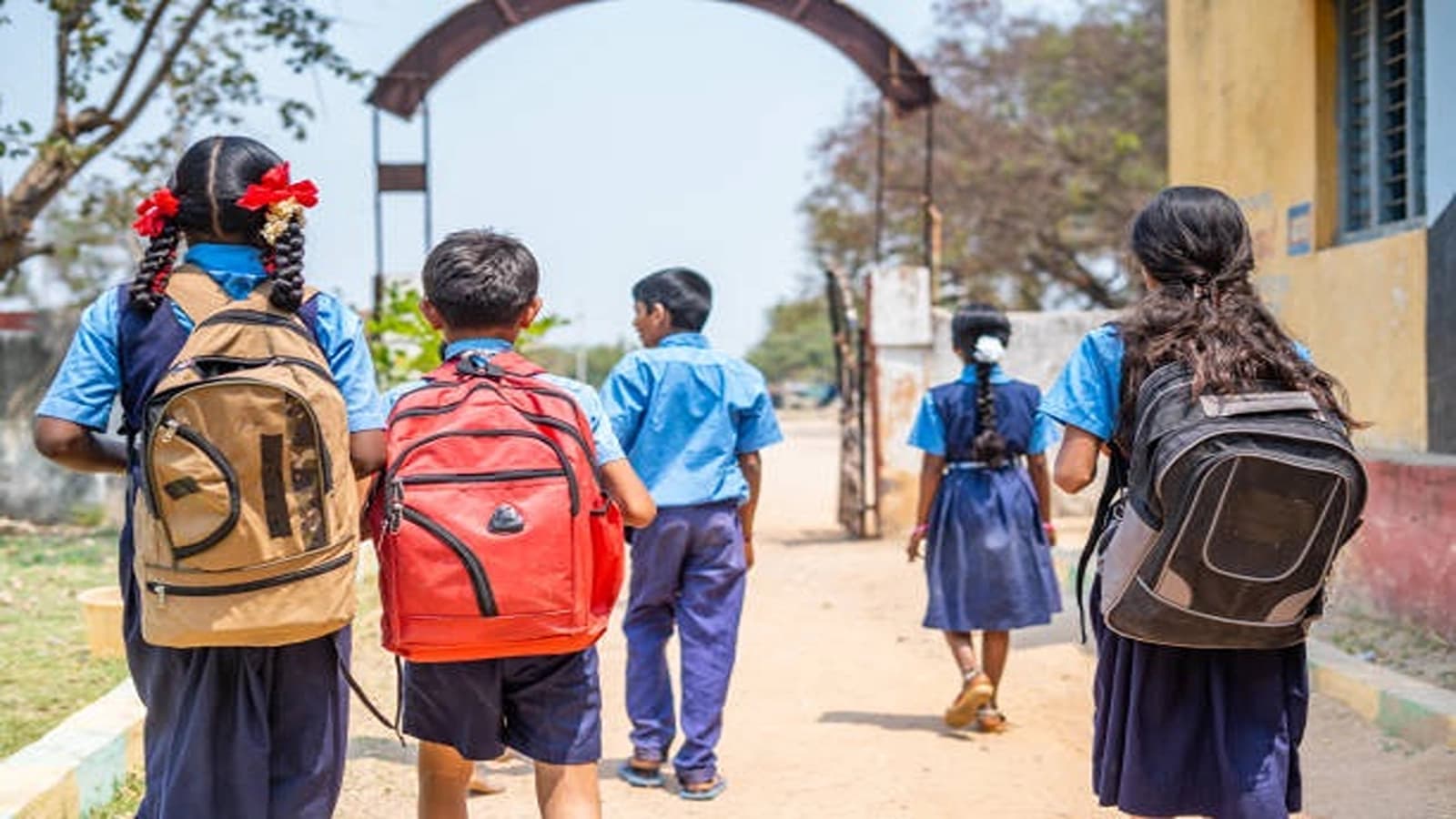
India's Right to Education (RTE) framework aims to ensure that children have access to schools within a reasonable distance of their homes. However, a new government survey has highlighted a significant gap between these prescribed norms and the actual commuting patterns of students across the country.
According to the National Household Travel Survey (NHTS), 60.6% of children aged 6 to 14 travel at least one kilometre to reach their educational institutions. The proportion is higher in urban areas, where 64.4% of children travel this distance, compared with 59% in rural areas.

The findings have renewed attention on the availability and accessibility of neighbourhood schools, particularly for children in the elementary education age group.
The Right of Children to Free and Compulsory Education (RTE) Act, 2009, guarantees free and compulsory elementary education to children aged 6 to 14 years.
Under the Central RTE Rules, neighbourhood schools are expected to be established within a walking distance of one kilometre for children in Classes 1 to 5. For students in Classes 6 to 8, the prescribed distance is three kilometres.
The rules also allow governments to make special arrangements in geographically difficult areas, including locations affected by poor road connectivity, difficult terrain or other safety concerns. Such arrangements may include transportation facilities and residential provisions.
The NHTS findings indicate that travelling beyond one kilometre is common among students. The survey also highlights differences in commuting patterns between rural and urban areas.
Walking remains an important mode of transport, particularly in rural regions. Buses, bicycles and other motorised vehicles are also widely used by students to reach educational institutions.
The survey found that among students aged six years and above, 66.4% undertake daily educational journeys of at least one kilometre. The corresponding figures are 68.1% in urban areas and 65.6% in rural areas.
These findings suggest that school accessibility remains an important consideration in education planning.
The survey also highlights the financial burden of commuting to educational institutions. On average, households spend ₹443 per student every month on educational travel.
However, the expenditure varies considerably between rural and urban households:
Urban students: Average monthly commuting expenditure of ₹617.
Rural students: Average monthly commuting expenditure of ₹361.
National average: ₹443 per month.
The higher expenditure in urban areas indicates the additional financial pressure that commuting can place on families.
Despite the distance travelled, most students manage to reach their educational institutions within half an hour.
According to the government survey, 87.6% of students reach their educational institutions within 30 minutes. The average commuting time is 23 minutes in rural areas and 22 minutes in urban areas.
The findings provide insight into the relationship between commuting distance, transport availability and the time students spend travelling every day.
The survey highlights the importance of improving access to neighbourhood schools and strengthening transport facilities for students.
However, travelling more than one kilometre does not automatically establish a violation of RTE provisions. The survey records actual student journeys rather than the distance between a child's home and the nearest eligible neighbourhood school. It also does not establish whether students are enrolled in primary or upper-primary classes.
The findings nevertheless underline the need for better school-location planning, improved public transport facilities and effective implementation of the RTE framework to make elementary education more accessible.

Auslan gains ground in Western Australian schools

Children’s Right to Internet: What Supreme Court Ruling Means for Parents, Schools and Social Media Platforms
RTE Act School Distance Rules: 60.6% of Children Travel Over 1 Km to Reach Educational Institutions

CBSE Class 10 Board Exams 2028: Five Compulsory Subjects, Optional Skill Paper to Offer Second Chance
Bihar Schools: 75% Attendance Mandatory for Girl Students; Special Classes for Class 9 Failed Students
Auslan gains ground in Western Australian schools

Serbia elects student-backed parliament with more than 160 PhD holders on candidate list

The Future Belongs to Those Who Can Collaborate Intelligently with AI

Diljit Dosanjh Delhi Concert Today: Traffic Restrictions from 1 PM, Check Roads to Avoid, Metro Timings and Parking Details
Why Are Women Still Only 20% of IIT Admissions? JEE Advanced 2026 Data Explained

Auslan gains ground in Western Australian schools
Children’s Right to Internet: What Supreme Court Ruling Means for Parents, Schools and Social Media Platforms
RTE Act School Distance Rules: 60.6% of Children Travel Over 1 Km to Reach Educational Institutions
CBSE Class 10 Board Exams 2028: Five Compulsory Subjects, Optional Skill Paper to Offer Second Chance
Bihar Schools: 75% Attendance Mandatory for Girl Students; Special Classes for Class 9 Failed Students
Auslan gains ground in Western Australian schools
Serbia elects student-backed parliament with more than 160 PhD holders on candidate list
The Future Belongs to Those Who Can Collaborate Intelligently with AI
Diljit Dosanjh Delhi Concert Today: Traffic Restrictions from 1 PM, Check Roads to Avoid, Metro Timings and Parking Details
Why Are Women Still Only 20% of IIT Admissions? JEE Advanced 2026 Data Explained
Copyright© educationpost.in 2026 All Rights Reserved.