


An unusually strong El Niño developing in the Pacific could influence global weather, increase coastal flooding risks and disrupt marine ecosystems. Stanford researchers explain how warmer ocean conditions may affect coastlines, fisheries and wildlife during 2026–27.
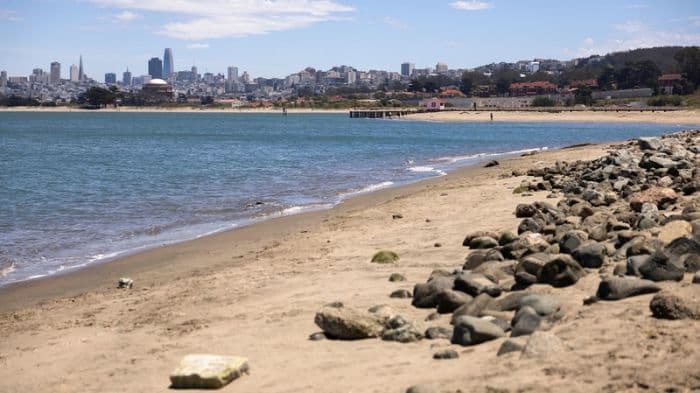
An unusually strong El Niño developing in the Pacific Ocean could have consequences extending beyond changes in rainfall and temperature, affecting coastal communities, marine ecosystems and fisheries, according to researchers at Stanford University.
Scientists from Stanford’s Doerr School of Sustainability examined the developing 2026–27 El Niño and its potential effects on weather patterns, ocean conditions and marine life.

The researchers said the event was already among the strongest on record, with unusually high sea surface temperatures across parts of the central and eastern tropical Pacific. The phenomenon is expected to reach its potential peak during the Northern Hemisphere winter.
The US National Oceanic and Atmospheric Administration (NOAA) said in its Oct 8 assessment that there was a greater than 83% probability of a strong-to-very-strong El Niño continuing through January–March 2027. It also cautioned that the likelihood of typical El Niño impacts does not mean they are guaranteed.
What makes the current El Niño unusual?
El Niño is the warm phase of a natural climate pattern known as the El Niño-Southern Oscillation (ENSO). It occurs when trade winds across the equatorial Pacific weaken or reverse, allowing warm surface water to move eastwards towards the Americas.
These changes influence the movement of heat and moisture through the atmosphere, affecting weather conditions in regions far from the Pacific.
Earle Wilson, an assistant professor at Stanford’s Doerr School of Sustainability, said the current event was unusual because of the magnitude of temperature differences across the central and eastern tropical Pacific, particularly for this time of year.
El Niño events generally reach their strongest phase during December and February. The current event was already showing exceptional conditions several months before its potential peak.
How could El Niño affect coastal communities?
Changes in ocean temperatures and atmospheric circulation can increase the risk of coastal hazards, particularly when several conditions occur together.
Stanford researchers Christine Baker and Kristen Davis explained that heavier rainfall can saturate coastal landscapes and weaken cliffs, increasing the risk of collapse. When this coincides with higher sea levels and powerful storm waves, communities can face greater risks of erosion and flooding.
Davis said El Niño-related ocean waves travelling towards California can raise coastal sea levels by around 6 to 12 inches. Higher water levels can allow tides and waves to reach further inland, increasing the potential for flooding and beach erosion.
The effects depend on local conditions, including rainfall, tides, wave strength and the vulnerability of coastal infrastructure.
El Niño also influences atmospheric circulation through what scientists call teleconnections. Changes in tropical Pacific winds and rainfall can affect the jet stream and storm tracks, increasing the likelihood of particular weather patterns in distant regions.
For example, El Niño can bring wetter winter conditions to parts of the southern United States and California. However, these are changes in probability, not guarantees that a particular location will experience a specific weather event.
Warmer oceans could disrupt marine ecosystems
The effects of El Niño extend beneath the ocean surface. Warmer seawater along the western coasts of North and South America can change the distribution of marine species, alter food chains and affect the survival and reproduction of some organisms.
Brooke Weigel, an assistant professor of oceans at Stanford, said warmer conditions can affect biological processes, including the metabolic rates of marine species.
Her research has examined how elevated ocean temperatures affect kelp forests. Young kelp can experience reproductive failure, while adult plants can also be damaged by prolonged warming.
During the 2014–16 marine heatwave, Northern California lost up to 95% of its kelp forests. Many of these forests have still not recovered, according to Weigel.
Kelp forests provide habitat for marine biodiversity, support commercial and subsistence fisheries and absorb carbon. Further warming could place additional pressure on these ecosystems.
El Niño could affect squid and fishing communities
The impact of changing ocean temperatures can also be seen in the behaviour and life cycles of marine animals.
Stanford professor William Gilly has studied the Humboldt squid, also known as the jumbo flying squid, in the Gulf of California. His research indicates that strong El Niño events can change the species' growth and life cycle.
During such events, the squid can shift from a form that lives for around two years and grows to very large sizes to one that lives for about six months and remains much smaller.
Gilly said similar changes occurred during strong El Niño events in 1997–98, 2009–10 and 2015–16. The changes have ecological consequences because sperm whales, which feed on large Humboldt squid, may lose an important food source.
Commercial squid fishing can also be affected. Gilly said the fishery in the Gulf of California declined sharply after the 2009–10 event, with fishing activity recovering only in spring 2025.
The current El Niño could again affect squid populations and the fishing communities that depend on them, although the extent of the impact remains uncertain.
Harmful algal blooms raise further concerns
Researchers are also monitoring the relationship between warmer ocean conditions and harmful algal blooms.
Stanford scientists studying Monterey Bay have recorded a bloom of Pseudo-nitzschia, a type of algae that produces domoic acid, a neurotoxin. The toxin can move through the marine food chain, including through fish such as anchovies and sardines, and affect marine mammals that feed on them.
Two juvenile humpback whales stranded in California in June 2026. Researchers at the University of California, Santa Cruz, detected domoic acid in both animals and concluded that the toxin likely contributed to their deaths.
Stanford researchers clarified that the bloom was not caused by El Niño. However, prolonged warm-water conditions can make such events more likely, which is why scientists are monitoring ocean temperatures and marine conditions.
How does climate change influence El Niño?
El Niño is a natural climate phenomenon that has occurred long before modern global warming. However, it now takes place against a background of rising ocean temperatures.
Kristen Davis said that the same El Niño event can push temperatures and sea levels higher because the ocean is already warmer than it was in the past.
Whether climate change is making El Niño events themselves stronger or more frequent remains an active area of research. Stanford scientists said there is currently no scientific consensus on the relationship between global warming and changes in the intensity or frequency of these events.
The distinction is important: the effects of El Niño can be intensified by warmer background ocean conditions, but this does not establish that climate change is directly causing stronger El Niño events.
Better monitoring could help communities prepare
Despite the potential risks, researchers said improved observations and forecasting can help communities prepare for coastal hazards.
Stanford scientists are monitoring ocean temperatures and changes in water circulation around Monterey Bay using sensors deployed on research equipment. Their measurements are intended to help track how El Niño affects coastal waters and marine ecosystems.
Christine Baker said better understanding of coastal processes can improve flood-risk projections, support resilient infrastructure planning and help policymakers identify areas that require protection.
NOAA Fisheries is also monitoring the 2026–27 event to assess possible effects on marine life, fisheries and coastal communities. Its work includes ocean surveys, uncrewed underwater vehicles, forecasting models and collaboration with fishing communities.
The developing El Niño is therefore being watched not only for its influence on seasonal weather but also for its longer-term effects on ocean ecosystems and coastal livelihoods. Scientists caution that the precise consequences will vary by region and will depend on how the event develops over the coming months.

Moderna-Merck cancer vaccine success raises questions over its use against other cancers

Serbia elects student-backed parliament with more than 160 PhD holders on candidate list
How could the 2026–27 El Niño affect global weather and ocean life? Stanford experts explain

InAmerica Education helps students turn personal passions into real-world impact

Canada seeks expanded access to EU student exchange programme
Serbia elects student-backed parliament with more than 160 PhD holders on candidate list

The Future Belongs to Those Who Can Collaborate Intelligently with AI

Diljit Dosanjh Delhi Concert Today: Traffic Restrictions from 1 PM, Check Roads to Avoid, Metro Timings and Parking Details
Why Are Women Still Only 20% of IIT Admissions? JEE Advanced 2026 Data Explained

Google adds hundreds of free textbooks to Gemini Notebook for students in India and US

Moderna-Merck cancer vaccine success raises questions over its use against other cancers
Serbia elects student-backed parliament with more than 160 PhD holders on candidate list
How could the 2026–27 El Niño affect global weather and ocean life? Stanford experts explain
InAmerica Education helps students turn personal passions into real-world impact
Canada seeks expanded access to EU student exchange programme
Serbia elects student-backed parliament with more than 160 PhD holders on candidate list
The Future Belongs to Those Who Can Collaborate Intelligently with AI
Diljit Dosanjh Delhi Concert Today: Traffic Restrictions from 1 PM, Check Roads to Avoid, Metro Timings and Parking Details
Why Are Women Still Only 20% of IIT Admissions? JEE Advanced 2026 Data Explained
Google adds hundreds of free textbooks to Gemini Notebook for students in India and US
Copyright© educationpost.in 2026 All Rights Reserved.