


Students from Austin College and the University of Connecticut are joining the UN climate conference in Antalya, where university delegations can follow negotiations, engage with climate leaders and learn how international climate policy is developed.
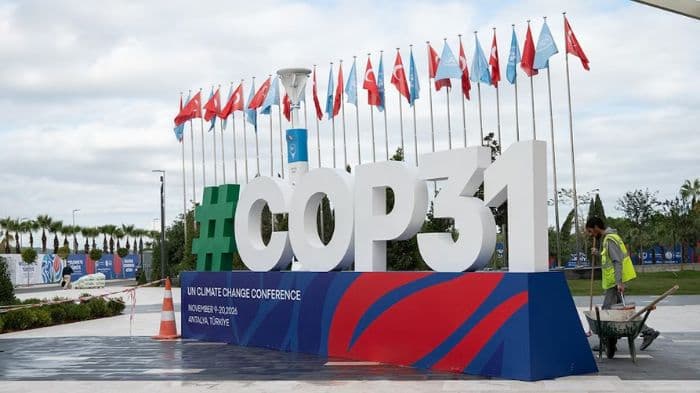
Students from two US universities are joining the 31st United Nations Climate Change Conference (COP31) in Antalya, Türkiye, as official observers, gaining an opportunity to follow international climate negotiations and engage with policymakers and climate experts.
Austin College in Texas has sent its Climate Ambassadors to the conference, while the University of Connecticut (UConn) has selected 12 students for its UConn@COP fellowship programme. The delegations are participating in the annual UN climate summit, which brings together governments, international organisations, researchers and civil society groups to discuss responses to climate change.

The Austin College delegation travelled to Antalya on Nov 7. Its Climate Ambassadors will follow negotiations, interact with climate leaders and explore solutions addressing the economic and social priorities of communities affected by climate change.
The college received official observer status as a research or educational institution from the United Nations Framework Convention on Climate Change (UNFCCC) in 2023. Its student ambassadors are selected through an application and interview process and take part in a preparatory seminar covering climate science, policy and public outreach.
The programme is open to students across academic disciplines. Participants choose areas of interest to explore during the conference, which can include climate finance, public health, food and water security, climate justice, nature-based solutions and adaptation.
Austin College said its ambassadors would also continue climate awareness activities on campus and in the wider community after returning from the conference.
University of Connecticut selects 12 students for COP31 fellowship
The University of Connecticut has selected 12 students for its UConn@COP31 fellowship after receiving approximately 60 applications. The group includes undergraduate students from different academic disciplines, as well as doctoral and master's candidates.
The fellows are scheduled to attend the conference from Nov 13 to 21. The programme gives students an opportunity to attend sessions on international climate negotiations, interact with delegates and learn about climate policy and environmental justice.
UConn began sending students and faculty members to the UN climate conference in 2015, the year the Paris Agreement was adopted. Through the fellowship, participants are also expected to share their experiences with the university community after returning.
The programme supports students' participation through financial assistance, with the university saying that nearly all travel expenses for this year's fellows are covered through donations and programme support.
What university students can do as COP observers
The UNFCCC allows admitted observer organisations, including eligible research and educational institutions, to participate in the climate conference process. Their representatives can follow negotiations, attend briefings, engage with government delegates and participate in certain side events and discussions.
Observer participation does not give students the authority to negotiate or vote on behalf of countries. Formal decisions at COP are taken by the governments that are parties to the UN climate convention.
COP31 is scheduled to take place in Antalya from Nov 9 to 20, 2026. For participating students, the conference provides an opportunity to understand how international climate policy is negotiated and how scientific research, public policy and community concerns feed into discussions on climate action.
The university programmes also aim to take that experience beyond the conference venue, with students expected to share what they learn with peers and their wider communities.
US universities send students to COP31 as official climate conference observers
EU partners with 10 Indonesian universities to expand academic cooperation

Iranian researchers face growing barriers to international academic collaboration

French academics launch campaign against low pay and insecure university jobs

UK teacher escapes ban after giving vulnerable pupil sexually explicit books

Odisha expands postgraduate medical education with 318 additional seats

CSIR-UGC NET December 2026 registration deadline extended, apply by Nov 9

XAT 2027 introduces new exam rules, adds 17 B-schools to associate network

Delhi-NCR schools up to Class 5 to shift to hybrid mode amid rising pollution

CA Foundation result 2026 out, Kansika and Mahek Gupta jointly secure AIR 1

US universities send students to COP31 as official climate conference observers
EU partners with 10 Indonesian universities to expand academic cooperation
Iranian researchers face growing barriers to international academic collaboration
French academics launch campaign against low pay and insecure university jobs
UK teacher escapes ban after giving vulnerable pupil sexually explicit books
Odisha expands postgraduate medical education with 318 additional seats
CSIR-UGC NET December 2026 registration deadline extended, apply by Nov 9
XAT 2027 introduces new exam rules, adds 17 B-schools to associate network
Delhi-NCR schools up to Class 5 to shift to hybrid mode amid rising pollution
CA Foundation result 2026 out, Kansika and Mahek Gupta jointly secure AIR 1
Copyright© educationpost.in 2026 All Rights Reserved.