


Months of forest and peatland fires have spread hazardous smoke across the region, affecting public health, disrupting education and raising questions about land-use practices and preparedness for environmental emergencies.
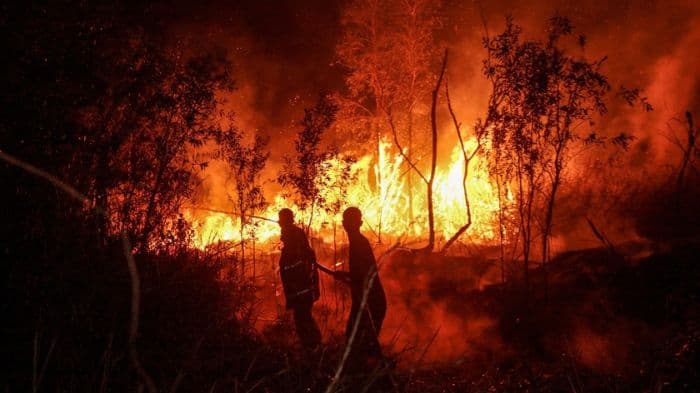
Months of forest and land fires in Indonesia have turned an environmental emergency into a wider regional crisis, with hazardous smoke affecting communities, disrupting education and exposing the challenges of responding to pollution that crosses national borders.
The fires, concentrated in parts of Sumatra and Kalimantan, have produced dense haze that has affected Indonesia as well as neighbouring Malaysia and Singapore. Universities have shifted classes online, restricted outdoor activities and introduced measures to protect students and staff from polluted air.

The scale of the disruption has also raised questions about how educational institutions and governments prepare for environmental emergencies that can continue for months rather than days.
In Indonesia, institutions in the worst-affected parts of Sumatra and Kalimantan faced significant disruption, while universities in other parts of the archipelago experienced less severe effects.
Agustian Sutrisno, an adviser with Cowater International and lecturer at Universitas Katolik Indonesia Atma Jaya in Jakarta, said that many universities moved classes online because travelling outside had become difficult in the haze. He also described growing public discontent over the prolonged crisis.
Forest and peatland fires fuel the haze
The smoke has largely originated from fires on the Indonesian islands of Sumatra and Kalimantan, where forest and peatland burning has contributed to the spread of pollution.
Land clearing through fire has long been associated with agricultural and plantation expansion in the region. The use of burning to clear vegetation can allow fires to spread beyond the intended areas, particularly when the ground and surrounding vegetation are dry.
Peatlands make the problem more difficult to control. These ecosystems contain layers of partially decomposed organic material that can store large amounts of carbon. When drained or dried, peat becomes more vulnerable to fire. Fires can also continue smouldering below the surface, producing smoke even when flames are not clearly visible.
The unusually hot and dry conditions in 2026 have further increased the risk. The World Meteorological Organization said in October that a strengthening El Niño was expected to influence global temperature and rainfall patterns, with warmer conditions and rainfall deficits increasing pressure on South-east Asia.
The Copernicus Atmosphere Monitoring Service had also warned in August that Indonesia's seasonal fires could become particularly intense in 2026 because of the developing El Niño conditions.
However, the weather pattern is not the only factor behind the crisis. Land-use practices, the condition of forests and peatlands, and the effectiveness of fire prevention and enforcement also influence how fires start and spread.
A growing public-health burden
The consequences of the fires extend beyond reduced visibility and discomfort. Smoke from vegetation fires contains fine particulate matter, including PM2.5, which can penetrate deep into the respiratory system.
Indonesia's National Disaster Management Agency reported that the country's Health Ministry had recorded 333,470 acute respiratory infection cases in fire-affected areas between Aug 18 and Oct 21. The cases were reported across 68 districts and cities in seven provinces.
Children were among those affected. Of the recorded cases, 75,172 involved children aged five and below, according to the agency's figures. Authorities also identified older people, pregnant women and individuals with asthma or chronic obstructive pulmonary disease as groups requiring particular protection.
The effects have not been limited to Indonesia. A report by environmental news organisation Mongabay cited increases in respiratory illnesses in parts of Malaysia and health concerns in Singapore. It also reported that Malaysia's Health Ministry had recorded increases in upper respiratory infections, asthma and conjunctivitis during a monitored period in September.
Universities and schools struggle to maintain normal activities
The haze has also affected access to education. In Indonesia, universities in the worst-affected areas shifted teaching online, while institutions in Malaysia suspended outdoor activities and moved some classes to remote learning.
James Chin, professor of Asian studies at the University of Tasmania, said that the disruption in Malaysia extended beyond classroom teaching. Sports, field trips and other physical activities were suspended, affecting the wider student experience.
At the National University of Singapore, a doctoral student said that the university issued health advisories, provided guidance on cancelling or limiting fieldwork, extended the opening hours of air-conditioned spaces such as libraries and installed additional air purifiers, as reported by a leading publication.
The student also described increased use of N95 masks on campus as the haze worsened.
The disruption is not confined to higher education. Save the Children reported in September that more than 1.4 million students in affected Indonesian areas had shifted to remote learning and around 12,800 schools across Borneo and Sumatra had closed amid dangerous air quality. These figures relate to the situation reported by the organisation at that time, rather than a current count of closures.
The interruptions demonstrate how environmental emergencies can affect attendance, practical learning, outdoor activities and access to educational facilities. Moving lessons online may help institutions continue academic instruction, but it cannot fully replace laboratory work, field research, sports and face-to-face campus activities.
The challenge of tackling pollution across borders
The haze has also renewed calls for regional cooperation because smoke generated in one country can affect the health and daily lives of people in neighbouring states.
The issue has featured in discussions among South-east Asian governments. In October, Reuters reported that ASEAN foreign ministers were expected to discuss the transboundary haze ahead of the bloc's November summit. Malaysia had indicated that it would raise concerns about the existing regional mechanisms for responding to the problem.
Singapore has also moved to strengthen its response. On November 4, the country amended its transboundary haze legislation to widen investigative powers relating to business activities linked to cross-border air pollution, according to Reuters.
The challenge is not simply to respond when air quality deteriorates. It also involves preventing fires, protecting forests and peatlands, improving monitoring and holding businesses and other responsible parties accountable where violations are established.
Environmental preparedness must extend to education
For universities, the crisis has highlighted the need to treat environmental risks as part of institutional planning rather than as occasional disruptions. Emergency communication, air-quality monitoring, access to clean indoor spaces, flexible teaching arrangements and guidance for fieldwork can help institutions protect students and staff during periods of severe pollution.
The experience also raises questions about the longer-term role of universities. Institutions can contribute through research on forest management, peatland restoration, public health, air pollution and climate resilience, while preparing students to understand the social and economic consequences of environmental change.
The 2026 haze crisis shows how environmental damage can move beyond forests and rural communities to affect cities, public health and education across national boundaries. Without sustained action on the causes of fires and stronger preparedness for recurring pollution episodes, universities and schools may continue to face interruptions each time the region experiences another severe haze season.

University of Sharjah deepens UAE-Australia ties through cultural and academic exchange

Chhath Puja 2026: Delhi Declares November 16 Holiday, Bihar Schools to Reopen on November 18

Abu Dhabi to train 250 Emiratis annually for inclusive education roles

National Education Day 2026: History, Significance, Celebrations and Maulana Abul Kalam Azad’s Legacy

French students block 49 schools in renewed protest over learning conditions

UK regulator warns universities to protect degree standards as AI reshapes student assessments

Assam clears key education reforms, healthcare funding and employee welfare measures

India-Japan MIRAI-Setu program connects IIT students with Japanese universities and industries

Indian Railways Announces 31 Special Trains from Delhi Amid Chhath Puja Rush; Bihar and UP Passengers Get Relief
Fewer children, more university aspirants: China plans major education system overhaul

University of Sharjah deepens UAE-Australia ties through cultural and academic exchange
Chhath Puja 2026: Delhi Declares November 16 Holiday, Bihar Schools to Reopen on November 18
Abu Dhabi to train 250 Emiratis annually for inclusive education roles
National Education Day 2026: History, Significance, Celebrations and Maulana Abul Kalam Azad’s Legacy
French students block 49 schools in renewed protest over learning conditions
UK regulator warns universities to protect degree standards as AI reshapes student assessments
Assam clears key education reforms, healthcare funding and employee welfare measures
India-Japan MIRAI-Setu program connects IIT students with Japanese universities and industries
Indian Railways Announces 31 Special Trains from Delhi Amid Chhath Puja Rush; Bihar and UP Passengers Get Relief
Fewer children, more university aspirants: China plans major education system overhaul
Copyright© educationpost.in 2026 All Rights Reserved.