


UDISE+ data highlights a sharp mismatch in teacher deployment, with thousands of student-less schools existing alongside single-teacher institutions serving hundreds of thousands of students.
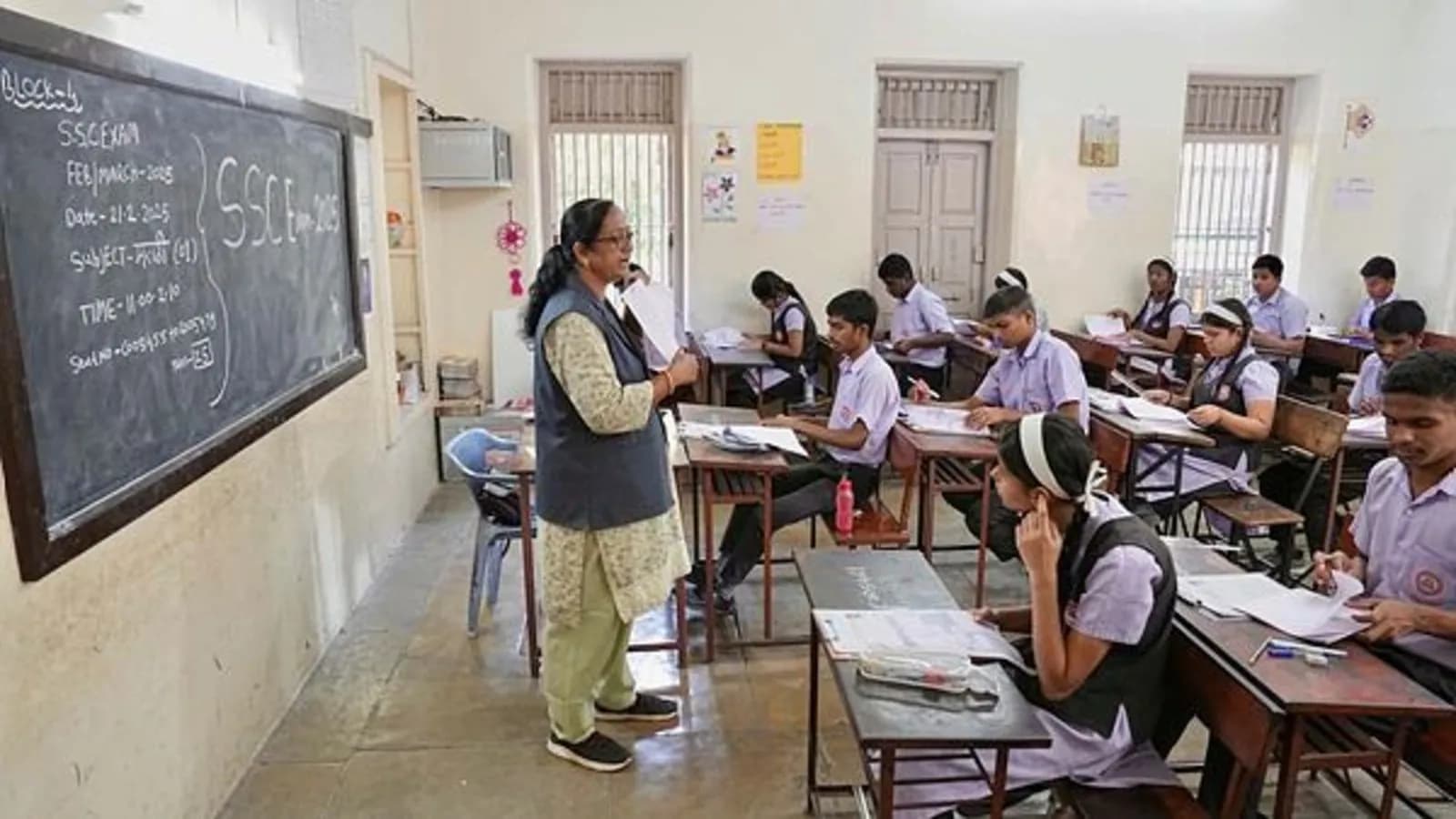
UDISE+ 2025-26 data shows a major disparity in teacher deployment across West Bengal schools.
West Bengal has 4,133 schools with no enrolled students but 19,502 teachers posted across them, according to the Union government's Unified District Information System for Education Plus (UDISE+) 2025-26 report.
The figure makes West Bengal the state with the largest number of zero-enrolment schools in the country. Of the 5,663 schools nationwide that reported no students, about 73% are in West Bengal. Uttar Pradesh, which ranks second, has 313 such schools with 177 teachers.

At the same time, West Bengal has 6,769 schools with only one teacher, serving a combined 229,569 students. The figures point to a sharp imbalance in the distribution of teaching staff across the state's school system.
The UDISE+ data also shows that the number of zero-enrolment schools in West Bengal increased by 321 from the previous academic year. Nationally, however, the number of schools with no students fell for the first time, from 7,993 in 2024-25 to 5,663 in 2025-26.
The state government has said some of the apparent imbalance may be linked to errors in data submitted by private schools. West Bengal School Education Minister Dipak Barman said some institutions had updated teacher information on the UDISE+ portal without properly updating student enrolment figures, resulting in schools appearing as having no students despite having teachers. The department is working on a mechanism to correct such discrepancies, he said.
The government has also begun a process to rationalise teacher deployment. Under a standard operating procedure introduced earlier this year, teachers and non-teaching staff from zero-enrolment schools and schools with surplus personnel can be transferred to institutions facing shortages.
Under the proposed system, district authorities are to identify schools with zero enrolment, surplus staff and high pupil-teacher ratios. Schools requiring teachers will then be identified, including subject-specific requirements at the secondary level. Teachers selected for transfer can indicate preferred schools, subject to administrative requirements.
The staffing imbalance is also reflected in a recent Comptroller and Auditor General audit of the implementation of the Samagra Shiksha Abhiyan in West Bengal between 2019-20 and 2023-24.
The audit found that 520 schools with a combined 8,596 students had no teachers at all. Another 5,152 schools, serving more than 1.76 lakh students, had only one teacher each. The audit also found shortages against prescribed student-teacher ratios in primary and upper-primary schools.
The CAG report identified broader challenges in school education, including high transition losses between school levels, overcrowded classrooms and gaps in the utilisation of education funds. Among students who had dropped out in surveyed areas, financial hardship was cited as the leading reason.
The UDISE+ report also shows that West Bengal had 93,147 schools in 2025-26. About 8% of the state's schools had 10 or fewer students, while 8.5% had more than 500 students. The state's pupil-teacher ratio was 30 students per teacher, compared with 36 in neighbouring Jharkhand.
The figures come as West Bengal continues to deal with the fallout from its school recruitment controversy. The Supreme Court has cancelled more than 25,000 appointments made through the 2016 School Service Commission recruitment process after findings of irregularities, adding to the state's longer-running challenge of balancing teacher availability with school-level requirements.
The data does not, by itself, establish that all 19,502 teachers are permanently assigned to schools with no students or that all 4,133 schools are operational in the conventional sense. The state government has attributed at least some of the zero-enrolment figures to reporting errors and is undertaking a rationalisation exercise.
The immediate challenge for the state is therefore twofold: correcting the underlying enrolment data and ensuring that available teachers are deployed where students actually need them.

New Zealand regulator halts enrolments in Auckland institute’s management master’s programmes

New Zealand tribunal urges government to restore schools’ Treaty obligation
Mumbai Introduces AI-Powered Cameras to Stop Garbage Dumping in Public Places; BMC Plans Wider Surveillance

Schools urged to make relationship education central to fight domestic violence in Australia

The Future Belongs to Those Who Can Collaborate Intelligently with AI
The Future Belongs to Those Who Can Collaborate Intelligently with AI

Diljit Dosanjh Delhi Concert Today: Traffic Restrictions from 1 PM, Check Roads to Avoid, Metro Timings and Parking Details
Why Are Women Still Only 20% of IIT Admissions? JEE Advanced 2026 Data Explained

Google adds hundreds of free textbooks to Gemini Notebook for students in India and US

NBEMS opens NEET Super Specialty 2026 applications: Check eligibility, dates and registration steps

New Zealand regulator halts enrolments in Auckland institute’s management master’s programmes
New Zealand tribunal urges government to restore schools’ Treaty obligation
Mumbai Introduces AI-Powered Cameras to Stop Garbage Dumping in Public Places; BMC Plans Wider Surveillance
Schools urged to make relationship education central to fight domestic violence in Australia
The Future Belongs to Those Who Can Collaborate Intelligently with AI
The Future Belongs to Those Who Can Collaborate Intelligently with AI
Diljit Dosanjh Delhi Concert Today: Traffic Restrictions from 1 PM, Check Roads to Avoid, Metro Timings and Parking Details
Why Are Women Still Only 20% of IIT Admissions? JEE Advanced 2026 Data Explained
Google adds hundreds of free textbooks to Gemini Notebook for students in India and US
NBEMS opens NEET Super Specialty 2026 applications: Check eligibility, dates and registration steps
Copyright© educationpost.in 2026 All Rights Reserved.