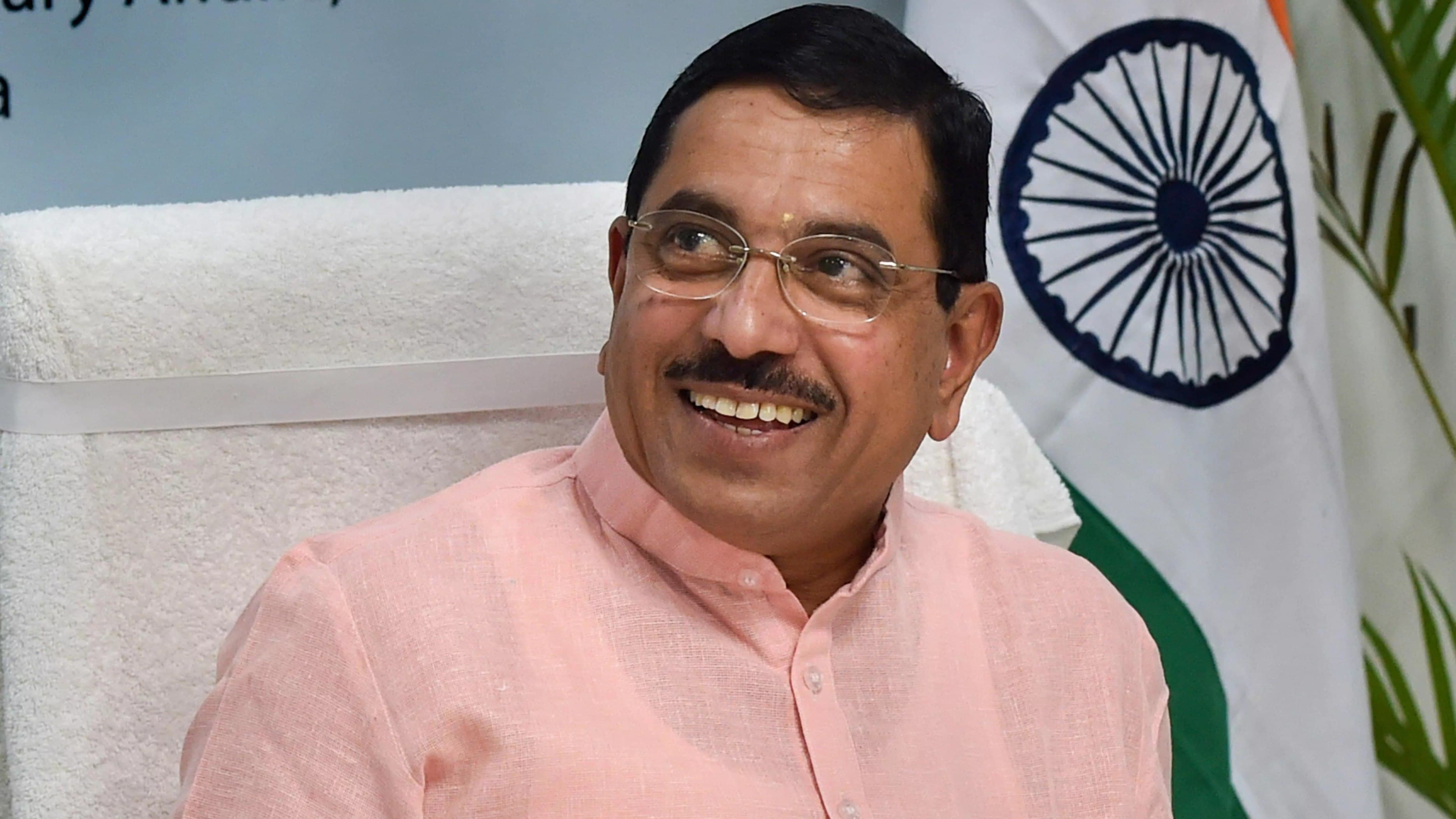
India could attract more international students, particularly from the Global South, as several countries tighten restrictions on overseas education, Union Education Minister Pralhad Joshi said at the 21st FICCI Higher Education Summit.
Joshi said the changing global education landscape presented an opportunity for India to strengthen its position as an international study destination. He also emphasized the need for closer partnerships between universities and industry to improve the quality, relevance and practical value of higher education.

“At a time when several countries are making it harder for international students to study abroad, India has a real opportunity to become a preferred education destination, particularly for the students from the global south,” Joshi said.
The minister urged industry leaders to take a more active role in shaping university education rather than limiting their involvement to hiring graduates.
He called for businesses to contribute to curriculum development, support academic researchers, provide apprenticeships and help universities address practical industry challenges through research.
“I ask the industry to go beyond the recruitment, work with universities to design curricula, support researchers, offer apprenticeships and bring real industry problems into our laboratories,” Joshi noted.
Joshi also stressed that stronger coordination among the government, universities and industry would be necessary to build India's education and innovation ecosystem and ensure graduates are equipped with relevant skills.
Anandrao Patil, additional secretary in the Ministry of Education, said India's higher education system needed to respond to major global shifts, including stricter student visa policies, advances in artificial intelligence (AI) and changes in international supply chains.
“The world is changing on several fronts at once. Countries that once welcomed international students are tightening their doors. Artificial intelligence is changing what a graduate needs to know faster than any syllabus can be revised. The energy transition is creating industries that did not exist a decade ago. And supply chains for goods, for technology and for talent are being redrawn,” Patil noted.
Patil said the restrictions being introduced by countries such as the United Kingdom (UK) could create opportunities for Indian universities to attract students who might otherwise have chosen to study abroad.
However, he cautioned that foreign universities establishing campuses in India should contribute to research, academic collaboration and the broader education ecosystem rather than function primarily as teaching institutions.
Highlighting the financial challenges facing parts of the UK's higher education sector, Patil said more than four in 10 universities in England expected to record a deficit during the current year.
He attributed the pressure to financial difficulties and a decline in international student arrivals, illustrating the changes affecting traditional destinations for overseas education.
The India-UK trade agreement, which came into force in July, has also created new opportunities in education services, Patil said.
Around 10 British universities are expected to establish campuses in India, potentially expanding international academic engagement and creating new avenues for collaboration.
Beyond internationalization, Patil highlighted implementation challenges facing India's higher education institutions.
He said reforms were often delayed because responsibilities were not clearly assigned within institutions, universities were required to implement several changes simultaneously, and difficulties were not communicated to the ministry promptly.
To address these issues, central universities have begun assigning designated officers to oversee major reforms, introducing changes in phases and reviewing data regularly rather than relying solely on annual reports, Patil said.
He also called on universities to share resources and work more closely with other institutions instead of operating in isolated academic systems.
Underutilized laboratories, research facilities, faculty development programs and digital platforms could be made available to other institutions, including state universities, to improve resource utilization and expand access to academic infrastructure.
Patil further urged universities to dedicate at least 100 days each year to hosting school students, particularly those from rural and tribal communities.
Such visits could give students opportunities to interact with university faculty and students and explore laboratories, libraries and other academic facilities, helping them become more familiar with higher education and its opportunities.
The discussions at the summit focused on how India could strengthen its global education profile while improving university-industry collaboration, accelerating reform implementation and widening access to academic resources and research opportunities.








.jpg&w=256&q=75)
.jpg&w=256&q=75)
.webp&w=256&q=75)
