


India’s Supreme Court has increased its sanctioned strength to 38 judges, but a growing number of Special Leave Petitions (SLP) is adding to its caseload. Can stricter admission filters ease the backlog without compromising access to justice?
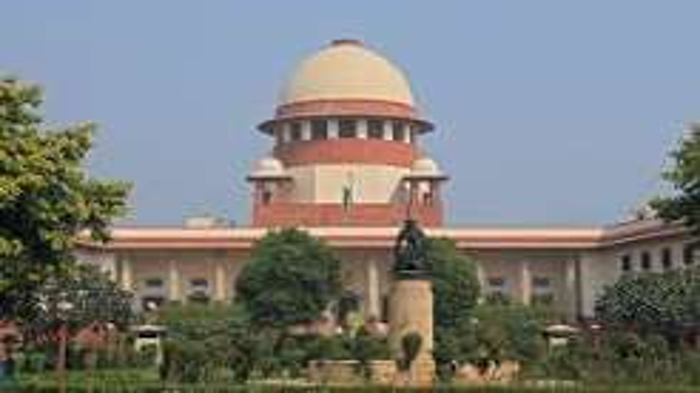
India’s Supreme Court is facing a growing burden of pending cases, raising concerns about whether increasing the number of judges alone can resolve judicial delays. According to the National Judicial Data Grid, more than 96,000 cases were pending before 38 judges, averaging around 2,500 cases per judge. Although the government increased the court’s sanctioned strength from 34 to 38 judges in May 2026, the growing number of cases continues to challenge its efficiency.
Special Leave Petitions (SLPs), filed under Article 136 of the Constitution, are a major contributor to this workload. They allow the Supreme Court, at its discretion, to hear appeals against decisions of lower courts and tribunals. Originally intended as an extraordinary remedy for exceptional cases, SLPs now account for a substantial share of fresh filings, with some estimates placing their proportion at around 80 per cent.

The article highlights how disputes that do not involve significant constitutional questions can also reach the apex court. Such cases consume judicial time that could otherwise be devoted to matters involving broader legal or constitutional importance. By comparison, the United States and the United Kingdom follow more restrictive approaches to accepting appeals before their highest courts.
The solution is not to eliminate access to the Supreme Court, but to establish clearer criteria for deciding which cases deserve its attention. Over the years, proposals have included separating its constitutional responsibilities from its appellate functions and creating regional divisions. However, these measures may address the symptoms without tackling the central problem of excessive admission of SLPs.
A more focused reform would introduce a well-defined threshold for accepting special leave petitions. The Supreme Court had recognised this concern in 2010, warning that the absence of clear guidelines could make its functioning difficult. However, a subsequent Constitution Bench declined to restrict the Court’s discretionary powers, considering such restrictions potentially harmful to the interests of justice.
The challenge lies in balancing access to justice with judicial efficiency. Many petitions are admitted because the Court believes it can correct an individual injustice, even when no substantial legal question is involved. India must therefore develop a framework that preserves the Supreme Court’s constitutional role while ensuring that its limited judicial capacity is used effectively.
Supreme Court’s Rising Caseload: Why India Needs Stronger Filters for Appeals

vChina’s Grey-Zone Warfare Along the LAC: Challenges for India

Microsoft Offers Voluntary Exit Packages to Employees in India Amid AI-Led Restructuring

Revenue Surges as Computing Costs and Financial Commitments Rise
China’s Grey-Zone Warfare Along the LAC Poses Strategic Challenges for India
South Africa study finds university mentors boost school pupils’ confidence
The Most Persistent Weakness in India’s Engineering Education System Is the Gap Between Knowing and Doing
Study in Singapore 2027: Top Universities, Fees, Scholarships, Student Visa and Jobs for Indian Students
Study in Taiwan 2027: Top Universities, Fees, Scholarships, Student Visa and Jobs for Indian Students
Study in Hong Kong 2027: Top Universities, Fees, Scholarships, Visa and Career Opportunities for Indian Students

Supreme Court’s Rising Caseload: Why India Needs Stronger Filters for Appeals
vChina’s Grey-Zone Warfare Along the LAC: Challenges for India
Microsoft Offers Voluntary Exit Packages to Employees in India Amid AI-Led Restructuring
Revenue Surges as Computing Costs and Financial Commitments Rise
China’s Grey-Zone Warfare Along the LAC Poses Strategic Challenges for India
South Africa study finds university mentors boost school pupils’ confidence
The Most Persistent Weakness in India’s Engineering Education System Is the Gap Between Knowing and Doing
Study in Singapore 2027: Top Universities, Fees, Scholarships, Student Visa and Jobs for Indian Students
Study in Taiwan 2027: Top Universities, Fees, Scholarships, Student Visa and Jobs for Indian Students
Study in Hong Kong 2027: Top Universities, Fees, Scholarships, Visa and Career Opportunities for Indian Students
Copyright© educationpost.in 2026 All Rights Reserved.