


From admissions at National Taiwan University to government scholarships, tuition fees, visa requirements and post-study employment, here is what Indian students should know before choosing Taiwan for higher education
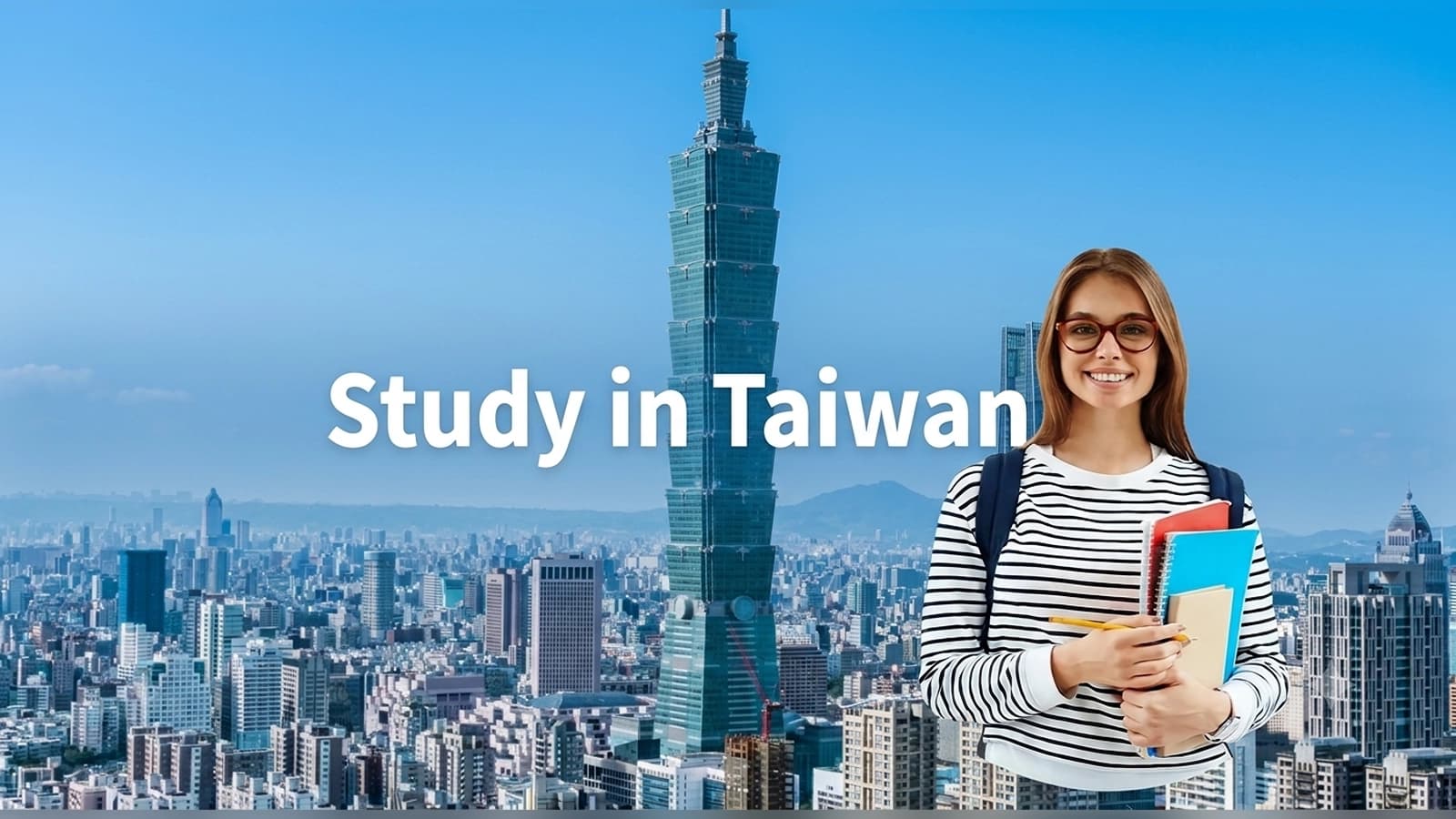
Representational Image
Taiwan is an option for Indian students looking for international education in Asia, particularly in technology, engineering, semiconductor manufacturing, computer science and research. Its universities offer undergraduate, master's and doctoral programmes, including selected courses taught in English.
For students considering studying abroad, Taiwan's appeal includes specialised technology education, research opportunities and government-funded scholarships. However, applicants must evaluate programme availability, language requirements, total expenses and employment rules before making a decision.

Taiwan is particularly worth considering for students interested in science, engineering and technology. Its education system includes universities offering programmes in electronics, semiconductor-related fields, artificial intelligence, computer science, business, biotechnology and management.
For Indian students, studying in Taiwan may provide access to research facilities and exposure to industries connected with electronics and advanced manufacturing. The availability of English-taught programmes can also make certain degrees accessible to students who do not speak Mandarin.
However, not every course is taught in English. Students should check the language of instruction, internship options and career outcomes for their specific programme before applying.
Students should compare universities according to their intended subject, admission requirements, tuition fees, research opportunities and language of instruction.
Indian students can explore several subject areas depending on their qualifications and interests:
Course availability, language requirements and eligibility differ by university. Applicants should confirm whether a programme is fully taught in English or requires Chinese-language proficiency.
Admission requirements depend on the university, course and level of study.
For undergraduate programmes, Indian applicants generally need recognised Class 12 qualifications and must meet the university's subject and academic requirements. For master's programmes, a relevant bachelor's degree is generally required, while doctoral programmes normally require a suitable postgraduate qualification or other preparation specified by the institution.
Universities may request academic transcripts, certificates, recommendation letters, a statement of purpose, a study plan, proof of language proficiency and other supporting documents. Some programmes may also require interviews, examinations or research proposals.
English-taught courses may require proof of English proficiency, while Chinese-taught programmes may require Mandarin-language qualifications. Meeting the minimum criteria does not guarantee admission.
The general application process involves these steps:
The Ministry of Education's admission guidance confirms that international students apply directly to their chosen institution during its designated application period.
The cost of studying in Taiwan varies by university, degree, subject and accommodation. The official Study in Taiwan portal has published a broad indicative tuition and miscellaneous-fee range of approximately US$800 to US$15,000 per year. This is a general range, not a guaranteed fee for any particular course or institution.
Living expenses can differ significantly between cities and accommodation types. University dormitories may be an option, but availability and eligibility vary. Before accepting an offer, Indian students should calculate the total cost for the entire course rather than looking at tuition alone.
Students searching for scholarships in Taiwan for Indian students should explore the Taiwan Scholarship, university-funded scholarships and relevant research awards.
The Taiwan Scholarship programme administered by Taiwan's Ministry of Education has provided tuition and miscellaneous-fee support of up to NT$40,000 per semester, along with a monthly stipend of NT$15,000 for undergraduate students or NT$20,000 for postgraduate students under the published programme terms. The actual award, eligibility and conditions must be confirmed against the guidelines applicable to the student's application year.
Indian applicants should monitor announcements from the Taipei Economic and Cultural Center in India. Previous application cycles have generally run during February and March, but dates can change. As of October 2026, students should not assume that the 2027 India application window or final terms have been confirmed unless an official announcement has been published.
Other possibilities include university scholarships and the TaiwanICDF International Higher Education Scholarship Programme. TaiwanICDF has announced that its 2027 scholarship application period is scheduled for December 1, 2026, to March 15, 2027. Applicants must check the annual programme guide and eligible-country and programme lists before applying.
Indian students accepted into eligible full-time degree programmes generally need to apply for a Taiwan resident visa for study and complete the relevant residence formalities.
According to Taiwan's Bureau of Consular Affairs, applicants may need an online visa application, a valid passport, photographs, an admission permit, a health certificate and other supporting documents. Requirements can vary according to the programme and individual circumstances.
After entering Taiwan on the appropriate resident visa, students generally need to apply for an Alien Resident Certificate (ARC) within the required period. The official guidance specifies a 30-day deadline in the circumstances described on its student-visa page.
Admission does not guarantee visa approval. Students should follow the latest instructions from the Bureau of Consular Affairs and the relevant Taiwanese representative office in India.
International students can apply for permission to work part-time, but they must follow Taiwan's work-permit rules.
The Ministry of Education states that international students generally cannot work more than 20 hours per week during the academic term, except during summer and winter breaks. Students must obtain the required work permit before starting employment. Eligibility and procedures should be checked with the university and the relevant authorities.
Part-time work should not be treated as a guaranteed source of income. Students should arrange sufficient funding for tuition and living costs before travelling.
Taiwan's technology and manufacturing ecosystem may be relevant to graduates in electronics, semiconductors, engineering, computer science and research. Other career paths can include business, finance, logistics and academic research, depending on the student's qualifications and language skills.
However, graduating from a Taiwanese university does not automatically grant permission to work in Taiwan. International graduates must meet the applicable employment and immigration requirements.
Taiwan has routes through which eligible international graduates may pursue internships or employment, but eligibility, duration and application procedures depend on the relevant rules. The Ministry of Education's published guidance describes post-graduation internship options for certain eligible graduates and a points-based system for some employment applications. Students should verify the latest policy before relying on a particular route.
Mandarin proficiency can be valuable for many local workplaces, although requirements vary by employer and role. Students should research industry demand, internship opportunities and work-permit conditions before choosing a degree.
Taiwan may be a suitable option for Indian students seeking specialised education in technology, engineering, science or research, particularly when they find a relevant English-taught programme or scholarship.
The decision should nevertheless be based on the full picture: academic fit, tuition and living expenses, language requirements, scholarship eligibility and realistic career options after graduation.
Before applying, students should verify every major detail with university admissions offices and official Taiwanese government websites. Careful planning can help them compare Taiwan with other study-abroad destinations and make an informed decision.
From “write a thesis” to “build something”: IIT Ropar’s new PhD route
Study in Taiwan 2027: Top Universities, Fees, Scholarships, Student Visa and Jobs for Indian Students

Study in Japan 2027: Top Universities, Fees, Scholarships, Visa and Career Opportunities for Indian Students
Maharashtra: Nanded to Offer Free NEET, JEE Coaching to 200 Rural Students

NEET PG 2026: NBEMS issues fresh guidelines on joining deadlines, fees and seat upgradation
Study in Taiwan 2027: Top Universities, Fees, Scholarships, Student Visa and Jobs for Indian Students

Study in Hong Kong 2027: Top Universities, Fees, Scholarships, Visa and Career Opportunities for Indian Students

Study in South Korea 2027: Top Universities, Fees, Scholarships, Visa and Career Opportunities for Indian Students
UAE robotics league puts students with intellectual disabilities at the heart of 279 teams

Gujarat Class 12 student builds scribe network to support visually impaired students

From “write a thesis” to “build something”: IIT Ropar’s new PhD route
Study in Taiwan 2027: Top Universities, Fees, Scholarships, Student Visa and Jobs for Indian Students
Study in Japan 2027: Top Universities, Fees, Scholarships, Visa and Career Opportunities for Indian Students
Maharashtra: Nanded to Offer Free NEET, JEE Coaching to 200 Rural Students
NEET PG 2026: NBEMS issues fresh guidelines on joining deadlines, fees and seat upgradation
Study in Taiwan 2027: Top Universities, Fees, Scholarships, Student Visa and Jobs for Indian Students
Study in Hong Kong 2027: Top Universities, Fees, Scholarships, Visa and Career Opportunities for Indian Students
Study in South Korea 2027: Top Universities, Fees, Scholarships, Visa and Career Opportunities for Indian Students
UAE robotics league puts students with intellectual disabilities at the heart of 279 teams
Gujarat Class 12 student builds scribe network to support visually impaired students
Copyright© educationpost.in 2026 All Rights Reserved.