


Military Infrastructure and Ambiguous Tactics Strengthen China’s Border Position
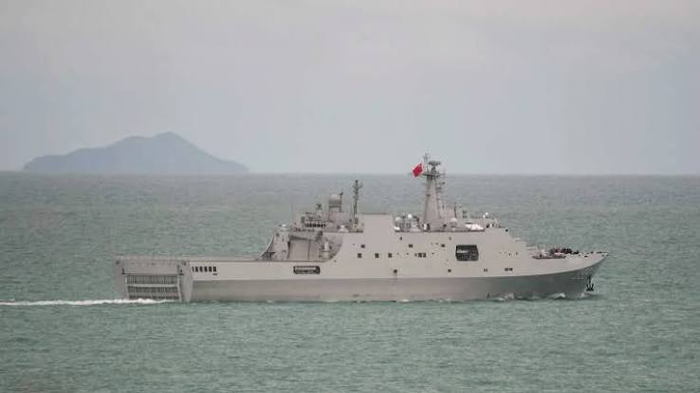
The recurring face-offs between Indian and Chinese troops along the Line of Actual Control (LAC) in Arunachal Pradesh have highlighted the challenges posed by China’s grey-zone warfare strategy. Shatrujeet Kapur, Director General of the Indo-Tibetan Border Police (ITBP), recently confirmed that troops from both countries had faced off at several locations in Upper Subansiri district since July.
The Ministry of External Affairs stated that tensions arise when Chinese forces deviate from established patrolling patterns. Reports have also indicated that Chinese People’s Liberation Army (PLA) personnel pitched tents around 6–7 km inside India’s perception of the LAC.

Despite high-level engagements between Prime Minister Narendra Modi and Chinese President Xi Jinping, disagreements over the boundary remain unresolved.
Grey-zone warfare refers to activities between conventional peace and open war that exploit ambiguity and avoid direct military confrontation. China employs political pressure, economic influence, cyber operations and non-state actors as part of this approach. Its “Three Warfares” strategy further combines public opinion, psychological and legal warfare to advance its interests.
China has significantly expanded its military infrastructure along the Himalayan frontier since the 2020 Eastern Ladakh confrontation. Strategic highways, railway lines, upgraded airfields and heliports have strengthened its ability to mobilise troops and supplies near the border.
The PLA also follows a “nibble and negotiate” approach, making incremental changes to the ground situation through patrolling and infrastructure development. China’s construction of 628 border villages under its Xiaokang programme, many concentrated near Arunachal Pradesh, and its repeated renaming of places in the state are cited as additional instruments of strategic pressure.
China’s grey-zone approach seeks to alter the status quo gradually without triggering a full-scale military conflict. Its expanding infrastructure, geopolitical partnerships and cooperation with Pakistan can create additional strategic pressure on India.
India’s challenge extends beyond conventional military preparedness. An effective response requires coordination among the armed forces, border management agencies, diplomatic institutions and economic policymakers.
Strengthening border infrastructure, surveillance, intelligence-sharing and rapid-response capabilities would help India address emerging threats. Greater coordination between military and civilian authorities is also essential to ensure that developments along the LAC are assessed through a unified national security framework.
India must combine military deterrence with diplomatic engagement, economic resilience and strategic communication. A clearly articulated national strategy, supported by integrated doctrines and institutional coordination, would enable the country to respond more effectively to activities that fall below the threshold of conventional warfare.
Ultimately, countering grey-zone warfare requires sustained preparedness and the ability to identify and respond to incremental changes before they develop into larger strategic disadvantages.
Supreme Court’s Rising Caseload: Why India Needs Stronger Filters for Appeals
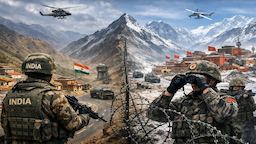
vChina’s Grey-Zone Warfare Along the LAC: Challenges for India

Microsoft Offers Voluntary Exit Packages to Employees in India Amid AI-Led Restructuring

Revenue Surges as Computing Costs and Financial Commitments Rise
China’s Grey-Zone Warfare Along the LAC Poses Strategic Challenges for India

South Africa study finds university mentors boost school pupils’ confidence

The Most Persistent Weakness in India’s Engineering Education System Is the Gap Between Knowing and Doing

Study in Singapore 2027: Top Universities, Fees, Scholarships, Student Visa and Jobs for Indian Students

Study in Taiwan 2027: Top Universities, Fees, Scholarships, Student Visa and Jobs for Indian Students

Study in Hong Kong 2027: Top Universities, Fees, Scholarships, Visa and Career Opportunities for Indian Students

Supreme Court’s Rising Caseload: Why India Needs Stronger Filters for Appeals
vChina’s Grey-Zone Warfare Along the LAC: Challenges for India
Microsoft Offers Voluntary Exit Packages to Employees in India Amid AI-Led Restructuring
Revenue Surges as Computing Costs and Financial Commitments Rise
China’s Grey-Zone Warfare Along the LAC Poses Strategic Challenges for India
South Africa study finds university mentors boost school pupils’ confidence
The Most Persistent Weakness in India’s Engineering Education System Is the Gap Between Knowing and Doing
Study in Singapore 2027: Top Universities, Fees, Scholarships, Student Visa and Jobs for Indian Students
Study in Taiwan 2027: Top Universities, Fees, Scholarships, Student Visa and Jobs for Indian Students
Study in Hong Kong 2027: Top Universities, Fees, Scholarships, Visa and Career Opportunities for Indian Students
Copyright© educationpost.in 2026 All Rights Reserved.