


India Must Develop an Integrated Strategy to Counter China’s Grey-Zone Warfare
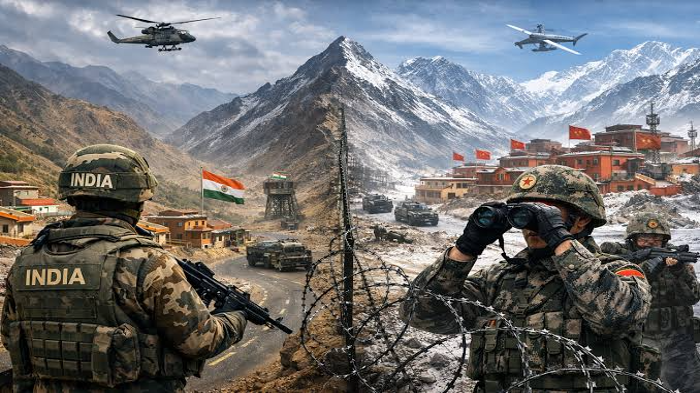
Repeated face-offs between Indian and Chinese troops along the Line of Actual Control (LAC) highlight continuing border tensions. Indo-Tibetan Border Police (ITBP) Director General Shatrujeet Kapur recently confirmed confrontations at several locations in Arunachal Pradesh’s Upper Subansiri district since July 2026. These incidents reflect China’s use of grey-zone warfare to gradually change the ground situation without triggering a full-scale conflict.
Grey-zone warfare involves actions between peace and conventional war, including political pressure, economic influence, cyber operations and legal claims. China also employs its “Three Warfares” strategy, which combines public opinion, psychological and legal warfare. Following the 2020 clashes in Eastern Ladakh, China strengthened military infrastructure near the Indian border by developing roads, railways, airfields and other strategic facilities.

Through its “nibble and negotiate” approach, China attempts to alter the status quo through incremental actions such as changes in patrolling patterns and infrastructure development. Its border-village programme, renaming of places in Arunachal Pradesh and growing strategic partnership with Pakistan further complicate India’s security concerns. These measures allow Beijing to strengthen its territorial claims while limiting the risks associated with direct military confrontation.
India needs an integrated national strategy combining military preparedness, border management, infrastructure development, intelligence, logistics, economic policy and diplomacy. Better surveillance, rapid reinforcement and coordination between the Army and border-guarding forces are essential. The article also argues for considering a dedicated border-guarding force under the Army’s operational control to ensure faster responses to Chinese activities.
Diplomatic engagement remains important, but high-level meetings alone cannot guarantee peace along the LAC. China’s continued territorial claims demonstrate that improved diplomatic relations do not necessarily mean that border disputes have been resolved.
India must therefore strengthen credible military deterrence while ensuring that border agreements are respected. Its approach should combine firm diplomacy, operational preparedness and long-term strategic coordination. The primary objective must be to prevent China from converting small, incremental gains into a permanent change in the status quo.
Supreme Court’s Rising Caseload: Why India Needs Stronger Filters for Appeals
vChina’s Grey-Zone Warfare Along the LAC: Challenges for India

Microsoft Offers Voluntary Exit Packages to Employees in India Amid AI-Led Restructuring

Revenue Surges as Computing Costs and Financial Commitments Rise
China’s Grey-Zone Warfare Along the LAC Poses Strategic Challenges for India

South Africa study finds university mentors boost school pupils’ confidence

The Most Persistent Weakness in India’s Engineering Education System Is the Gap Between Knowing and Doing

Study in Singapore 2027: Top Universities, Fees, Scholarships, Student Visa and Jobs for Indian Students

Study in Taiwan 2027: Top Universities, Fees, Scholarships, Student Visa and Jobs for Indian Students

Study in Hong Kong 2027: Top Universities, Fees, Scholarships, Visa and Career Opportunities for Indian Students

Supreme Court’s Rising Caseload: Why India Needs Stronger Filters for Appeals
vChina’s Grey-Zone Warfare Along the LAC: Challenges for India
Microsoft Offers Voluntary Exit Packages to Employees in India Amid AI-Led Restructuring
Revenue Surges as Computing Costs and Financial Commitments Rise
China’s Grey-Zone Warfare Along the LAC Poses Strategic Challenges for India
South Africa study finds university mentors boost school pupils’ confidence
The Most Persistent Weakness in India’s Engineering Education System Is the Gap Between Knowing and Doing
Study in Singapore 2027: Top Universities, Fees, Scholarships, Student Visa and Jobs for Indian Students
Study in Taiwan 2027: Top Universities, Fees, Scholarships, Student Visa and Jobs for Indian Students
Study in Hong Kong 2027: Top Universities, Fees, Scholarships, Visa and Career Opportunities for Indian Students
Copyright© educationpost.in 2026 All Rights Reserved.