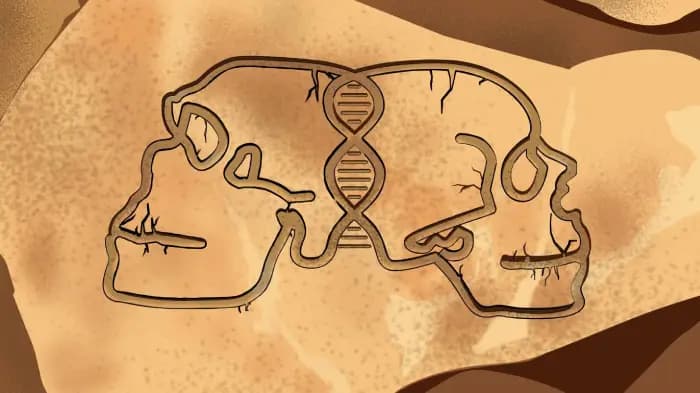
Modern humans and Neanderthals interbred in multiple waves over 200,000 years, exchanging genes and influencing each other's evolution. A new study using AI reveals traces of modern human DNA in Neanderthals and revises their population size to 2,400. The findings suggest Neanderthals weren't wiped out but were gradually absorbed into human populations, reshaping our understanding of shared history.
.jpg&w=3840&q=75)

A four-term Congresswoman, 2020 presidential candidate and NYT bestselling author, Gabbard is a veteran with three deployments to war zones in the Middle East and Africa. She recently moved from being a Democrat to a Republican member.

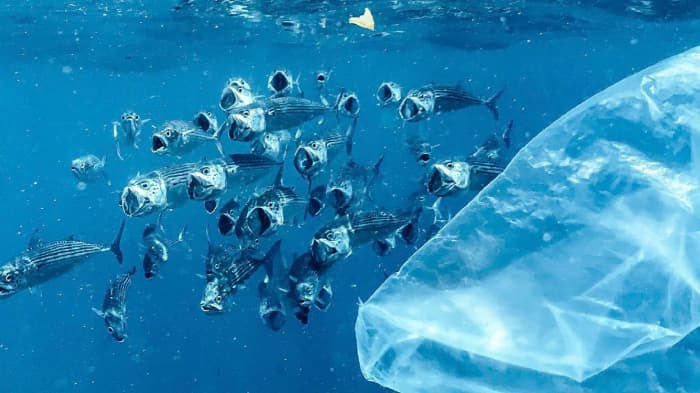
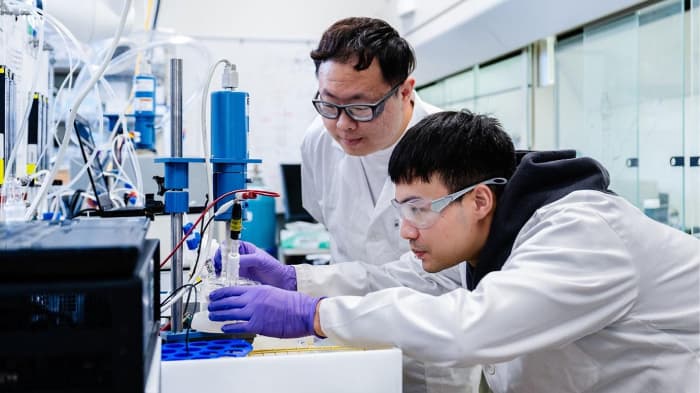
Argonne National Laboratory researchers are pioneering circular economy solutions to repurpose waste into valuable resources. By transforming materials like CO2, plastics, and sludge, they aim to reduce landfill waste and emissions. Argonne scientists are pushing for a regenerative future where waste fuels the creation of new products using innovative catalysts, sustainable water management, and new recycling technologies.

Princeton engineers have closed a critical internet security loophole by introducing a new standard for verifying website identities. This method, adopted globally, requires certification authorities to validate websites from multiple locations, preventing attackers from easily creating fraudulent sites. This breakthrough, developed with industry leaders, strengthens online security for billions of daily internet transactions.

NYU Silver’s Dr. Briana Barocas has received an $8 million grant from the U.S. Department of Justice to evaluate restorative practices addressing domestic and sexual violence. The study will assess victim-centered, trauma-responsive alternatives to punitive justice, aiming to improve healing, accountability, and community safety. Insights will guide practitioners and policymakers on effective methods for supporting survivors and holding offenders accountable.

Princeton professor John Hopfield won the 2024 Nobel Prize in Physics, sharing it with Geoffrey Hinton for pioneering work on artificial neural networks. Hopfield's creation of the Hopfield network, inspired by human memory, revolutionized machine learning, enabling machines to recognize patterns and recall information. Their contributions form the foundation of today’s advanced AI technologies.

By discovering a new fossil species, Harvard researchers have uncovered new insights into the evolution of tardigrades, Earth’s most resilient micro-animals. Using advanced imaging technology, they re-examined fossils from the Cretaceous period, revealing critical details about tardigrades' survival mechanisms and evolutionary timeline, offering a fresh understanding of these near-indestructible creatures' ancient origins.

IISc Bengaluru launches comic book with Amar Chitra Katha to showcase its legacy

Biometric e-KYC made mandatory for LPG users, subsidy and refills linked to verification

IIM Ahmedabad shifts Dubai campus students to India amid West Asia conflict

Jaishankar highlights ‘enormous economic potential’ in India-EU FTA during talks

India’s Economic Growth Outlook Remains Strong

India slams Pakistan over ‘barbaric’ Kabul hospital strike as civilian toll mounts

Iran escalates strikes on Israel, US targets hit as conflict engulfs West Asia

Pakistan-Afghanistan war escalates after Kabul hospital strike kills 400

Maharashtra Assembly passes anti-conversion Bill as Shiv Sena (UBT) backs govt, opposition objects

India delays US trade deal after court scraps key tariffs
Copyright© educationpost.in 2024 All Rights Reserved.
Designed and Developed by @Pyndertech