


The UN agency said acute malnutrition has worsened in 26 of Afghanistan's 34 provinces, with children under two years facing the highest burden amid rising food insecurity and funding gaps.
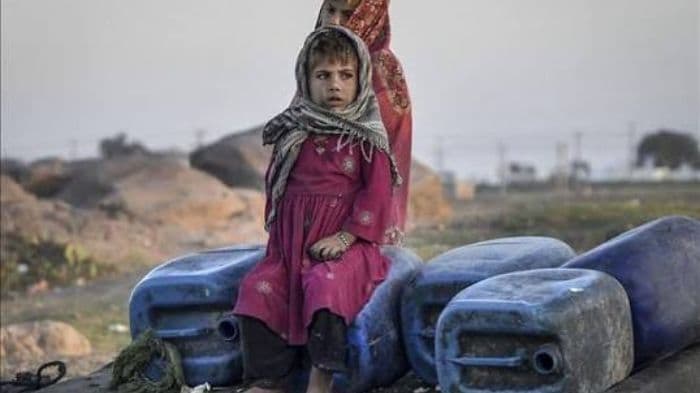
As many as 3.7 million children aged below five years are at increased risk of undernutrition in Afghanistan in 2026 due to child food and nutrition insecurity, the United Nations Children’s Fund (UNICEF) said in a report.
In its report "Too Little, Too Late: The diet Crisis Facing Young Children in Afghanistan", UNICEF said acute malnutrition has deteriorated in 26 of Afghanistan's 34 provinces compared to 2025. The UN agency stated that conditions are worsening even before Afghanistan's annual peak malnutrition season, which mainly runs from July to September.

According to UNICEF, 83 per cent of severe malnutrition cases and 77 per cent of moderate acute malnutrition cases occur among children aged below two years, showcasing the increasing vulnerability of children during the most critical stage of physical and cognitive development.
The UN agency stated that children residing in severely food-insecure households are up to six times more likely to experience severe wasting during the peak malnutrition period.
UNICEF’s Representative in Afghanistan, Tajudeen Oyewale, said: "This new evidence gives us an opportunity to act before children reach the point of severe malnutrition. When families begin reducing meals or cutting back on nutritious foods it is not only a sign of hardship. It is a warning that a child may soon become dangerously wasted. Treatment saves lives, but we must also invest in prevention, starting with the diets of the youngest children and pregnant women."
Apart from poor young child diets and rising food insecurity, worsening malnutrition in Afghanistan is due to disease outbreaks, low immunisation coverage, inadequate water, sanitation and hygiene services, and growing funding and supply gaps.
In a statement, UNICEF stated: "Together, these pressures are increasing children’s vulnerability to wasting and underline the need for coordinated action across nutrition, health, water, sanitation and hygiene, education and social protection services."
Earlier in June, the United Nations Office for the Coordination of Humanitarian Affairs (OCHA) said that 16 million people in Afghanistan will need access to clean water and sanitation services in 2026, Afghan news agency Khaama Press reported.
The OCHA said water scarcity is exposing children to greater health risks and affecting daily life in Afghanistan, forcing people to take coping mechanisms amid deteriorating conditions. The agency stated that access to safe drinking water and sanitation in Afghanistan is a critical humanitarian challenge, Khaama Press reported.
Over the years, Afghanistan has faced recurring droughts, inadequate water-management infrastructure and poverty, resulting in millions of people facing difficulty in getting sufficient water for drinking, household use and agriculture. Humanitarian agencies have said that climate-related shocks are increasing pressure on already fragile communities in Afghanistan.
“Except for the headline, no changes have been made to the story by Education Post staff.”
As student suicides raise alarm, RTI exposes mental health support gaps across IITs

Narayana Business School recognised by Radio City among brands driving Gujarat’s growth

Make in India in Defence: Indian Navy Signs ₹53,866-Crore Deal for 8 Indigenous Warships

NTA empanels 5,000 experts in major overhaul after NEET-UG paper leak

Odisha Laptop Scheme 2026: Rs 30,000 Assistance for 15,000 Meritorious Class 12 Students
As student suicides raise alarm, RTI exposes mental health support gaps across IITs
Make in India in Defence: Indian Navy Signs ₹53,866-Crore Deal for 8 Indigenous Warships
NTA empanels 5,000 experts in major overhaul after NEET-UG paper leak
Cyclone Murasu Makes Landfall in Andhra Pradesh: Why Did It Form, What Does Its Name Mean and Which States Are Affected?

SC Allows Green Crackers in Delhi-NCR for Two Days During Diwali 2026; Ban Returns November 9

As student suicides raise alarm, RTI exposes mental health support gaps across IITs
Narayana Business School recognised by Radio City among brands driving Gujarat’s growth
Make in India in Defence: Indian Navy Signs ₹53,866-Crore Deal for 8 Indigenous Warships
NTA empanels 5,000 experts in major overhaul after NEET-UG paper leak
Odisha Laptop Scheme 2026: Rs 30,000 Assistance for 15,000 Meritorious Class 12 Students
As student suicides raise alarm, RTI exposes mental health support gaps across IITs
Make in India in Defence: Indian Navy Signs ₹53,866-Crore Deal for 8 Indigenous Warships
NTA empanels 5,000 experts in major overhaul after NEET-UG paper leak
Cyclone Murasu Makes Landfall in Andhra Pradesh: Why Did It Form, What Does Its Name Mean and Which States Are Affected?
SC Allows Green Crackers in Delhi-NCR for Two Days During Diwali 2026; Ban Returns November 9
Copyright© educationpost.in 2026 All Rights Reserved.