


The Ministry of Defence has signed contracts worth ₹53,866.50 crore for eight Next-Generation Corvettes. With the Indian Navy responsible for the indigenous design and domestic shipyards handling construction, the project marks another major step in India's push to strengthen its defense manufacturing capabilities.
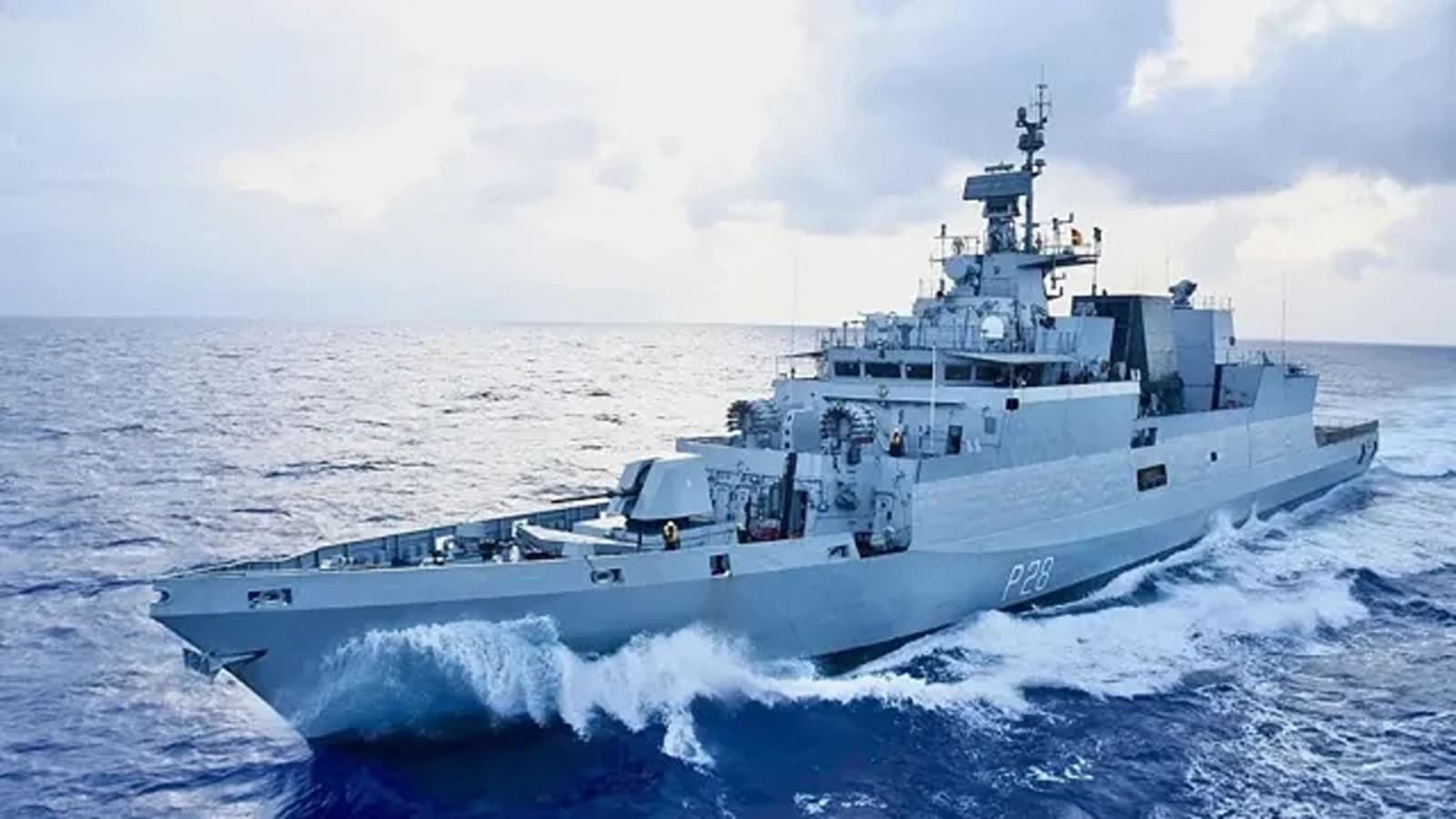
India's Make in India defense push gains momentum as the Indian Navy signs a ₹53,866.50-crore contract for eight indigenously designed Next-Generation Corvettes.
India's push to manufacture advanced defense equipment within the country has received a major boost. The Ministry of Defence has signed contracts worth ₹53,866.50 crore for the construction of eight Next-Generation Corvettes (NGCs) for the Indian Navy, bringing domestic shipbuilding into focus.
Signed on November 2, 2026, the contracts have been awarded to two government-owned shipyards: Garden Reach Shipbuilders & Engineers Limited (GRSE) and Goa Shipyard Limited (GSL). GRSE will construct five warships, while GSL will build the remaining three. The project reflects India's broader effort to move beyond importing defense equipment and strengthen its ability to design, develop and manufacture advanced military platforms at home.

India's Make in India Push Gets a Boost
For years, India has relied on foreign suppliers for several categories of advanced defense equipment. While imports continue to play a role in military procurement, the government has increasingly emphasized domestic manufacturing to build long-term defense capabilities.
The Next-Generation Corvette project fits into this approach. Instead of purchasing ready-made warships from overseas, India is using an indigenous naval design and domestic shipbuilding infrastructure to develop the new vessels. This is important because building a modern warship involves much more than assembling its outer structure. It requires advanced engineering, propulsion systems, weapons integration, radar technology, communication equipment and specialized naval systems. Developing these capabilities within the country can help strengthen India's defense industrial ecosystem and create opportunities for domestic manufacturers.
GRSE and Goa Shipyard to Build Eight Indigenous Corvettes
The construction of the eight warships has been divided between two public sector shipyards.
Garden Reach Shipbuilders & Engineers (GRSE), based in Kolkata, has received the contract to build five corvettes. The company has previously constructed several naval platforms, including frigates and anti-submarine warfare vessels.
Goa Shipyard Limited (GSL) will manufacture the remaining three vessels. The order is particularly significant for the company, with the Ministry of Defence describing it as the largest order secured by GSL in its history.
The involvement of two Indian shipyards is expected to expand domestic shipbuilding capacity and distribute the manufacturing workload across different industrial centers. It also creates opportunities for smaller companies supplying equipment, components, engineering services and other materials required during construction.
Why Indigenous Warship Manufacturing Matters
Building warships domestically can offer advantages beyond reducing dependence on foreign suppliers.
First, it allows Indian institutions and shipyards to develop technical expertise in complex naval engineering. Over time, this knowledge can support the development of more advanced vessels and future defense projects. Second, domestic manufacturing gives India greater control over important stages of production, including design, construction, maintenance and upgrades. This can become particularly important when defense equipment needs modifications to meet changing operational requirements. Third, a stronger domestic shipbuilding industry can create opportunities for private manufacturers, technology companies and MSMEs that supply components to major defense projects.
However, indigenous manufacturing does not automatically mean that every component is produced in India. The Ministry of Defence's announcement confirms the indigenous design and domestic construction of the corvettes, but does not provide a complete breakdown of the domestic content or the origin of every system installed on the vessels.
What Technology Will These Warships Carry?
The eight Next-Generation Corvettes are being developed as multi-role combat platforms capable of operating across air, surface and underwater domains. According to the Ministry of Defence, the vessels will feature advanced missiles, weapons and sensor systems. Defense-industry reporting has also described a proposed configuration involving anti-ship missiles, surface-to-air missiles, torpedoes, naval guns and advanced radar systems.
These technologies are expected to support several naval operations, including:
The combination of these capabilities is intended to give the Indian Navy greater flexibility during maritime operations.
₹53,866-Crore Project Expected to Generate Employment
The project is also expected to contribute to India's industrial and employment landscape. According to the Ministry of Defence, construction of the eight corvettes is expected to generate approximately 72 lakh person-days of employment at the shipyards. Another 460 lakh person-days are expected across ancillary industries and micro, small and medium enterprises (MSMEs) over the next ten years.
This could benefit companies involved in manufacturing ship components, supplying materials, providing engineering services and developing specialized equipment. The government estimates a total of 532 lakh person-days of employment from the project. These figures represent cumulative employment days and should not be interpreted as the number of permanent jobs being created.
A Major Investment, but Questions Remain
Although the contract represents a significant investment in domestic defense manufacturing, the project's financial details also deserve attention. The Defence Acquisition Council had granted Acceptance of Necessity for the project in June 2022 at an estimated cost of approximately ₹36,000 crore. The final contracts signed in November 2026 are worth ₹53,866.50 crore. This is an increase of nearly 49.6% over the initial estimate.
The Ministry of Defence's announcement does not provide a detailed explanation for the difference. A clearer breakdown of the revised project cost, equipment requirements and domestic manufacturing contribution would help assess the project's wider economic and industrial impact.
Another important factor will be the extent to which Indian suppliers participate in the production of advanced systems. The long-term success of the project will depend not only on building the ships in India but also on strengthening domestic capabilities in the technologies that power them.
What Does the Corvette Project Mean for India's Defense Future?
The ₹53,866.50-crore agreement is an important development in India's effort to strengthen its indigenous defense manufacturing ecosystem. The project brings together the Indian Navy's design capabilities and the manufacturing infrastructure of two domestic shipyards. It is also expected to create opportunities for ancillary industries and MSMEs.
However, the real test of India's Make in India ambitions will be whether domestic manufacturers can gradually develop more advanced technologies, reduce dependence on imported critical systems and deliver complex defense platforms within the planned timelines. The eight Next-Generation Corvettes represent another major step in India's attempt to build a stronger naval fleet through domestic design and manufacturing.

As student suicides raise alarm, RTI exposes mental health support gaps across IITs

Narayana Business School recognised by Radio City among brands driving Gujarat’s growth
Make in India in Defence: Indian Navy Signs ₹53,866-Crore Deal for 8 Indigenous Warships

NTA empanels 5,000 experts in major overhaul after NEET-UG paper leak

Odisha Laptop Scheme 2026: Rs 30,000 Assistance for 15,000 Meritorious Class 12 Students
As student suicides raise alarm, RTI exposes mental health support gaps across IITs
Make in India in Defence: Indian Navy Signs ₹53,866-Crore Deal for 8 Indigenous Warships
NTA empanels 5,000 experts in major overhaul after NEET-UG paper leak

Cyclone Murasu Makes Landfall in Andhra Pradesh: Why Did It Form, What Does Its Name Mean and Which States Are Affected?

SC Allows Green Crackers in Delhi-NCR for Two Days During Diwali 2026; Ban Returns November 9

As student suicides raise alarm, RTI exposes mental health support gaps across IITs
Narayana Business School recognised by Radio City among brands driving Gujarat’s growth
Make in India in Defence: Indian Navy Signs ₹53,866-Crore Deal for 8 Indigenous Warships
NTA empanels 5,000 experts in major overhaul after NEET-UG paper leak
Odisha Laptop Scheme 2026: Rs 30,000 Assistance for 15,000 Meritorious Class 12 Students
As student suicides raise alarm, RTI exposes mental health support gaps across IITs
Make in India in Defence: Indian Navy Signs ₹53,866-Crore Deal for 8 Indigenous Warships
NTA empanels 5,000 experts in major overhaul after NEET-UG paper leak
Cyclone Murasu Makes Landfall in Andhra Pradesh: Why Did It Form, What Does Its Name Mean and Which States Are Affected?
SC Allows Green Crackers in Delhi-NCR for Two Days During Diwali 2026; Ban Returns November 9
Copyright© educationpost.in 2026 All Rights Reserved.